
 2 months ago
69
2 months ago
69
ADVERTISE HERE
KUALA LUMPUR: A once under-the-radar political party in Malaysia which was recently given a shot in the arm when two former federal ministers joined its fold is hoping to disrupt traditional party structures through an unconventional recruitment model.
In the near term, Parti Bersama Malaysia (Bersama) said that it hopes to fill its slate of candidates for the upcoming state elections in Johor and Negeri Sembilan as it beefs up membership numbers nationwide and seeks to raise its appeal among voters.
Meanwhile, analysts whom CNA spoke to raised questions on whether Bersama could pose a credible challenge in Malaysia’s already crowded political scene, though some believe that the party provides an “alternative” for voters who feel that they have been sidelined.
Led by Rafizi Ramli and Nik Nazmi Nik Ahmad, Bersama has launched a “digital-first” campaign to find candidates - treating the selection like a job recruitment drive that demands asset disclosure and a rigorous vetting process.
Those interested to be the party’s candidates can apply to do so online, bypassing traditional methods typically employed by other parties that rely on traditional grassroots organising and branch-by-branch recruitment.
After applicants submit their details, they will be redirected to an online video interview. Bersama’s election committee then evaluates those who have been shortlisted based on professional achievements and academic qualifications, among other criteria.
Those who clear this initial stage are then subject to background checks before the committee finalises its candidate list and assigns them to specific parliamentary or state constituencies.
Former natural resources and environmental sustainability minister Nik Nazmi, 44, told CNA that the party has already received applications from a diverse range of candidates, including corporate professionals, activists, academics, former civil servants and entrepreneurs.
“Using traditional selection methods, we likely never would have discovered many of these individuals,” he said, adding that priority was currently given to finalising candidates for the upcoming Johor and Negeri Sembilan state elections.
Nik Nazmi said that while many Malaysians have a genuine desire to serve, they are often discouraged by the internal power struggles and bureaucratic hurdles inherent in traditional party structures.
“What they really want is just, ‘how can (I) help to make change happen’.
“I like to say that we run like a budget airline, so our costs are low. We are able to get the same impact compared to the established parties, which run more like a premium airline, but both of us can actually get to the destination just as good,” said Nik Nazmi, the party’s co-leader.
WHAT IS BERSAMA’S APPEAL - AND LIMITATION?
Political analysts and observers said that support for Bersama is currently fuelled by growing frustrations with Parti Keadilan Rakyat (PKR) and the Pakatan Harapan (PH) coalition it is part of than by affinity for the party’s platform.
Former three-term Democratic Action Party (DAP) parliamentarian Charles Santiago told CNA that Bersama’s traction is largely a symptom of the reform movement failing to meet public expectations. DAP is another component party of PH.
"In some sense, PH has not delivered on its promises and some voters will look at Bersama as a way to send a message to them. Wherever I have gone, people have been telling me that they will vote for Bersama,” he said, pointing to the example of freedom of expression in the country as a point of contention among activists.
 Former economy minister Rafizi Ramli (middle) and former natural resources and environmental sustainability minister Nik Nazmi Nik Ahmad (left) receive the Parti Bersama Malaysia registration certificate from its founder Tan Gin Theam. (Photo: CNA/Melissa Goh)
Bersama was a minor political party registered 10 years ago. It took part in the 2018 elections, but lost in all five parliamentary and 20 state seats it had contested in Penang.
On May 17, the party’s founder and then-president, Tan Gin Theam, officially handed over the registration certificate of Bersama to former PKR parliamentarians Rafizi and Nik Nazmi at an event in Petaling Jaya, Selangor.
It took place on the same day that PH held its convention in Johor Bahru. Rafizi was previously Malaysia’s economy minister.
Hisommudin Bakar, executive director of research firm Ilham Centre, said that PH was most vulnerable to losing votes to Bersama, given that the new party's target constituencies are heavily concentrated in urban and semi-urban areas that have traditionally served as PH strongholds.
“If Bersama succeeds in positioning itself as an alternative outlet for voters disappointed with PH, similar to how Warisan attracted segments of progressive voters in Sabah, (Bersama) may not necessarily win many seats, but it could still have a significant impact on election outcomes,” he said, referring to the Borneo-based party Parti Warisan.
In the 2025 Sabah state election, Warisan effectively capitalised on voter discontent, notably capturing all six urban seats previously held by DAP.
“In such circumstances, the main beneficiaries could be either Barisan Nasional (BN) or Perikatan Nasional (PN), depending on the nature of the contest and the voter composition in individual constituencies,” said Hisommudin.
PH, BN, and PN currently stand as Malaysia’s three primary political coalitions. PH and BN are partners at the federal government, while PN is the opposition bloc.
He noted that some observers have drawn parallels between Rafizi and Hungarian Prime Minister Péter Magyar, who broke away from the political establishment and defeated long-time incumbent Viktor Orbán in April’s general elections.
Magyar left the country's ruling party to establish a new platform, building a wave of support that reshaped Hungary's political landscape.
“The question is whether Rafizi can become ‘Malaysia’s Peter Magyar’. It is still far too early to draw such conclusions. If Bersama merely becomes a vehicle for dissatisfied PKR supporters, its growth potential will likely remain limited,” said Hisommudin.
“However, if it succeeds in attracting urban Malays, young professionals, fence-sitters, civil society groups, segments of non-Malay voters and those who have increasingly distanced themselves from traditional party politics, its potential trajectory could be significantly greater than what many currently anticipate,” he added.
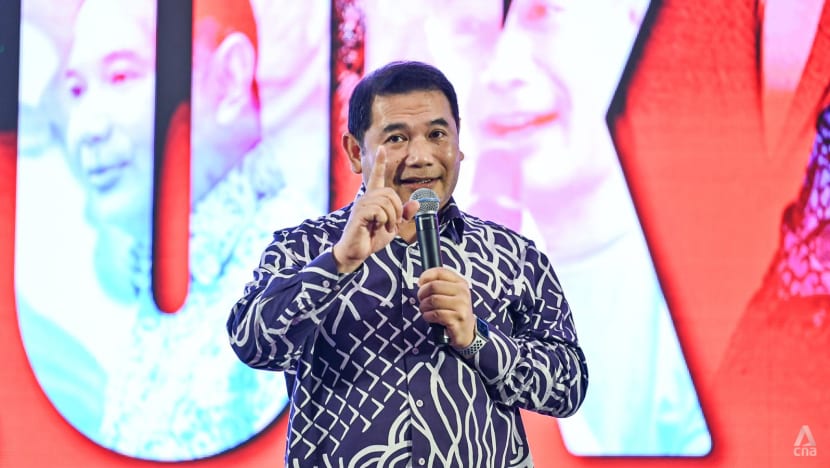 A file photo of Rafizi Ramli taken in Johor Bahru on May 20, 2025. (Photo: CNA/Zamzahuri Abas)
Political analyst Awang Azman Awang Pawi from Universiti Malaya echoed these views and said that the presence of Bersama could alter the dynamic in terms of vote distribution, especially among young voters, disillusioned reformist voters, long-time PKR supporters, and fence-sitters.
“In multi-cornered contests, a small party does not need to win many seats to make an impact; it is enough to draw 3 to 8 per cent of the vote in marginal seats to swing the outcome,” he said.
Political scientist Syaza Shukri of the International Islamic University Malaysia (IIUM) characterised Bersama’s current role as that of a "spoiler" rather than a direct challenger to the established political blocs. She believed that PH stood to lose significantly in Selangor if urban votes were split.
Selayang Member of Parliament William Leong, a PKR stalwart, told CNA that Bersama is most likely to grab votes from PH, and this would affect the ruling coalition.
“If the vote is split further, then the number of seats (won by PH) reduces. What does that do for the movement?” he said, in reference to PH.
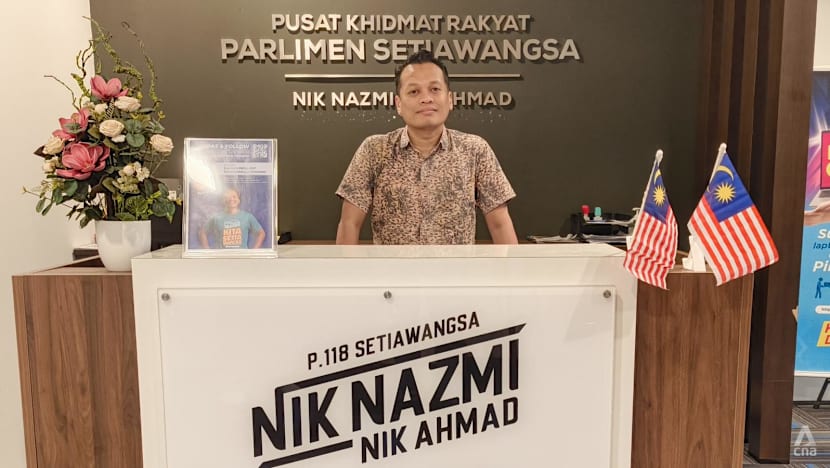 Nik Nazmi Nik Ahmad at his office in Setiawangsa, Kuala Lumpur during an interview with CNA on Jun 17, 2026. (Photo: CNA/Rashvinjeet S Bedi)
WHAT IS BERSAMA ABOUT?
As both Nik Nazmi and Rafizi, 48, trace their political roots to PKR, Bersama has inevitably been framed as a splinter group.
But Nik Nazmi pushed back against the idea that the party is merely a “spoiler” meant to divide the PH vote and stressed that support is not something a coalition can take for granted.
“We are working hard for our support, and I hope PH does the same,” he said.
“I think every party should be just working hard and trying to win on their own merit and not spook people into voting for them. People want to know what you have done. You are now the government and can’t just complain.”
Nik Nazmi said that from Bersama’s analysis, there is disillusionment of voter support among the three main coalitions, although this is strongest among PH supporters.
He cited the Sabah elections last year where the turnout among the predominantly urban Chinese voters who historically supported PH dropped significantly.
Since Bersama’s relaunch in mid-May, about 27,000 people have registered as members. Of that total, 47 per cent were previously unaffiliated with any party.
While 27 per cent were former PKR members, Nik Nazmi noted that he was particularly encouraged by the fact that 15 per cent of the new recruits came from various Malay-based parties such as Parti Islam Se-Malaysia and the United Malays National Organisation (UMNO).
“So we've been drawing out members from other segments as well that have not voted for PH. So that's the general macro view that we have. Obviously, we need to test it on the ground,” he said.
Nik Nazmi said Bersama has also been approached by politicians from other parties, including those from DAP, who expressed an interest to join the party. But he stressed that Bersama has advised them to resign from their parties only once the parliament or state assemblies are dissolved.
Meanwhile, six PKR MPs attended the Bersama's launch in May: Subang MP Wong Chen, Petaling Jaya MP Lee Chean Chung, Ampang MP Rodziah Ismail, Wangsa Maju MP Zahir Hassan, Sungai Siput MP S. Kesavan and Balik Pulau MP Bakhtiar Wan Chik.
Observers expect them to join Bersama once parliament is dissolved and Malaysia’s 16th general election (GE16) is called.
Both Rafizi and Nik Nazmi resigned from their Cabinet positions last year after their defeat in internal party elections within PKR.
Nik Nazmi said Bersama was born out of what he sees as PKR's drift from its reformist roots.
He believes that his former party has shifted its focus away from its foundational reformist cause, and became increasingly centred on Prime Minister Anwar Ibrahim securing his next term.
Anwar was sworn in as Malaysia’s 10th prime minister on Nov 24, 2022, after the 15th general election failed to produce a clear winner and resulted in a hung parliament for the first time in Malaysia’s history.
That led to the uneasy alliance between PH and BN. Also in the alliance are Borneo-based blocs.
Nik Nazmi acknowledged that forming the 2022 unity government was a necessary compromise to secure a parliamentary majority following a hung parliament. But he argued that PH and BN should have maintained their independence to compete separately in the various state or by-elections that followed, rather than work together.
“As a result, the thinking to reform (PH’s electoral agenda) becomes blinkered because it is all about how I get re-elected as opposed to how do I push through meaningful reforms,” said Nik Nazmi.
He also raised concerns regarding systemic issues, including alleged political influence in judicial appointments, the influence of “corporate mafia” networks, and the need for independent anti-corruption investigations.
For now, Nik Nazmi admitted that Johor and Negeri Sembilan state polls on Jul 11 and Aug 1 respectively would be testing grounds for the party and that the party’s initial benchmark is to avoid losing their deposits.
In Malaysia, candidates lose their RM10,000 (US$2,400) deposit for parliament seats or RM5,000 deposit for state seats if they fail to capture at least 12.5 per cent of the votes cast.
Looking ahead to GE16, Nik Nazmi said the party is aiming to win a '”sizable number of seats”, not with the goal of forming the government, but to establish a base it could grow on, adding that the party is looking to contest mainly in multi-racial seats.
He said that the party intends to contest the elections independently and ruled out joining the government in the event they won seats, even if there were a hung parliament.
He noted that in such a scenario, the party’s “worst-case” strategy would be to offer a confidence and supply agreement, provided the government commits to major reforms, such as ensuring equal constituency allocations for all parliamentarians.
GE16 must be called by February 2028.
“I think we can have a presence in GE16. The hope is that then we can be truly sizable on our own in GE17 because by that time we can deploy our candidates early,” he said
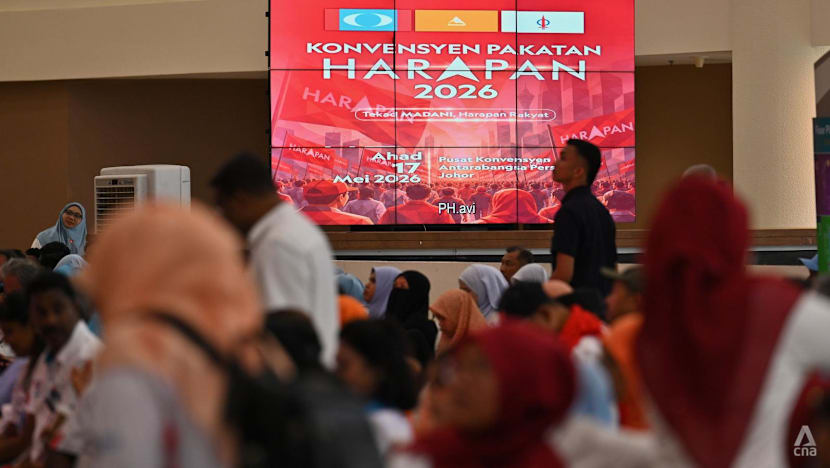 Attendees at the Pakatan Harapan 2026 Convention at the Johor International Convention Centre in Johor Bahru on May 17, 2026. (Photo: CNA/Zamzahuri Abas)
LONG ROAD AHEAD
Analysts however cautioned that Bersama has a long road ahead of it and that public dissatisfaction with its competitors alone was insufficient to sustain a political party over the long term.
Hisommudin said that Bersama’s initial strength does not lie in its political machinery or grassroots organisation, but rather in the narrative it brings.
He said that Malaysian politics has seen numerous parties attract considerable attention in their early stages, only to struggle later due to organisational weaknesses, inconsistent political messaging, financial constraints and the challenges of building an effective grassroots machinery.
“The real test for Bersama is whether it can move beyond the influence of individual personalities and build a strong, resilient political organisation capable of sustaining itself over the long term,” said Hisommudin.
Syaza meanwhile believed that if Bersama is too data-driven and ignored the role of emotion and belonging, it would be difficult for it to win over Malaysians. She, however, expressed hope that Bersama is in it for the long haul.
“I think even they know that their chances for this round of elections are not great. But I hope that won’t deter them. I hope Bersama grows to become a grassroot movement,” she said.
Nik Nazmi acknowledged the challenges it would face and said that its aim is to groom a younger generation of leaders to eventually take over.
“We’re designing the party to eventually become part of the government, or to lead the government. Of course, I hope that happens during my time here, but if we don't get there by GE17 or GE18, we will be able to let go and allow a new leadership group to take over,” he said.
“Both (Rafizi and I) have said that we don't see ourselves doing this in our late 60s or anything like that. For us, politics is a means to an end,” he said.


 English (US) ·