
 4 months ago
145
4 months ago
145
ADVERTISE HERE
Based on deals inked with Malaysian firms and the defence ministry, it was apparent that Malaysia preferred companies from other nations, particularly the West.
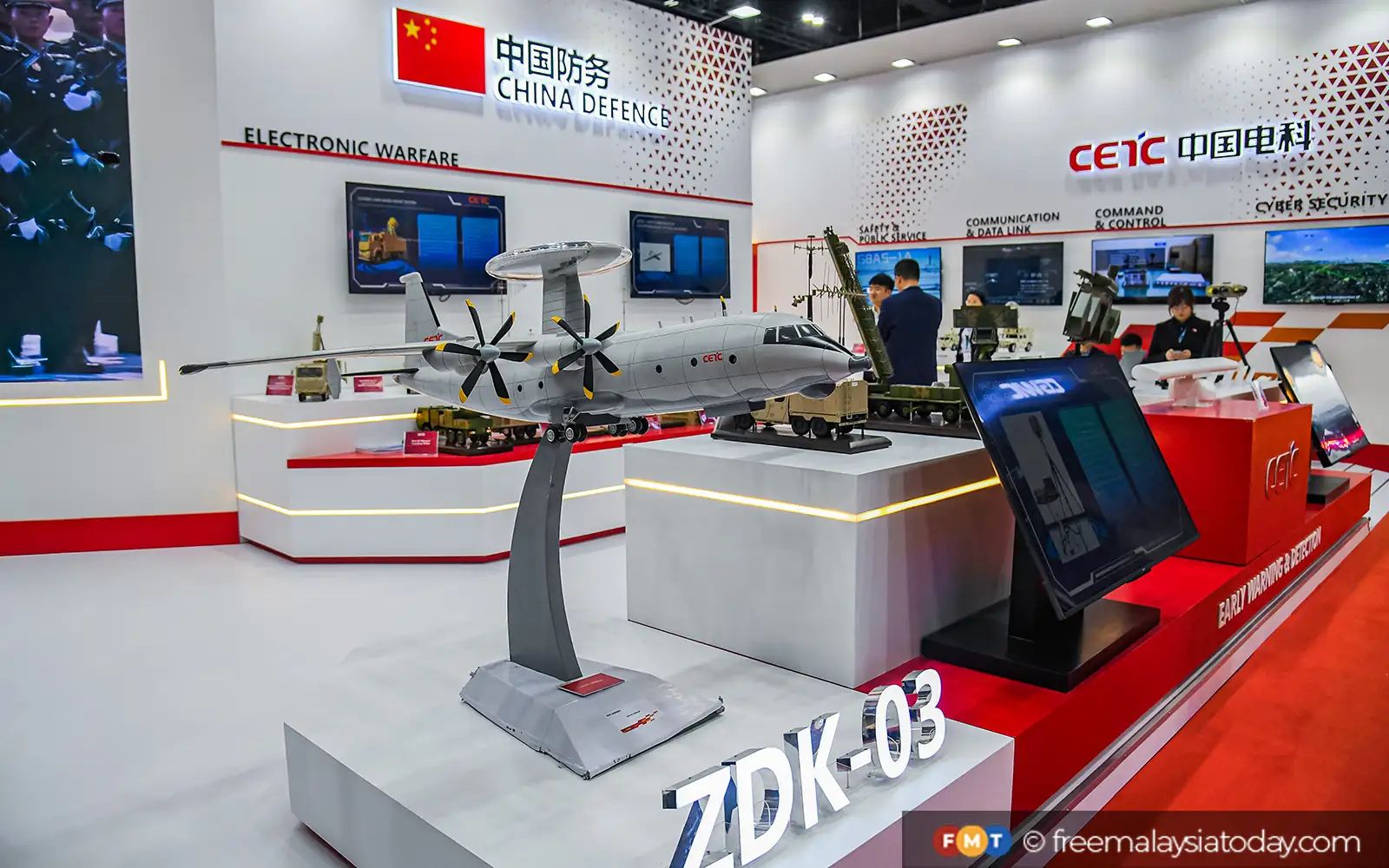
Companies from China dominated the Defence Services Asia and National Security Asia 2026 trade show the past week, with 192 Chinese firms turning up for the biennial exhibition.
According to defence minister Khaled Nordin, this was the largest participation by country, followed by Turkey (87) and the US (83). A total of 1,456 companies from 63 nations had set up pavilions and booths at the four-day exhibition.
An extensive array of equipment and arms were showcased in nine halls on three floors at the Malaysia International Trade and Exhibition Centre, from assault rifles to artillery, drones, unmanned aerial vehicles, troop carriers and counter-drone systems.
At the main China pavilion, Beijing-owned Poly Technologies was an immediate attention-grabber as it showed off its range of defence systems, including missiles, naval ships and an unmanned helicopter.
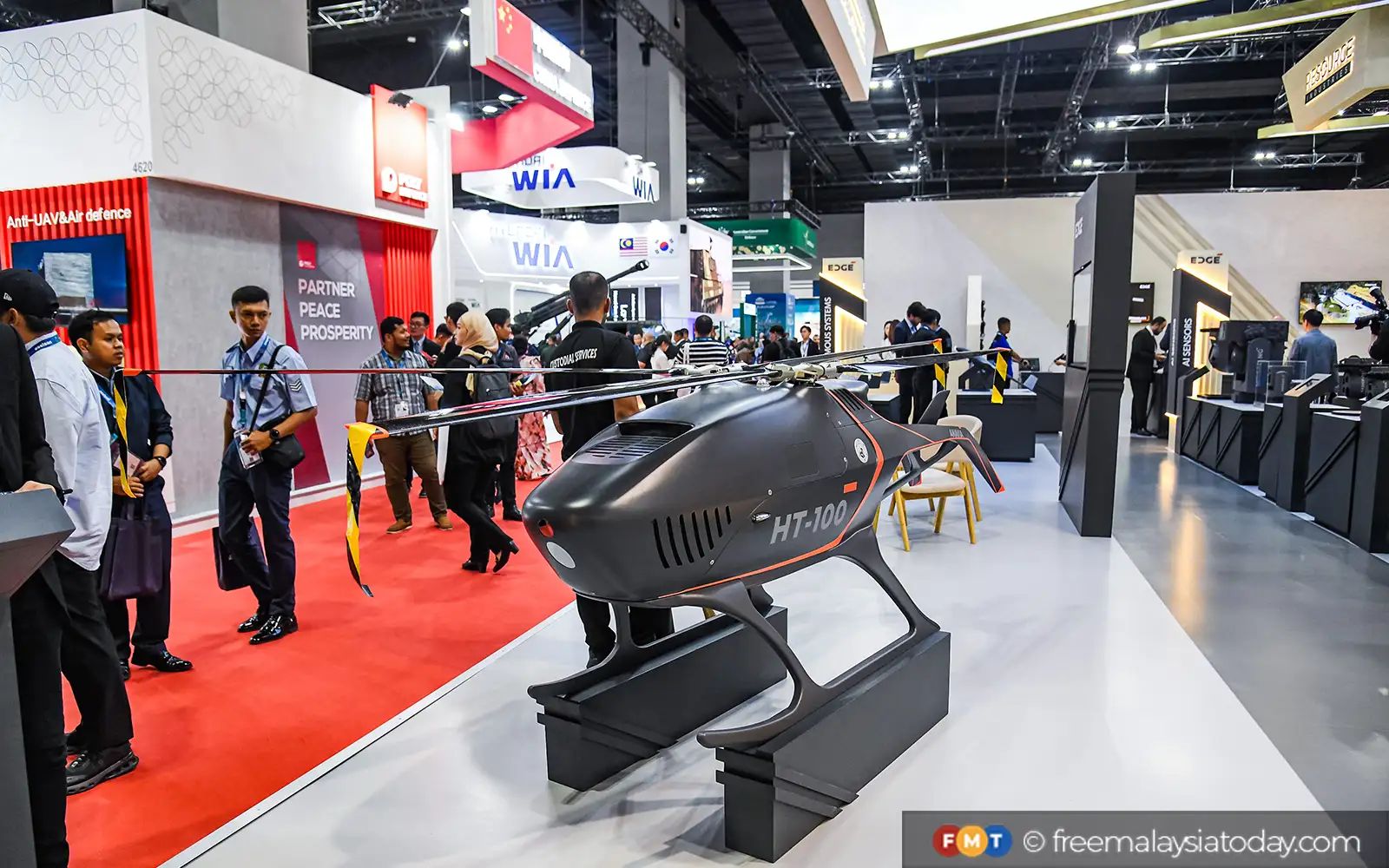
Defence analyst Lam Choong Wah said China’s presence was its biggest yet at the trade show.
He told FMT that the Chinese firms showcased some modern technology, while companies from other nations such as the US and India appeared to be exhibiting more traditional weaponry.
Nonetheless, based on the agreements and memoranda inked with Malaysian firms and the defence ministry, it was apparent that Malaysia preferred companies from other nations, particularly those from the West.
For the defence ministry, the focus is on developing the local defence industry. The Malaysian Defence Industry Blueprint was launched last year with the goal of greater defence self-reliance while placing Malaysian firms in the global supply chain.
At DSA, the defence ministry inked 24 strategic defence initiatives worth RM3.54 billion with various local firms, including a Boustead Holdings Bhd subsidiary and Lumut Naval Shipyard Sdn Bhd (Lunas).
However, based on the deals these companies signed separately at the exhibition, foreign firms clearly remained key partners for these Malaysian companies, save for those from China.
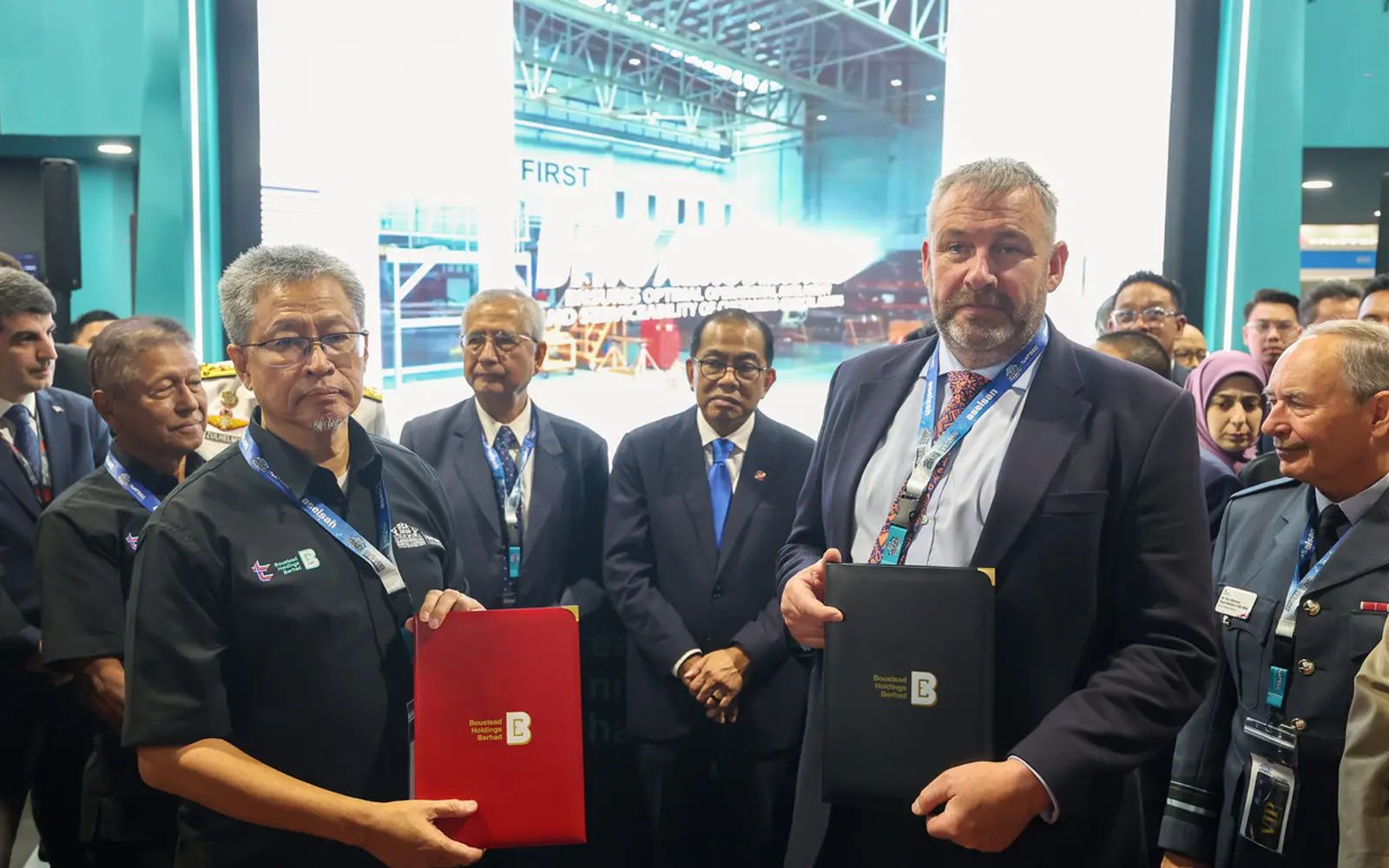
Boustead inked contracts with European aviation giant Airbus, the UK’s Submarine Manufacturing & Products Ltd, as well as Turkey’s Aselsan, while Asian firms like Korea’s HD Hyundai Heavy Industries Co Ltd and LIG Defense & Aerospace also snagged deals with Malaysian firms.
Lunas alone signed seven memoranda for deals valued at RM300 million, involving Hyundai Heavy Industries, US firm Ocean Infinity, Dutch shipyard Hull Vane BV, France’s Sillinger SAS, and three local firms.
A slew of deals were done with other Turkish firms, including Turkish Aerospace Industries subsidiary CTech’s agreement with AR Eastern Sdn Bhd to supply jamming-resistant satellite communication modems.
Turkey’s Roketsan even signed a RM369 million contract with Malaysia’s defence ministry for the provision of surface-to-surface missiles.
Need for international partners
Lam, of Universiti Malaya, said the small Malaysian defence industry is incapable of taking on major projects on its own, which is why they are reliant on international partners.
The domestic market is also very small, which meant that there must be a vision to serve foreign markets to truly establish a large and capable local defence industry.
“When it comes to international partners, there are geopolitical concerns we have to take into consideration. It is perhaps the most important aspect we have to consider, maybe even above technological concerns and affordability,” he told FMT.
Lam, who is also a foreign policy analyst, said defence partnerships, even on a company-to-company basis, meant defence ties of some level between nations, and that this requires a certain degree of political trust.
Despite being Malaysia’s largest trading partner, dealing with China was a no-go because of conflicting interests in the South China Sea. He said the reality was that military and foreign affairs officials, on paper, still preferred dealing with the West, especially the US.
“The political grandstanding and anti-US sentiments we see among our politicians sometimes is only for domestic politics, nothing more,” he said.
The analyst said Malaysia has had bilateral ties with the US since the 1980s, while Washington sent millions of dollars in defence aid to Putrajaya annually. This also facilitates exchange in military experience and knowledge.
It was reported in 2022 that the US had given nearly US$230 million (RM1 billion at the time) in defence aid to Malaysia since 2018, including military training and exchange programmes.
In 2024 alone, Washington distributed some US$10.2 million in aid to Malaysia, of which US$1.86 million involved security assistance.
Lam also pointed out that Malaysia sends military officers to elite US military academies like West Point for training every year. “The moment we cut major defence deals with China, that will end.”
He also said Washington was Malaysia’s most crucial ally when it comes to the South China Sea, adding that annual joint exercises with the US military centred on the possibility of a Chinese invasion of the resource-rich Luconia Shoals, off of Sarawak.
Stay current - Follow FMT on WhatsApp, Google news and Telegram
Subscribe to our newsletter and get news delivered to your mailbox.





 English (US) ·