


 3 months ago
75
3 months ago
75
ADVERTISE HERE
KUALA LUMPUR: Pricey airfares, schedule changes and flight cancellations.
The troubles plaguing Sarawak-owned AirBorneo in recent months should not be allowed to fester, analysts say, or they risk undermining the state's ambitions in pursuing rapid development and greater autonomy.
The Sarawak government can still turn the situation around by ensuring AirBorneo improves public communication and operational efficiency, observers also say, adding that a successful Sarawak-owned airline will boost the state's case for greater control of its resources.
"AirBorneo’s problems are unlikely to weaken the political case for greater Sarawak autonomy. But they do sharpen the question of state capacity," said Asrul Sani, associate vice-president at strategic advisory firm The Asia Group.
REBRANDED FROM MASWINGS
In February 2025, the Sarawak government agreed to acquire MASwings from Malaysia Aviation Group - the parent company of flag carrier Malaysia Airlines - to strengthen regional air connectivity and ensure affordable fares for Sarawak and its people.
MASwings was rebranded as AirBorneo, which has continued the primary aim of operating domestic rural air services in Sabah and Sarawak. The airline has plans to launch international routes in July.
The sheer size of the East Malaysian states and their distance from West Malaysia means locals see domestic air travel as a crucial mode of transport that should be efficient and relatively affordable.
Sarawak’s purchase of an airline - alongside its takeover of a port and a bank - is also seen as one of its flagship development projects as the state pushes for greater autonomy in the Malaysian Federation.
But AirBorneo’s issues surfaced even before it officially started operations in January, when passengers grumbled about what they felt were unreasonable airfares that spilled over to the Chinese New Year and Hari Raya period from February to March.
For instance, some complained about having to pay more than RM200 (US$48.20) to fly from Sibu in central Sarawak to the state capital Kuching - a slightly over half-an-hour flight. They said other airlines offered cheaper fares for the same route.
This month, AirBorneo advised passengers to expect delays, cancellations and schedule changes as it continued to manage operational disruptions affecting flights across Sabah and Sarawak.
The airline attributed the disruptions to unscheduled technical rectification work on several aircraft, ongoing scheduled maintenance, as well as operational and crew duty requirements.
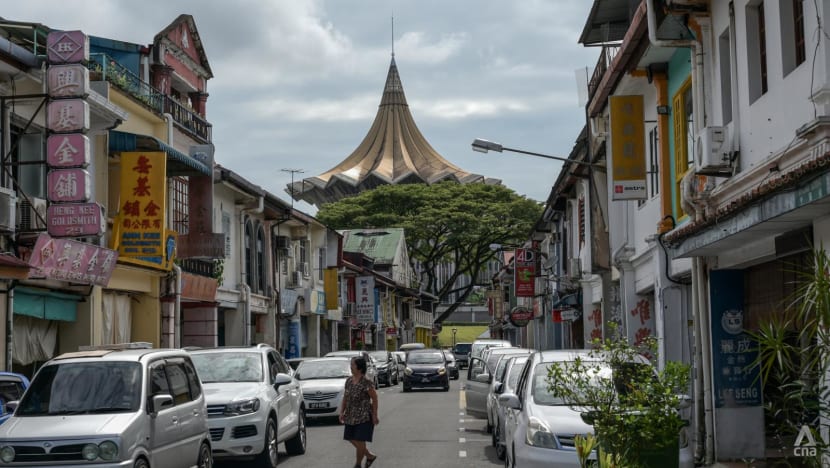 A view of the Chinatown area in Kuching, Sarawak. (Photo: CNA/Fadza Ishak)
On Jun 10, it apologised to affected passengers, saying that several aircraft became unavailable simultaneously because of scheduled maintenance and delays in the delivery schedule of key replacement components.
A Sarawak federal lawmaker from an opposition party in the state assembly urged AirBorneo to expedite plans to lease more aircraft and improve reliability, though the state’s tourism minister called for the airline to be treated fairly and given time to grow.
Sarawak premier Abang Johari Openg said on Jun 15 that AirBorneo’s issues were temporary and pledged the state government would resolve them.
“We are still transitioning from our takeover of MASwings. There are some minor problems along the way. But they will surely be resolved,” he was quoted as saying by local news outlet Dayak Daily.
 Sarawak Premier Abang Johari Openg speaking to CNA during an interview at his office in Kuching on Aug 20, 2024. (Photo: CNA/Fadza Ishak)
NOT AN “ORDINARY CORPORATE TRANSACTION”
MASwings’ rural air service operations, comprising 40 routes in Sabah and Sarawak, were fully borne by the federal government in the form of subsidies and aircraft rental.
The airline had received an annual subsidy of RM209 million, aviation news portal ch-aviation reported in 2023, and operated as a public service organisation instead of a profit-generating company.
While AirBorneo inherited MASwings’ routes and continues to get federal government subsidies, it is now operating as a commercial entity, with eyes on serving international markets.
AirBorneo currently operates a fleet of eight ATR72 and six DHC-6 Twin Otter aircraft, with deliveries of a further eight turboprop planes scheduled from 2027.
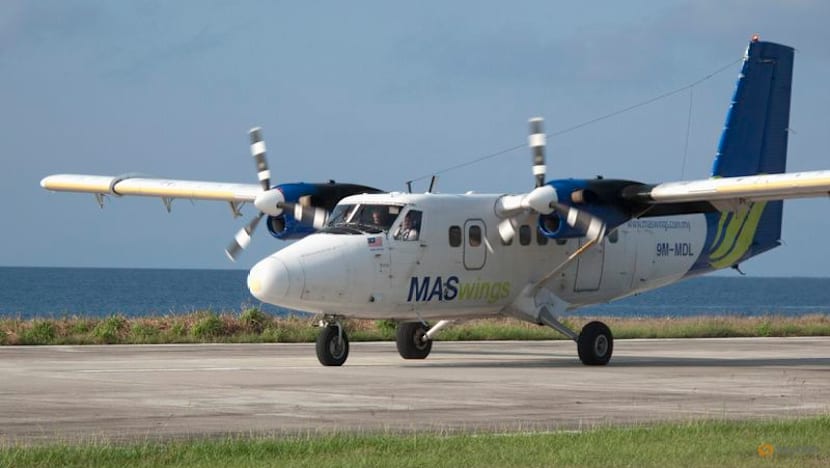 File photo of a MASwings DHC-6-300 Twin Otter plane landing on the Malaysian island of Layang Layang on Apr 6, 2010. (Photo: Reuters/David Loh)
Abang Johari’s statement was aimed at soothing concerns and framing the issue as a “temporary challenge during the transition period rather than a policy failure”, said political analyst Awang Azman Awang Pawi of Universiti Malaya.
“This is important in managing the public narrative before a technical issue evolves into a political one,” he said.
He and Asrul said AirBorneo's issues are particularly sensitive in Sarawak, pointing to how public expectations are higher for an airline seen as a symbol of the state government's ability to manage strategic assets independently.
Abang Johari needed to reassure the public as AirBorneo “is more than just an airline”, said Asrul.
“It is part of his broader vision for a new Sarawak, one that is more connected, economically developed and able to exercise greater control over its own affairs,” Asrul added.
“If AirBorneo fails during those moments, the issue stops being about airline operations and becomes a reflection on the government’s ability to deliver.”
Running AirBorneo therefore presents “an early test of whether Sarawak can not only acquire strategic assets but run them well,” Asrul said.
“The same question applies to Petros, where the stakes are much higher and the operational complexity far greater,” he added, referring to the Sarawak government’s wholly owned energy firm Petroleum Sarawak Bhd.
Through Petros, the Sarawak government is demanding regulatory control over the hydrocarbon reserves within its own territory – both onshore and offshore Borneo island. It is a bold push for autonomy that has threatened to upend national oil corporation Petronas’ monopoly over Malaysia’s lucrative hydrocarbon reserves.
“If AirBorneo works, it strengthens Sarawak’s case for greater control (over its resources),” Asrul said.
“If it struggles, critics will argue that the state is building the hardware of autonomy faster than the talent and systems needed to deliver it.”
Awang Azman said the public did not see Sarawak’s takeover of MASwings as an “ordinary corporate transaction”.
“Rather, they saw it as a promise by the Sarawak government to provide air services that are more stable, people-friendly, and better suited to Sarawak’s geographical realities,” he said.
“As such, flight disruptions affect more than just travel schedules. They can impact daily life, medical treatment, student mobility, public servants, small businesses, and rural residents.”
MORE PLANES, BETTER PLANNING
Airlines such as AirBorneo should ensure they have adequate aircraft available to offer continuous services to passengers while other planes in their fleet are being maintained, an economist said.
“The unavailability of spare parts should not have happened,” said Mohd Harridon Mohamed Suffian from the Universiti Kuala Lumpur Business School, who has decades of experience in the aviation and financial industries.
Airlines should plan ahead by using a comprehensive predictive maintenance process in their daily operations, he said.
And if AirBorneo had indeed inherited operational issues from MASwings, AirBorneo should have identified “the nature of the predicament before fully acquiring the entity”, Harridon said.
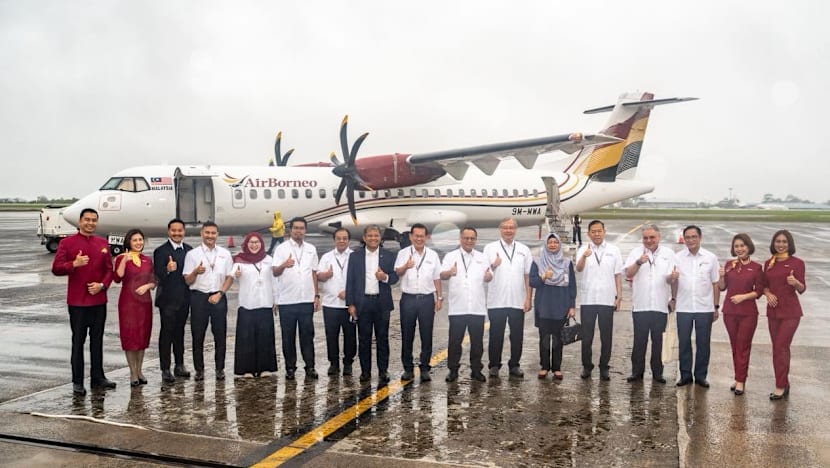 AirBorneo officials and flight crew pose in front of one of its planes ahead of the airline's inaugural flights in January 2026. (Photo: Facebook/AirBorneo Airways)
The federal government decided to continue subsidies for AirBorneo to prevent the airline from incurring losses, as rural air services are generally unprofitable, Transport Minister Anthony Loke was quoted as saying in February 2025.
The fact that AirBorneo is state-owned means there could be limitations on the airline's financial structure in terms of having to allocate certain expenditures to ferrying passengers to and from rural areas, Harridon said.
While this is needed, the airline should create separate entities: One to manage the rural services and another to make profits, he suggested.
“There should be a balance between expanding the profit margin and offering services to the people, because at the end of the day, running an airline constitutes the acquisition of revenues and making the airline financially sustainable,” he said.
Peter John Jaban, a Sarawak rights activist, said that while the airline’s issues have “understandably raised questions”, they should be viewed as an opportunity for improvement rather than a setback.
“The priority now should be strengthening operational efficiency, improving communication with passengers, ensuring proper planning, and building public confidence,” he said.
“Constructive feedback and timely action are important to ensure AirBorneo becomes a strong symbol of Sarawak’s development aspirations and benefits the people it is meant to serve.”




 English (US) ·