
 7 hours ago
6
7 hours ago
6
ADVERTISE HERE
WHAT started as random food reviews and casual videos has grown into a distinctly Sarawakian social media identity, one that has brought its creator from filming around Kuching to building an audience of more than 80,000 followers across TikTok, Instagram and Facebook.
Behind Ohhh Kaban is 30-year-old Watson Dana, a content creator who began exploring social media content towards the end of 2021.
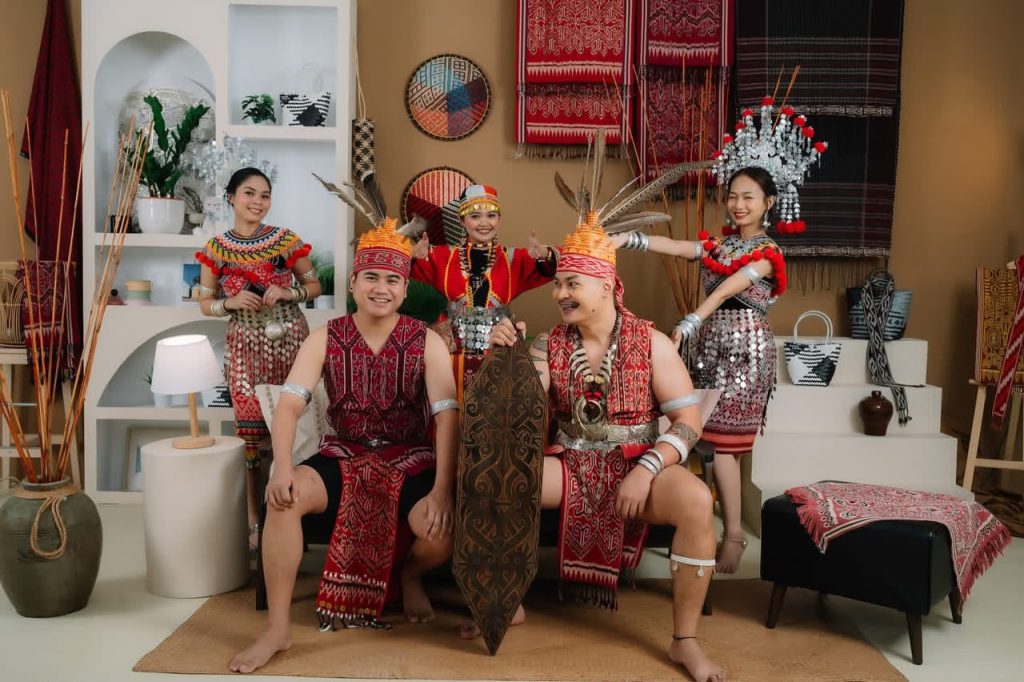 Watson (first right) and his talent.
At the time, there was no grand business plan, polished studio or carefully scripted production.
There was simply an interest in creating something of his own.
“I started with my voiceover content. We started from free reviews, random ones, jalan-jalan,” Watson said.
His early inspiration came during the Covid-19 pandemic, when he discovered TikTok and began following content creator Kak Mirah who is known for her tagline “Hari Tok Kak Mirah.”
Inspired by her food content, Watson initially ventured into food reviews before gradually expanding into other areas.
Today, Ohhh Kaban covers far more than restaurants.
Watson said that hotels and places to stay, food products, properties, gadget stores, spas and furniture have all found their way into his content, while the Kuching Food Festival has become an annual feature.
From random reviews to paid work
Still, food remains at the heart of what he does. His first review was a buffet restaurant near Telaga Air, although he could no longer recall its name.
His first invitation came later from Serapi Restaurant in Satok. The journey from doing random reviews to receiving paid work was gradual.
Clients initially approached Watson through TikTok direct messages before moving their conversations to WhatsApp. His first paid review cost clients about RM100, although he keeps his current rates private.
“The work has since grown into something much bigger than simply pointing a camera at a plate of food,” he said.
Watson remains the person behind almost every stage of his own production.
“I did all the shoots, edits, records the voiceover and handles the posting myself, while a small group of talents occasionally appear in front of the camera and contribute ideas,” he added.
The approach is deliberately spontaneous. Rather than preparing a complete script before arriving at a client’s premises, Watson prefers to see the location first and let the surroundings shape the content.
Once a client approaches him, they discuss what is to be featured. On shooting day, Watson visits the premises, observes the space, develops his ideas and directs his talents.
The footage is then compiled, edited and paired with his voiceover before a draft is sent to the client for approval. Only after approval does he publish it.
Ohhh Kaban identity
For Watson, the process is part of what makes Ohhh Kaban recognisable.
“It was also one reason I eventually moved away from using my own name.
“As engagement grew and more people began recognising my content, I realised I needed an identity that could stand on its own,” he said.
He said the name came to him while he was driving towards Santubong.
 The “Ohhh Kaban” logo.
He wanted a tagline that felt engaging, distinctly Sarawakian and connected to his Iban identity.
“Suddenly it popped out. ‘Oh, Kaban.’ I was talking with my friends,” he recalled.
The phrase eventually became Ohhh Kaban, which he described as carrying the sense of “Hey, friend”.
For Watson, it was more than a catchy name. It became the personality of the brand.
He said in the early days, however, many followers did not even know what he looked like.
He was usually behind the content while his talents appeared on camera.
“People recognised the faces in my videos and the voice and style of the content instead.
“That slowly changed as I continued travelling around Kuching for reviews and returned to clients who engaged my services repeatedly,” he added.
Eventually, followers began recognising Watson himself. There is an irony to building a public profile through content: the more visible a creator becomes, the more opinions come with it.
Watson has faced criticism, particularly when viewers disagree with his assessment of food or other products.
His response is relatively simple. Different people have different tastes.
“People have different opinions, different taste buds and other things,” he said.
Rather than allowing negative comments to derail him, Watson has learnt to treat criticism as part of the job.
He said many of the people leaving particularly negative comments appear to use fake or blank profiles, and he has never encountered them personally.
Instead of being triggered by criticism, he uses it as motivation to improve.
Staying positive
“I always take it as a positive side. For them to criticise me means they cannot be me. I will go further from here. I will go way better,” he said.
But behind the upbeat videos lies a more complicated question about what viewers should expect from a paid review.
Watson is clear that he sees himself as a content creator rather than an influencer, and he makes a distinction between creating promotional content for a client and providing an independent review.
His clients, he explained, are paying for marketing and exposure. Their objective is to let more people know about their business and encourage them to try it.
That does not necessarily mean every viewer will love what is being promoted.
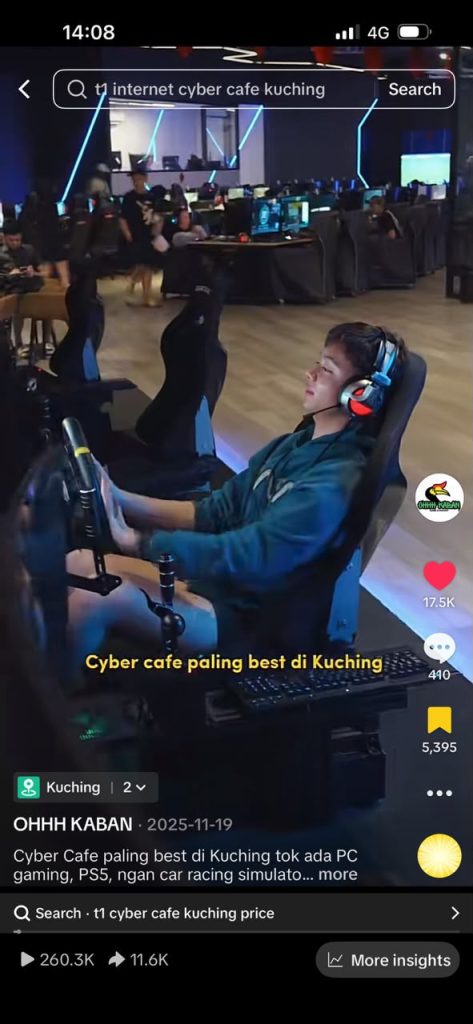 Screenshots of some of “Ohhh Kaban” most viewed video.
“The food might not be nice, but at least you guys try once,” he said, explaining that viewers ultimately make their own decisions.
For Watson, the challenge is finding a balance between the client who pays for the content and the audience that watches it.
If he finds something about a dish lacking, he does not necessarily state it bluntly.
Instead, he may turn the criticism into a light-hearted suggestion.
If a dish is not salty or sweet enough, for example, he might say that customers could ask for it to be made a little saltier or sweeter.
To him, the comment serves as a subtle hint while keeping the overall tone positive.
“It will be like a balance for both sides, for the clients, for the viewers,” he said.
That balance also extends to the way he handles his own professional boundaries.
There was at least one occasion when Watson turned down a second assignment from a furniture client after repeated changes to the requested content made him feel he could no longer deliver it in the Ohhh Kaban style.
He had already explained that the brand had its own style and that constant changes would affect what people recognised as Ohhh Kaban.
Rather than compromise that identity, he rejected the second review. It was a small but significant decision for a creator whose brand is built largely on consistency.
Watson’s philosophy is also evident in how he approaches opportunities.
He questions the idea of creators asking businesses for free reviews in exchange for “exposure”.
For him, the better approach is to prove the quality of the work first.
“I would prefer to do a job well done first. Then slowly the client will see,” he said.
His advice to those hoping to enter the world of content creation is similarly straightforward.
“Just start. Start small, and then try to improve the quality of your content from there. See what people like, and just do it consistently,” he said.
For someone who has built Ohhh Kaban largely from his own room at home, the next stage could take the brand beyond individual reviews.
Watson hopes eventually to manage social media accounts for clients, a goal he has had for some time but has yet to pursue fully because he is still looking for the right partner.
For now, the home remains his unofficial production base, with cafes occasionally serving as his alternative workspace.
He also has ambitions to work with creators whose strengths complement his own.
Among his dream collaborations are creators he admires for their production quality and storytelling, including a Tiktok content creator known to him as Jason Chen (@jcinthehizzay) and Indonesian content creator Serly Asnim (@onebitebigbite), whom he admires for her humour and storytelling.
Promoting Iban culture
He has also collaborated with KL Foodie on content. Yet perhaps the most personal direction for Ohhh Kaban lies not in commercial work, but culture.
The Iban identity behind the name has always been part of Watson’s thinking, and he sees the platform as something that could eventually help expose more people to his culture.
“I want to gradually develop content that promotes Iban culture, using the audience I have built through food, places and everyday life.
“That’s why I started from Oh Kaban first. That’s why the name Oh Kaban was born,” he said.
From a random buffet review near Telaga Air to a growing digital identity recognised by followers around Kuching, Watson’s journey has been less about having everything figured out from the beginning and more about learning as he went.
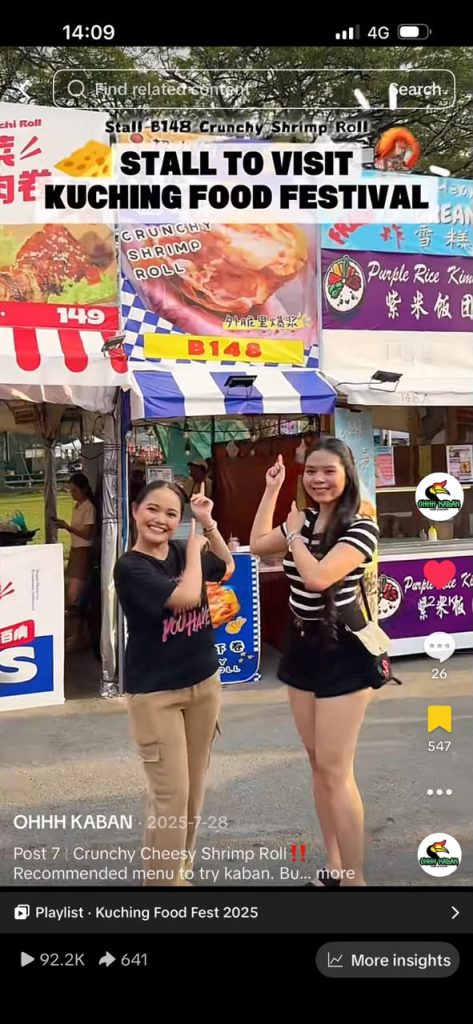 Screenshots of some of “Ohhh Kaban” most viewed video.
Ohhh Kaban may have started as a name and a tagline.
But after years of filming, editing, reviewing, listening, adapting and occasionally saying no, it has become something more personal: a voice Watson can call his own, and perhaps a platform through which he can eventually tell a bigger Sarawakian story.





 English (US) ·