
 3 months ago
170
3 months ago
170
ADVERTISE HERE
 Tan Kai
Advertisement
By Shikin Louis
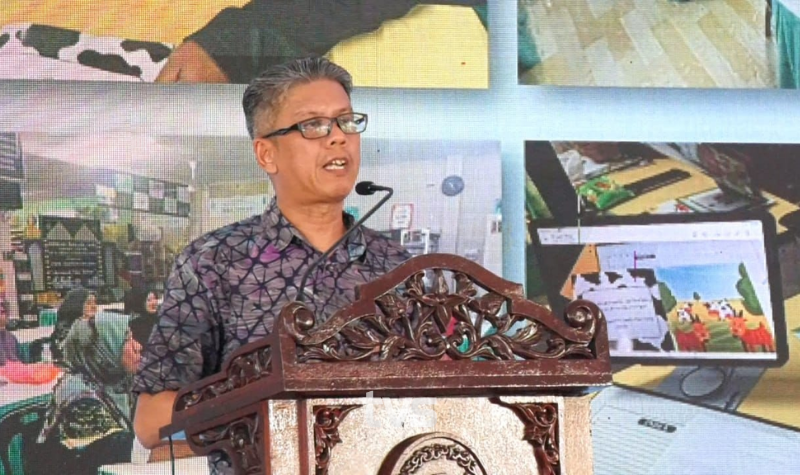
KUCHING, June 4: Persistent flooding, ageing neighbourhoods and industrial challenges in Pending reflect a widening development gap that must be urgently addressed under the Post-Covid-19 Development Strategy 2030 (PCDS 2030), says SUPP Pending branch deputy chairman Tan Kai.
He said the constituency had lagged behind over the past two decades after drifting away from Sarawak’s mainstream development framework.
Advertisement

“Kenyalang has gradually lost some of its former vibrancy. The factories in Bintawa continue to face challenges. The long-standing drainage and flood issues along Foochow Road remain unresolved.
“How can the two fishing villages be revitalised and transformed? How can residential areas such as Three Hill Park and Kali Garden be upgraded to improve living standards? Many infrastructure and livelihood-related issues are still awaiting solutions,” he said when speaking at the SUPP Pending branch’s 42nd anniversary dinner tonight.
He stressed that it was time for the constituency to be fully reintegrated into the State’s development agenda under PCDS 2030.
“I believe the people of Pending feel it is time for the constituency to return to the political mainstream and board the final train of the PCDS 2030,” he added.
On candidate matters, Tan said the Pending branch had always followed its tradition of recommending candidates while leaving the final decision to party leadership, and had never been driven by internal disputes over nominations.
He said focus should remain on restoring Pending’s development direction rather than discussions over candidacy.
“The Pending branch has always followed the proper process. We recommend, but the final decision lies with the party leadership.
“I believe we should focus on how to help Pending rise again, rather than who the candidate will be,” he stated.
Reflecting on his own political journey, Tan recalled contesting in the 2013 Kuching parliamentary election despite knowing the odds were slim, saying the decision was made in line with party responsibility rather than electoral calculations.
“At that time, I accepted the challenge without hesitation. I did not ask whether it was winnable or whether the timing was right,” he said.
He added that political participation should not be defined by the idea of “winnable candidates”, but by the willingness to serve when called upon.
“There is no perfect timing and no such thing as the most winnable candidate. History has shown that even candidates expected to win can still lose,” he emphasised. — DayakDaily


 English (US) ·