


 3 months ago
156
3 months ago
156
ADVERTISE HERE
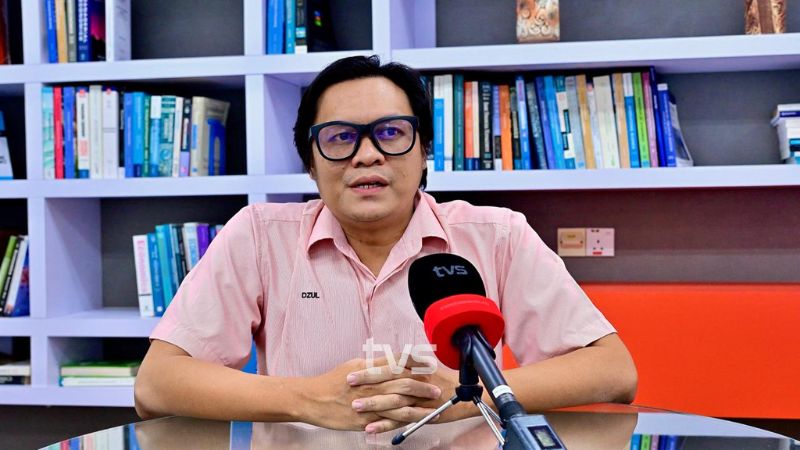
Samirul Ariff Othman says that many states continue to attract labour-intensive industries that generate employment but not necessarily high wages

It would be difficult for other states to emulate the premium wages of RM4,000 and above on offer in Johor for graduates, according to an economist.
Many states continue to attract labour-intensive industries that generate employment but not necessarily high wages, said Samirul Ariff Othman of Universiti Teknologi Petronas.
Malaysia also faced a gap between what employers needed and what skills graduates possess, he said in response to a a former MP’s call for other states to emulate Johor’s premium wage initiative.
Earlier this month, Johor menteri besar Onn Hafiz Ghazi said fresh graduates in Johor could earn salaries of RM4,000 and above while technical and vocational graduates could earn between RM4,000 and RM5,000 or more, depending on their qualifications and skills.
Samirul said wages in other states could not rise sustainably unless businesses become more productive through technology, innovation and better management practices.
“This is why talent development, TVET reform and industrial upgrading must move together. Raising wages without addressing productivity would only solve part of the problem.”
The economist also said it would be difficult to set the RM4,000 graduate pay rate as the national benchmark.
Only large multinational companies in Johor, Penang or Selangor may be able to support a RM4,000 starting salary, he said. “Many small-medium enterprises in smaller states may struggle to do so without productivity gains,” he added.
However, Samirul and Yeah Kim Leng of Sunway University said that other states can emulate Johor’s wage approach only if they identify their own competitive advantages. Yeah notes that Penang could focus on its electronics industry while Sarawak could do so with its hydropower-intensive industries.
Unique advntages
Yeah said Johor had unique advantages such as its proximity to Singapore and the participation of both governments in attracting high-value investments and industries to the Johor Singapore Special Economic Zone.
Yeah praised Johor’s “commendable” wage initiative as the state government would have to develop more than just an efficient and business-friendly environment but one that draws high-value industries and dynamic firms who could attract and nurture talented workers who in turn contribute to their business growth and success.
Samirul said that TVET graduates could earn RM4,000 to RM5,000 salaries in selected industries due to changes in the labour market. Modern manufacturing increasingly required technicians with specialised skills, and in many cases, skilled technicians were becoming harder to find than degree holders.
“The challenge is ensuring that TVET programmes remain closely aligned with actual industry demand rather than producing graduates whose skills are no longer relevant,” he added.
Stay current - Follow FMT on WhatsApp, Google news and Telegram
Subscribe to our newsletter and get news delivered to your mailbox.





 English (US) ·