
 7 hours ago
4
7 hours ago
4
ADVERTISE HERE
This World Cleanup Day, perhaps cleaning up should begin before something becomes rubbish — by rethinking what we throw away.
A second life for food scraps
WORLD Cleanup Day usually brings to mind rubbish bags, gloves and groups of people clearing litter from beaches, parks, drains and public spaces.But what if cleaning up is not only about picking up what has already been thrown away? What if it also means looking at what we throw away in the first place?
The banana peel tossed into the kitchen bin. The handful of vegetable trimmings left after dinner.
The coffee grounds scraped from the filter.
Most of us see these things as rubbish. But some of them do not have to become rubbish at all.
With the right conditions, food scraps and other organic materials can decompose into compost — a dark, crumbly material that can be returned to the soil.
It is a much quieter kind of clean-up.
And in a country where households throw away substantial amounts of food each year, perhaps that is a question worth asking this World Cleanup Day: Before we clean up what we throw away, can we find ways to throw away less?
Malaysia’s food waste problem
The latest figures from the Department of Statistics Malaysia (DOSM) put the issue into perspective.
According to its Special Release: Household Food Waste in Malaysia 2025, Malaysian households generate an estimated 31.9kg to 97.3kg of food waste per person each year.
Yet 79.3 per cent of households dispose of food waste together with other household waste, while only 20.7 per cent practise separate disposal.
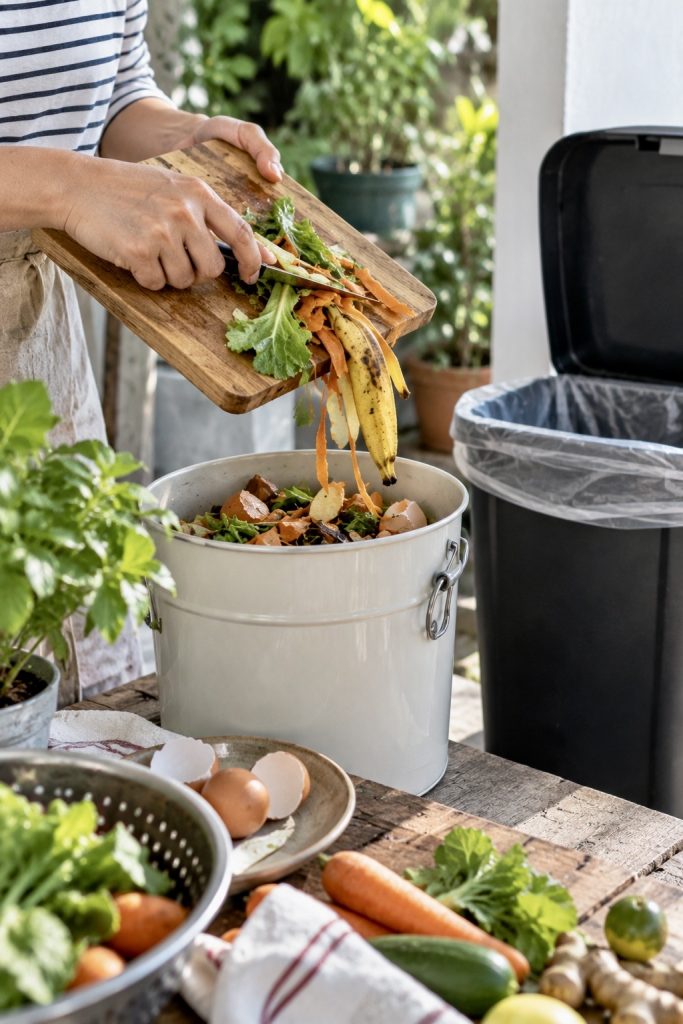 Photo: This AI-generated image is for illustrative purposes only.
Vegetables were the most frequently wasted raw food category at 29.1 per cent, followed by fruits at 22.4 per cent and fish or seafood at 15 per cent.
For cooked or processed food, rice accounted for the largest share at 16.7 per cent, followed by vegetables at 15.8 per cent and takeaway food at 13.8 per cent.
Individually, a vegetable peel or handful of leftover rice may seem insignificant. Collectively, they become a waste stream.
So perhaps the question is: How much of what we throw away could have another life?
Your compost bin has four jobs
Composting is essentially nature’s recycling system.
In conventional composting, microorganisms break down organic material through a controlled process that needs four basic things: carbon, nitrogen, moisture and oxygen.
The carbon comes mainly from “browns” such as dry leaves, twigs and shredded cardboard, while “greens” such as fruit and vegetable scraps and coffee grounds provide nitrogen.
The US Environmental Protection Agency (EPA) recommends roughly two to three times as much brown material as green material by volume in a home compost pile.
Food scraps can also be covered with dry material to help manage moisture and discourage pests.
Think of it as a very slow, earthy recipe: browns + greens + moisture + air + time.
That is really the heart of it.
Start small
The good news is that composting does not have to begin with a huge backyard pile.
For someone living in a terrace house, apartment or small home, the first step can simply be separating suitable kitchen scraps from the rest of the rubbish.
A small container can be used to collect fruit and vegetable scraps before they are transferred to the chosen composting system.
Dry leaves, shredded cardboard or other suitable brown material can be kept separately so they are ready when needed.
 Food scraps such as vegetable peelings, fruit skins and eggshells are placed in a composting box instead of being thrown into the rubbish bin. Photo: This AI-generated image is for illustrative purposes only.
The important thing is consistency rather than quantity.
A household does not need to compost every single scrap from day one. Starting with vegetable trimmings, fruit peels and coffee grounds can make the process easier to understand before expanding it.
Even a small amount diverted from the general waste bin is still material that does not have to follow the usual waste route.
And perhaps that is the easiest way to think about composting: Don’t try to change everything at once. Just change what happens to the next handful of scraps.
The smell test
Nobody wants a compost bin that smells like yesterday’s dinner. But an unpleasant smell does not necessarily mean composting has failed.
It can mean the pile is too wet or lacks oxygen. Adding dry, carbon-rich material and turning the pile can improve airflow.
If it is too dry, decomposition may slow down, so some moisture may be needed.
A well-maintained compost pile can take around three to five months to produce finished compost, according to the EPA.
The result should be dark, loose and crumbly, with most of the original food scraps no longer recognisable.
For beginners, fruit and vegetable scraps, coffee grounds, dry leaves and other suitable plant materials are a simple place to start.
Meat, fish, bones, dairy products, fats, oils and grease should generally stay out of a basic backyard compost pile because they can attract pests and may not break down properly.
Sarawak’s own example
For Kuching residents, the idea is not entirely new.
Kuching North City Commission (DBKU) has been promoting EM Bokashi Home Composting for almost two decades, encouraging households to process kitchen waste and turn it into organic fertiliser.
The programme aims to reduce household waste, while the resulting fertiliser can be used for backyard farming and to benefit soil and plants.
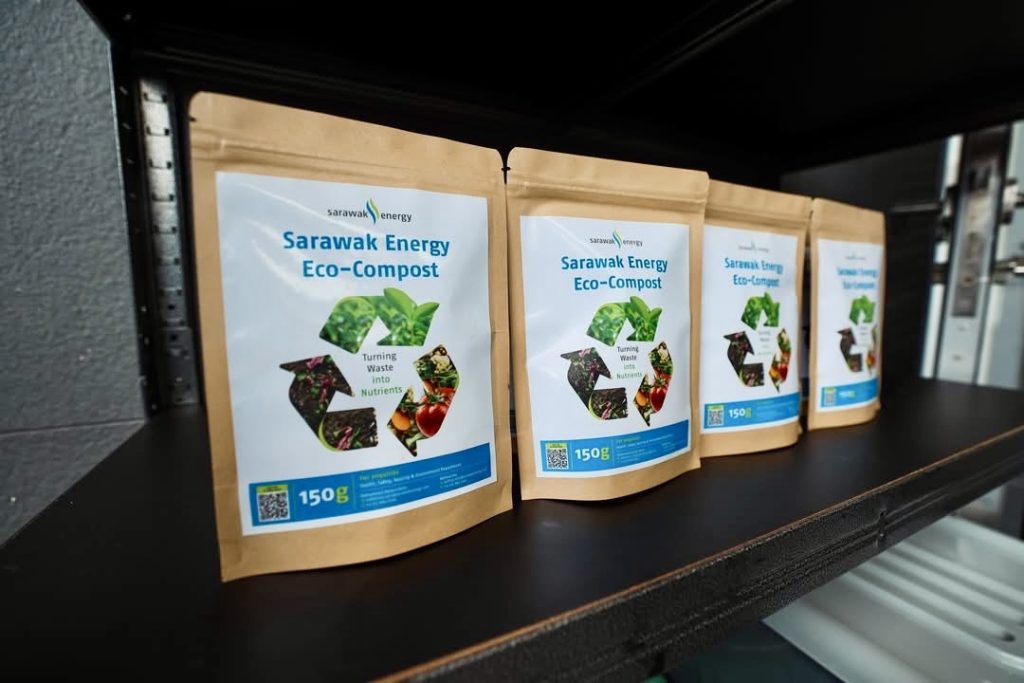 Sarawak Energy’s Eco-Compost, produced through its food waste composting initiative, gives organic waste a second life as compost. Photo: Sarawak Energy Berhad/Facebook
It remains available to residents within DBKU’s jurisdiction, who can register with the Environmental Health Division to receive an EM Bokashi kit and training.
The approach is also being adopted in a corporate setting.
In March 2026, Sarawak Energy introduced a Food Waste Composting and Recycling Hub at Menara Sarawak Energy, using an on-site system to process organic waste at source and convert it into nutrient-rich compost within 24 hours.
The company said the compost can be reused for landscaping and greenery, while approximately 60kg of food and garden waste was diverted from disposal between January and March.
The initiative is part of Sarawak Energy’s Circularity Framework under its Waste Reduction Strategy.
From food to soil — and back again
Composting, however, should not become an excuse to waste food.
Preventing food from becoming waste in the first place still matters most — buying only what we need, storing food properly and making use of leftovers.
But some scraps are unavoidable.
Vegetable skins. Fruit peels. Coffee grounds. Garden leaves.
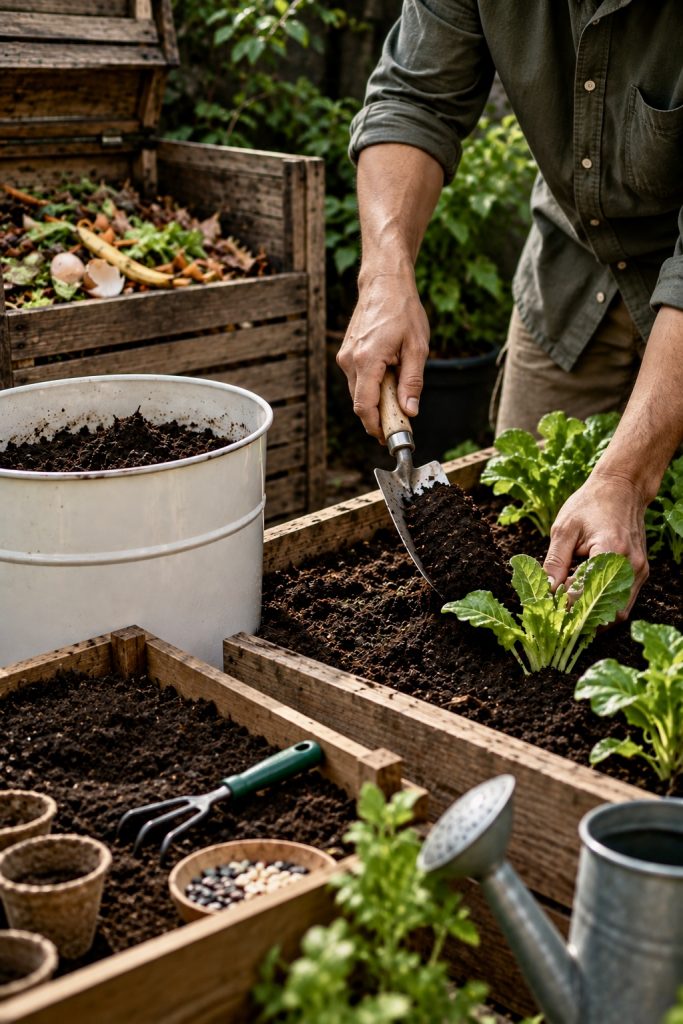 Finished compost is worked into the soil around young vegetables, returning organic matter to the garden. Photo: This AI-generated image is for illustrative purposes only.
Instead of: Food → bin → disposal, the journey can become: Food → scraps → compost → soil → food.
The EPA notes that compost can improve soil structure and its ability to retain moisture and nutrients, while returning organic matter to the soil.
And suddenly, the banana peel in the kitchen bin looks a little different.
It is not simply something to get rid of. It is material that can still have a purpose.
Perhaps the clean-up starts before the bin
World Cleanup Day is a reminder that keeping our surroundings clean is everyone’s responsibility.
But perhaps the clean-up can begin a little earlier — before something reaches the rubbish bin.
It can begin when we buy only what we need.
When yesterday’s leftovers become today’s lunch. When vegetable scraps are separated instead of mixed with everything else. When dry leaves are seen not as rubbish, but as one of the ingredients in a compost pile.
There is nothing particularly dramatic about it. No large clean-up crew. No truckload of rubbish.
Just a household deciding that some things do not have to become rubbish simply because they are no longer wanted at the dinner table.
Perhaps that is another way to look at World Cleanup Day.
Cleaning up is not always about finding more rubbish to pick up. Sometimes, it is about creating less rubbish to pick up in the first place.
And the next time a banana peel lands in your hand, perhaps the question does not have to be: “Where should I throw this?”
It could simply be: “What else could this become?”





 English (US) ·