
 13 hours ago
5
13 hours ago
5
ADVERTISE HERE
KOTA SAMARAHAN: The future of Southeast Asian literature must remain rooted in human experiences and cultural identity despite the rapid advancement of artificial intelligence (AI).
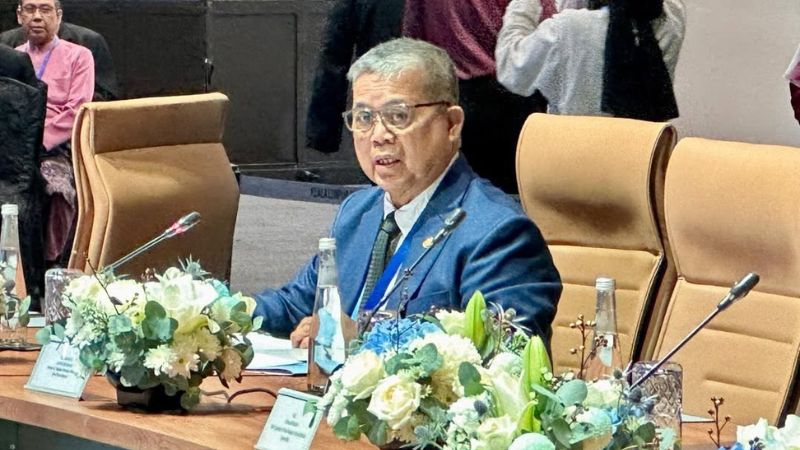
Dewan Bahasa dan Pustaka (DBP) board member Datuk Dr Jeniri Amir said AI should be viewed as a tool to expand human creativity and voices rather than replace the role of people in shaping language and literature.
He said technology could assist in translating literary works, locating manuscripts, giving lesser-known languages greater exposure and connecting literary works across Southeast Asian countries.
“Language can be produced by machines, but meaning must be entrusted to humans. We should use AI to amplify the human voice, not replace it,” he said.
Dr Jeniri said this when officiating the 2026 Southeast Asian Literature International Seminar (SAKAT 2026) at Pusat Islam Tun Abang Salahuddin (PITAS), Universiti Malaysia Sarawak (UNIMAS), here today (Sep21).
He stressed that technological advancement should not come at the expense of human relevance, as technology should ultimately enable more people to have their voices heard.
“However, if this technology makes humans irrelevant, then it is not good technology because technology should enable more people to be heard,” he said.
According to Jeniri, the future of Southeast Asian literature also depends on the ability of people across the region to read and understand one another’s works despite differences in language, ethnicity, religion and national borders.
He said the rise of AI presented an irony, with machines increasingly capable of processing millions of documents rapidly while people remained unfamiliar with literary works from neighbouring countries.
“Humans should not lose the ability to understand one another’s stories. We must not allow algorithms to become more diligent readers of Southeast Asia than we are,” he said.
He said writers should not attempt to compete with AI in terms of producing written material quickly, but instead concentrate on documenting human experiences.
“This includes remembering what people want to forget, questioning what is accepted without question and giving a voice to those who have no platform,” he said.
Jeniri said writers also had an important role in preserving Southeast Asian identity and collective memory through pantun, poetry, hikayat, novels, minority languages and the diverse experiences that shaped the region.
He posed a question on what should ultimately be protected as technology progresses, particularly concerning ancestral languages and those increasingly being learned by AI.
“My answer is neither technology nor nostalgia, but humanity. Our ability to remember, feel, imagine, doubt, love, suffer and give meaning to our experiences must be preserved,” he said.
“Technology may write the future together with us, but humans must ensure that the future still has a soul,” he added.






 English (US) ·