


 6 months ago
124
6 months ago
124
ADVERTISE HERE
KUALA LUMPUR: A secret meeting between his coalition partner and the opposition, a long-time ally rethinking their ties, a former protege-turned-critic, and allegations besieging the country’s anti-graft chief.
These developments that are occurring almost concurrently now pose potentially the most serious threat to Malaysia Prime Minister Anwar Ibrahim in his tenure so far, say insiders and observers.
They add that the pressure on Anwar and his “Unity Government" – a broad coalition built from several major alliances led by Anwar's four-member Pakatan Harapan (PH) – has reached an extent that it may force him to call early elections, nearly two years ahead of the February 2028 deadline.
Of particular concern is a little-known meeting in Bangkok in mid-December, which reportedly took place between key leaders from the United Malays National Organisation (UMNO) - a crucial Unity Government member - and two opposition parties, Parti Pribumi Bersatu Malaysia (Bersatu) and Parti Islam Se-Malaysia (PAS), sources told CNA.
UMNO president Ahmad Zahid Hamidi, who is also one of two deputy prime ministers, reportedly attended with party secretary-general Asyraf Wajdi Dusuki.
Bersatu was represented by its former deputy president Hamzah Zainudin, and PAS by secretary-general Takiyuddin Hassan, sources familiar with the situation told CNA.
Hamzah was sacked from Bersatu last month amid a public spat with party chief and former prime minister Muhyiddin Yassin and after allegedly breaching the party’s constitution, according to a letter dated Feb 13 that circulated on messaging platforms.
Hamzah recently confirmed that discussions were underway for him to take over Parti Keluarga Malaysia.
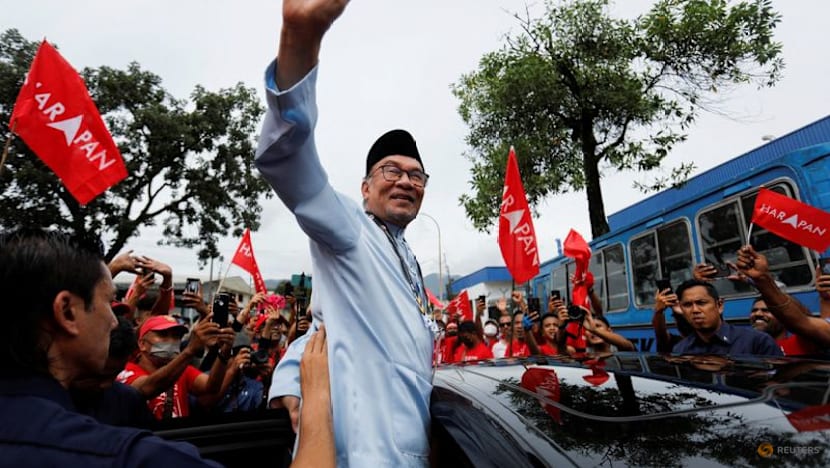 Malaysian Prime Minister Anwar Ibrahim is facing a complex mix of challenges that potentially pose the most serious threat to his premiership since coming to power in Nov 2022, say insiders and observers. (File photo: Reuters/Hasnoor Hussain)
Ahmad Zahid did not inform Anwar of the Bangkok meeting, according to sources in the administration who wished to remain anonymous.
The UMNO leader only acknowledged it after being confronted by Home Minister Saifuddin Nasution Ismail, who had been alerted by Thai intelligence, the sources told CNA.
While Ahmad Zahid insists he and UMNO remain committed to the Unity Government, a senior businessman who consults regularly with the premier said "there are trust issues with UMNO now."
PRESSURE MOUNTS FOR EARLY POLLS
Separately, pressure is building within the Democratic Action Party (DAP) – PH's largest component – to push Anwar to hold the country's 16th general election simultaneously with three state polls due before the government's term expires, according to PH politicians.
The next general election in Malaysia is scheduled to be held by Feb 17, 2028, but insiders and analysts told CNA in an earlier report that preparations are underway with Anwar seeking to exploit the strong economy and the opposition infighting.
“The pressure is building against him (PM Anwar) as if a perfect storm is brewing,” said an owner of a boutique financial advisory, who has tracked Malaysian politics for decades.
"Early federal polls are looking like a near certainty. Sabah and Sarawak want it, and so does DAP," former law minister Zaid Ibrahim told CNA.
The DAP – a staunch supporter of Anwar through his more than two decades as a progressive opposition leader – is widely seen as a Chinese-majority party, reflecting the views of the Malaysian Chinese community.
But its loss of all eight seats contested in November's Sabah state assembly elections has exposed simmering disenchantment among its traditional Chinese voter base.
Once the vocal counterbalance to Malay-dominated politics, DAP is now seen by many as subservient in Anwar's government. This loss of credibility through compromise is forcing a reckoning, DAP leaders privately acknowledge.
"DAP now sees (Parti Keadilan Rakyat) PKR and Anwar as weak allies. Many leaders want to leave PH and go solo upon Parliament's dissolution to regain lost ground among non-Malay communities," said former DAP state assemblyman Ronnie Liu, who remains in close contact with former colleagues.
Another senior DAP MP, speaking on condition of anonymity, said the party leadership faces "heavy pressure from its increasingly disenchanted traditional non-Malay voter base".
The pressure has prompted DAP secretary-general Anthony Loke to demand that Anwar decide quickly whether to align federal and state elections, and whether to maintain the current PH coalition framework.
“The election dates and the dissolution of the state legislative assemblies will take place within a relatively short period — within the next few months.
“So the consideration that must be decided by the prime minister is whether we want to continue the Madani government cooperation model … this unity government model, for the next election,” Loke said, as quoted by local media platform Malaysiakini.
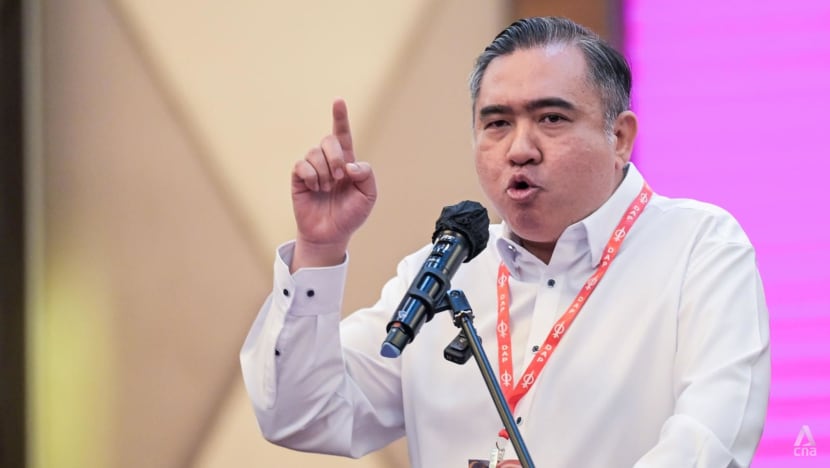 DAP secretary-general Anthony Loke, a senior minister in Malaysia's ruling coalition government, is coming under pressure from his own party, which is hemorrhaging support from its base of ethnic Chinese voters, reportedly due to widespread unease with the Anwar administration. (File Photo: CNA/Fadza Ishak)
He also announced last month that DAP will be holding a special congress on Jul 12, where delegates will vote on whether party leaders should resign all government positions - ministerial posts, state executive councillor roles, and positions in government-linked companies.
MACC WOES
Separately, Anwar is also facing pressure from the allegations of widespread misconduct at the Malaysian Anti-Corruption Commission (MACC), casting doubt on his pledge to tackle graft.
A key issue is the scandal engulfing the MACC chief Azam Baki.
Bloomberg reported in February that Azam owned millions of shares in public listed companies, allegedly breaching civil servant limits, and that businessmen had colluded with MACC officers to orchestrate hostile takeovers of listed firms.
The reports alleged that MACC officials used raids and intimidation to force executives into selling shares to groups dubbed the "corporate mafia" by media reports.
Azam denies the allegations and has filed a RM100 million (US$25 million) defamation suit against Bloomberg, which stands by its reporting. The MACC denies collusion with business groups.
Anwar – who was critical of the MACC and Azam before becoming premier – has said that he disagreed with the Bloomberg allegations and has rejected calls to put Azam on leave pending an investigation into his shareholdings, according to media reports.
Anwar last week told Parliament that recent large-scale MACC investigations had sparked plots to topple his government, with unnamed parties using foreign media to discredit the agency.
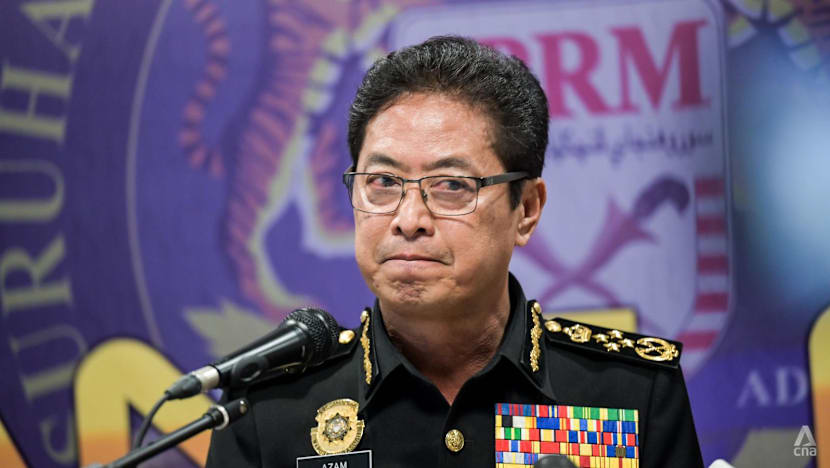 Embattled Azam Baki, Chief Commissioner of the Malaysian Anti-Corruption Commission (MACC), is under heavy public scrutiny following international media reports over allegations of irregular share purchases and suspected serious misconduct in the anti-graft agency. (Photo: CNA/Fadza Ishak)
He claimed international reports were part of a "Zionist" agenda to undermine Malaysia's economic strength and institutions.
The allegations, along with existing concerns over the slow progress of governance reforms, have pushed the DAP to rethink its ties, according to media reports.
DAP has called for Azam's immediate replacement and a Royal Commission of Inquiry into the alleged criminal collusion between business groups and the MACC.
Party officials now question whether to advance their planned congress if Anwar persists in rejecting calls for a Royal Commission on the MACC, PH politicians told CNA.
“I expect the party to evaluate its position in the relevant coalitions when the time comes for elections, to determine the best strategy going forward,” the DAP's disciplinary chief Tony Pua told Reuters.
Pua, however, said the party will not withdraw support for the government this term as it does not want to cause political instability.
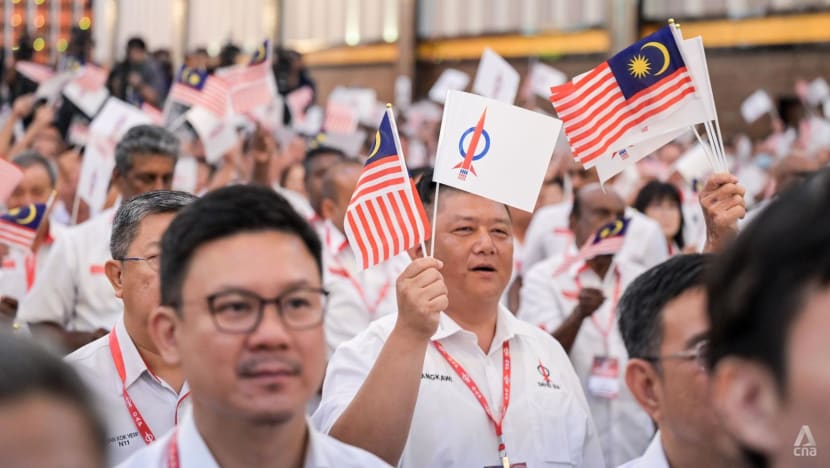 DAP members at the party's 18th national congress in Shah Alam, Selangor on Mar 16, 2025. The party has called for Azam's immediate replacement and a Royal Commission of Inquiry into the alleged criminal collusion between business groups and the MACC. (Photo: CNA/Fadza Ishak)
PKR FACTIONAL WAR
Anwar's defence of Azam and the MACC coincides with deepening fissures in his own PKR.
The main opposition comes from his former deputy president and ex-Economy Minister Rafizi Ramli, who leads a growing faction of dissenters.
Rafizi, deposed as PKR deputy president in a divisive party election last May, has publicly attacked Anwar over his MACC defence. He resigned from the Cabinet following his defeat and claims the MACC has been weaponised to target government opponents.
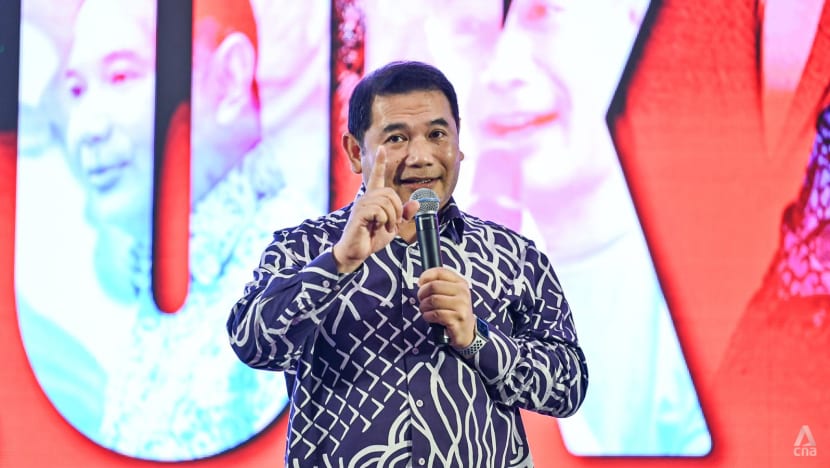 Former PKR deputy president Rafizi Ramli, once seen as the politician to most likely succeed Anwar, has turned into his most serious critic. (Photo: CNA/Zamzahuri Abas)
His open criticism has further split PKR, which holds 31 parliamentary seats in the Unity Government. PKR sources say Rafizi's faction includes eight other elected representatives.
These troubles expose the delicate political arithmetic holding Anwar's government together, said analysts.
PH holds 79 seats in the 222-member lower house, making it the largest single coalition, but short of a simple majority. It relies on UMNO and the Sabah and Sarawak coalitions to govern.
This is why the Bangkok meeting is viewed by Anwar as a potential challenge, said insiders.
PKR sources briefed of the meeting in the Thai capital by Malaysian security agency officials said Hamzah initiated the gathering while locked in a leadership battle with Bersatu president Muhyiddin.
Hamzah reportedly expressed confidence he would replace Muhyiddin, claiming support from most of Bersatu's 19 MPs. Once elevated, he planned to forge a pact with UMNO and PAS.
PAS holds 43 parliamentary seats, UMNO 26. Together, these exclusively Malay parties would command 88 MPs – larger than PH's contingent.
Whether they could persuade the Sabah and Sarawak parties to switch sides remains unclear.
But Muhyiddin struck back through the party's disciplinary committee, purging his rivals last month.
He dismissed Hamzah for gross insubordination, and in recent days the Bersatu president has cited the unauthorised Bangkok meeting as the primary cause. Sixteen other top-tier leaders, including three MPs aligned with Hamzah, were also expelled.
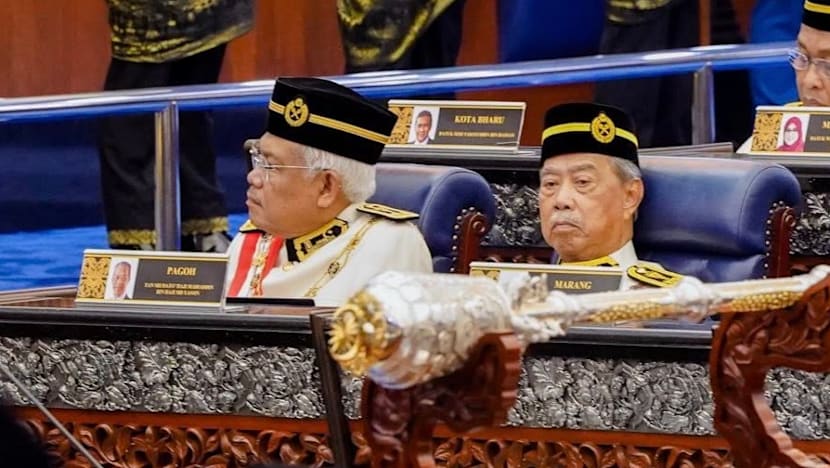 Then-Bersatu deputy president Hamzah Zainudin (left) and president Muhyiddin Yassin in Parliament in January 2026. Hamzah reportedly expressed confidence he would replace Muhyiddin, claiming support from most of Bersatu's 19 MPs. (Photo: Facebook/Hamzah Zainudin)
BREATHING SPACE, FOR NOW
While early polls may now be anathema to Anwar’s own political calculations, it remains a very real prospect, analysts said.
December marked the start of the final two years of the 15th Parliament of Malaysia which convened on Dec 19, 2022.
Under Malaysia’s electoral rules, Parliament will automatically dissolve on Dec 19 2027 and elections must be held within 60 days.
But in the meantime, the terms of the state administrations of three Melaka, Sarawak and Johor end in December 2026, February 2027 and April 2027 respectively.
There is widespread speculation that both the UMNO states of Melaka and Johor could suspend their respective state assemblies sometime in September this year, ahead of fresh elections.
The stakes are high for Anwar, who in private conversations with allies, has expressed his determination to secure a second term in office.
In recent weeks Anwar has highlighted his government's achievements – a stable economy, strengthening currency, and a buoyant stock market that enabled the state-owned Employees Provident Fund, the cornerstone of retirement planning for ordinary Malaysians, to declare a 6.15 per cent dividend for 2025, paying out RM79.6 billion to contributors.
Independent pollster Ibrahim Suffian, who heads the Merdeka Center for Opinion Research, told CNA that Anwar’s chances remain in the positive territory despite public anger over the premier’s backing of the MACC and other domestic issues, such as the government handling of the unauthorised construction of Hindu temples and licenses for pig farming.
“I see a repeat of the last election, where we will have a hung Parliament with PH securing the largest block to form a government. The prospect of a second term is still there,” he said.
Azmi Hassan, a fellow at the Nusantara Academy for Strategic Research, believes, however, that an early poll would not be in Anwar’s favour.
"Now is not the right time for polls. The government's popularity is weak due to so many issues, particularly Anwar's failure to craft a coherent policy on bread-and-butter issues," he told CNA.
Agreeing, veteran politician Ronnie Liu, a former DAP state assemblyman, said "the current report card for PH is very weak due to the failure to deliver on past election promises."
But the timing may no longer be Anwar's to determine, said analysts.
"Coalition partners are threatening to leave him, and that could force his hand," Liu said. "In this situation, anything can happen."






 English (US) ·