
 7 hours ago
10
7 hours ago
10
ADVERTISE HERE

Asfia (front, centre) in a photocall with other distinguished guests and participants. – Photo by Roystein Emmor
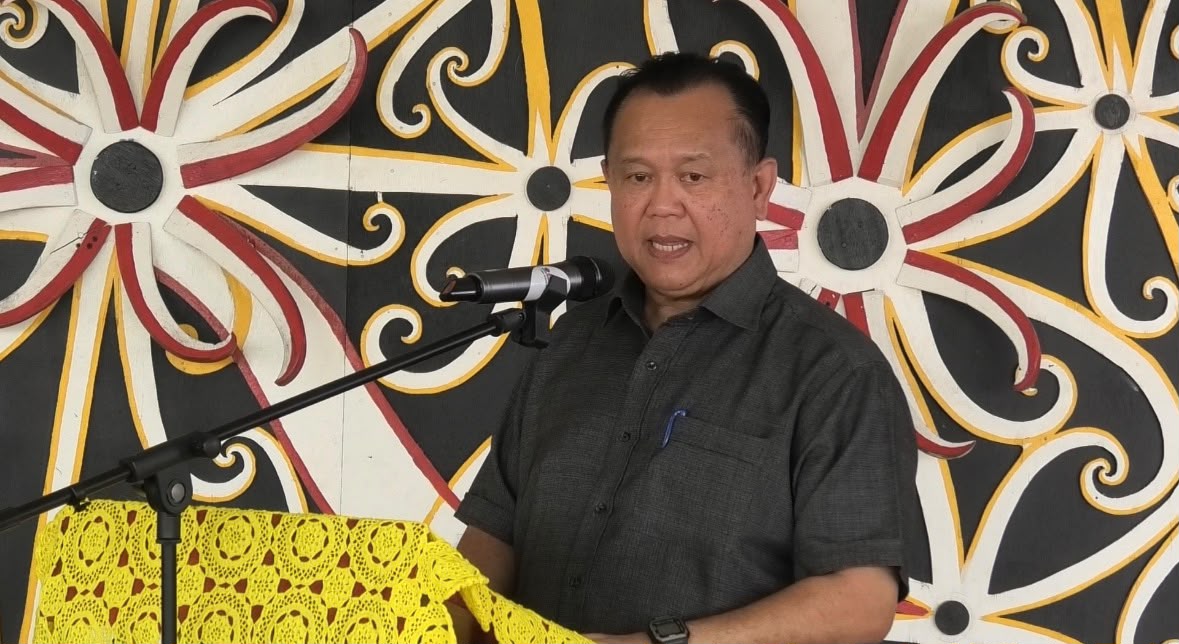
KUCHING (Sept 22): Sarawak’s future leaders must broaden their horizons and be prepared to engage confidently on the international stage, said Sarawak Legislative Assembly (DUN) Speaker Tan Sri Datuk Amar Mohamad Asfia Awang Nassar.
He said proficiency in an international language, particularly English, was important for young people aspiring to leadership in an increasingly interconnected world.
“You must not be scared to speak another international language if you want to be a leader of the future,” he said during the “Seminar Aku Kasih Malaysia: Pimpinan Belia Negeri Sarawak” at the DUN Auditorium in Petra Jaya here today.
Asfia said English was widely used in international diplomacy, trade and commerce, as well as in science, technology and artificial intelligence.
“As you visit the world, the world visits you,” he said.
He said young leaders would increasingly interact with foreign leaders, parliamentarians, businesses and visitors, making the ability to communicate internationally an important skill.
“How can you speak on the Asean forum? How can you speak in a forum of the United Nations? And when you speak to foreign visitors, when you meet foreign MPs, what language will you speak?” he asked.
Asfia recalled attending a Commonwealth parliamentary meeting in Namibia where some Malaysian MPs left because they could not understand the language being used.
“Do you expect the Namibians and Africans to speak Malay?” he questioned.
He urged young Sarawakians not to limit themselves to their immediate surroundings, but to have the confidence to engage and make an impact beyond their own environment.
Asfia also cautioned against viewing English negatively, noting that the language had evolved through the incorporation of words from many other languages and had become an important medium of international communication.
Turning to governance, he urged the younger generation to understand how political and governmental systems evolve rather than taking existing institutions for granted.
“All systems evolve. The question is in what direction is that system evolving?” he said.
Asfia said Malaysia practised a parliamentary democratic system and explained different forms of democracy, including the first-past-the-post electoral system used in Malaysia and preferential voting systems.
He also discussed what he described as some limitations of democracy, citing situations where immediate economic concerns, such as access to food, could take precedence over the form of government.
Asfia also highlighted the distinction between unitary and federal systems, stressing the importance of understanding Malaysia’s federal structure.
He said Sarawak and Sabah had their own governments, constitutions, governors and chief ministers before the formation of Malaysia in 1963.
Touching on Sarawak’s history, he stressed that the state’s history predated the arrival of James Brooke, noting that Sarawak had been under the Sultanate of Brunei before the establishment of the Brooke administration.
He also outlined the circumstances surrounding James Brooke’s involvement in Sarawak and the subsequent Brooke administration under James Brooke, Charles Brooke and Charles Vyner Brooke.
Asfia further highlighted the distinctive nature of the Sarawak DUN, noting that its members could speak in English, Malay and native languages.
He contrasted this with proceedings in the national Parliament, while stressing that multilingual ability remained practically important for leaders engaging with international counterparts.
Responding to a question from a youth participant, Asfia said society needed to cultivate a positive culture that allowed talented young people to develop and rise based on their abilities.
He said some cultures could discourage or hold back younger or more capable individuals who might otherwise have the potential to advance into leadership positions.
“We pray that we get a positive culture that encourages those who are talented, those who are young,” he said.
He said those in positions of influence should be willing to recognise ability and give credit where it was due.
“If the suppressor is clever, beautiful, so be it. You have to give credit when it is due,” he said.
Asfia cited the election of former United States president Barack Obama as an example of a society allowing an individual from a minority background to rise to the country’s highest political office.
He contrasted this with cultures that prevent talented young people from advancing.
“But when there’s a culture that doesn’t want the best to go up, that culture is doomed to destroy itself,” he said.
Asfia urged young people to make full use of the opportunities available to them to acquire knowledge, broaden their horizons and prepare themselves for leadership.
He cited a saying attributed to Saidina Abu Bakar, the first Rashidun Caliph and a close companion of Prophet Muhammad, on the importance of young people in determining a country’s future.
“If you want to know the future of a country, look at the faces of its young people,” he said.
He also referred to former Indonesian president Sukarno’s emphasis on the potential of young people to bring about major change.
“Make use of your youth,” he added.





 English (US) ·