
 2 hours ago
4
2 hours ago
4
ADVERTISE HERE
Wherever the art of medicine is loved, there is also a love of humanity.
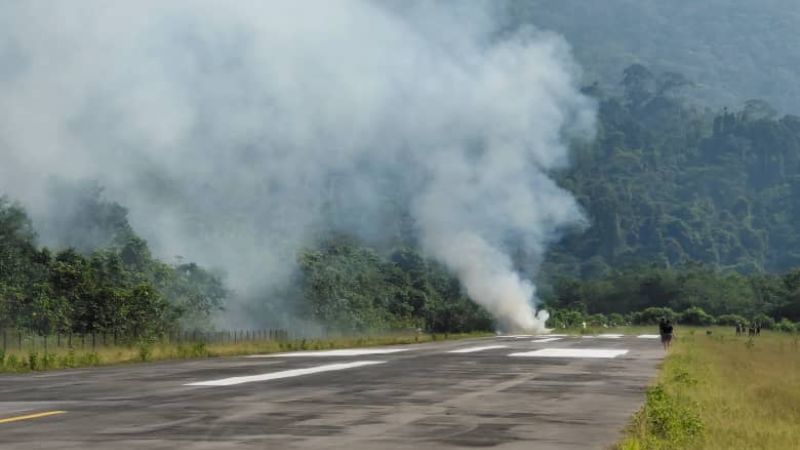
– HippocratesFive lives have been lost in the Long Lellang helicopter tragedy, and while Sarawak mourns, there is one question that refuses to leave my mind: must somebody die before we suddenly discover that something in the system needs reviewing?
It is a cruel question to ask when families are grieving, but perhaps this is precisely when it must be asked, because if we quietly offer condolences, hold investigations, issue statements and then move on, we would have learnt nothing from the deaths of pilot Captain Zainol Afiq, medical officer Dr Ainul Baraah Kamaruddin, medical assistant Alexson Adit and nurses Debra Moset and Jessie Paya.
These were not people taking a joyride over the beautiful Sarawak countryside; four of them were healthcare personnel travelling on official duty to serve people living in areas where access to medical treatment is difficult.
Flying Doctor Service (FDS) personnel go where many of us would hesitate to go, flying into remote settlements, sometimes through unpredictable weather, spending long and stressful hours away from the comfort and safety of hospitals and clinics because somebody in the interior needs a doctor, medical assistant or nurse.
Then we learnt about the princely sum supposedly meant to recognise this responsibility: RM30 per return flight under the Air Health Service Incentive Payment. Yes, ladies and gentlemen, RM30, an amount introduced in 1978 and which, according to the information now available, has remained unchanged despite everything else around us becoming more expensive over nearly half a century.
Are we living in some Kunta Kinte era where workers are expected to accept whatever crumbs are thrown their way and remain grateful? I ask that deliberately because it is difficult to comprehend how an allowance connected with such demanding duties could survive from 1978 until 2026 without someone somewhere saying: “Hey, perhaps RM30 no longer makes sense.”
Forty-eight years! During that period, salaries have changed, prices of petrol have changed, insurance premiums have changed, hotel rates have changed, the cost of a plate of noodles and satay has changed and, I am quite certain, allowances and benefits enjoyed by politicians have not remained frozen since 1978!
Even the wages of our kuli keng have been revised over the decades, yet people whom we put into helicopters to carry medicine and medical expertise into remote Sarawak were apparently still entitled to an incentive conceived when Jimmy Carter was president of the United States.
What was the Health Ministry thinking all these years, and how did such an obvious anachronism escape review after review, budget after budget and administration after administration?
Health Minister Datuk Seri Dr Dzulkefly Ahmad has confirmed that the allowance structure is being reviewed and that a proposal to improve staff welfare and FDS allowances had already been tabled before the tragedy.
That is welcome, but it inevitably raises another question: why did it take so extraordinarily long for a payment introduced in 1978 to reach this stage, and why must public attention so often become intense only after tragedy strikes?
There are even more disturbing questions arising from accounts now circulating among healthcare professionals. Medical officer Dr Justine Sim Wei Yang recalled that during a 2018 helicopter transfer from Miri, he allegedly received no dedicated aviation safety training covering matters such as brace positions, rotor hazards, fires, hard landings or emergency evacuation procedures, while an indemnity document was prepared for him to sign before boarding.
That is his account and it should be properly investigated rather than automatically treated as proof of what happened on every FDS flight. But surely it is reasonable to ask whether every doctor, nurse and medical assistant required to fly on official duty should receive structured aviation safety training, proper insurance protection and clear information about emergency procedures before setting foot inside an aircraft.
Other doctors have spoken about frightening experiences during Medevac flights, including emergency landings and flying through dangerous weather while caring for critically ill patients. These accounts remind us that medical personnel aboard these aircraft are not merely passengers; they may be simultaneously dealing with frightened or seriously ill patients while confronting risks completely different from those faced inside a hospital ward.
This is why Hartal Doktor Kontrak’s demand for thorough scrutiny of aircraft, facilities, maintenance records and operating procedures deserves attention, just as the Malaysian Medical Association’s call for the highest possible protection for healthcare workers deserves serious consideration. Essential services must certainly continue because rural Sarawakians cannot be deprived of healthcare, but continuity must never become an excuse for compromising the safety of those providing that service.
Nobody should jump ahead of the Air Accident Investigation Bureau and declare what caused the Long Lellang crash; investigators must be allowed to establish the facts professionally and independently. Questions surrounding the age or condition of the aircraft, maintenance, operational procedures or any other possible factor must therefore be answered by the appropriate aviation authorities on evidence, not speculation.
The Health Ministry’s decision to temporarily suspend the FDS pending investigation is therefore understandable, provided alternative arrangements are put in place so rural communities are not abandoned. Medevac operations are continuing through cooperation with the Fire and Rescue Department, while discussions with the armed forces on using its assets for emergency patient transport are also sensible measures during this difficult period.
I also welcome the ministry’s promise to comprehensively examine FDS contracts, governance, operational safety, coverage requirements and the overall delivery model. But please, let this be a genuine review with consequences, not another committee producing another beautifully bound report which eventually gathers dust until the next tragedy forces somebody to pull it from a cupboard.
There is another side to this tragedy that deserves recognition, and here the Sarawak GPS government has demonstrated what meaningful compassion looks like. Premier Datuk Patinggi Tan Sri Abang Johari Tun Openg announced RM100,000 assistance for each of the five victims’ families, while Yayasan Sarawak will bear the education costs of their children who are still schooling.
No amount of money can replace a husband, wife, father, mother, son or daughter, and nobody pretends otherwise. But such assistance tells bereaved families that the service and sacrifice of their loved ones are recognised in a tangible way, and ensuring that their children’s education is protected is particularly meaningful because those children should never have to pay another price for the tragedy that has already changed their lives.
Now the federal authorities must go further than reviewing RM30. They should examine risk allowances, insurance protection, indemnity arrangements, safety training, emergency procedures, aircraft standards, maintenance requirements, contractual responsibilities and every other safeguard surrounding personnel who take to the skies in order to deliver healthcare to communities that geography has placed far from conventional medical facilities.
And please do not tell us that there is no money. When governments can find billions for grand projects and when allowances elsewhere can be adjusted as circumstances change, surely this country can find enough to properly compensate and protect doctors, nurses, medical assistants and others whom it asks to undertake additional risks in the service of rural Malaysians.
The FDS has served remote communities in Sarawak since 1973 and remains far too important to be casually discarded. The answer is not to kill FDS; the answer is to make it safer, better governed, properly equipped and worthy of the courageous professionals who climb aboard those aircraft knowing that somewhere beyond the mountains, rivers and forests, somebody is waiting for them.
Above all, let Long Lellang end one particularly Malaysian habit: waiting until somebody dies before we discover a problem worthy of urgent attention.
If something is outdated, review it today; if something is unsafe, fix it today; if our frontline personnel deserve better protection, give it today, because the next review should never have to begin with five coffins.
The views expressed here are those of the columnist and do not necessarily represent the views of Sarawak Tribune. The writer can be reached at [email protected]



 English (US) ·