


 4 months ago
280
4 months ago
280
ADVERTISE HERE
JAKARTA: A new mechanism to tighten state control over key commodity exports is Indonesia President Prabowo Subianto’s latest push to plug what he says are long-running revenue leakages costing the government billions.
Experts say the move is well-intended, but could unsettle businesses if the new export control body takes a heavy-handed approach.
The export mechanism, overseen by a new export body, Danantara Sumber Daya Indonesia (DSI) under sovereign wealth fund Danantara, will manage key commodities, including crude palm oil, coal, and ferroalloys, said Prabowo during a rare address in parliament on Wednesday (May 20).
He added that Southeast Asia’s largest economy has lost as much as US$908 billion in revenue over the last 34 years because its commodities were sold at a discount.
Nickel pig iron, a low purity nickel metal which makes up the majority of Indonesia’s nickel exports, and some refined palm oil products will be exempt from the centralistion, Coordinating Minister for Economic Affairs Airlangga Hartarto said on Thursday, according to media reports.
The plan signals a stronger control over natural resources and a belief that Indonesia has not captured enough value from its own commodities through underpricing, experts told CNA.
But they warned that its success will depend on implementation and how exactly the body will oversee exports of these commodities.
“This is not yet clear,” said Yusuf Rendy, an economic researcher from think tank Center of Reform on Economics (CORE) Indonesia.
Danantara’s chief executive officer Rosan Roeslani said at a press conference on Wednesday that the body’s aim was to ensure exporters were being truthful in their reports, by comprehensively checking whether figures mentioned in their trade documents aligned with the global market index.
Rosan, however, stayed tight-lipped on the leadership structure of the export body, saying that the top positions will go to the people who have a good grasp of the industry.
He added that the agency was also “open” to having qualified foreigners in senior positions.
Experts also expressed concerns about whether DSI would operate transparently enough, or merely become a mandatory gatekeeper for exporters.
They added that the implications of the new regulation and DSI would be significant as the country’s commodity sectors are not just sources of export but also deeply linked to jobs, regional economies, industrial policy and fiscal stability.
"It's not just the conglomerates that will suffer, but rather the industries that employ millions of people, such as plasma farmers (farmers who partner with large companies through government programmes) that will suffer,” said economist Andry Satrio Nugroho, who heads the Center of Industry, Trade and Investment at the Institute for Development of Economics and Finance (INDEF).
STATE-LED ECONOMY
The government wants a bigger role in deciding how natural resources are sold, priced and monitored, said economist Wijayanto Samirin from Paramadina University.
This reflects Prabowo’s broader economic vision towards a more centralised, state-led model, he added.
“He addressed the direction of the economic policy, in which the government plays an increasingly important role, particularly regarding the export of natural resources,” said Wijayanto.
Besides DSI, Prabowo has launched other initiatives that demonstrate how the economy has become more state-led.
“Other programmes include the Red-White village cooperative and the free meal programmes that are managed and funded centrally,” Wijayanto said.
“Various decisions also appear to be top-down, without a public discourse process.”
Prabowo’s ambitious US$25 billion Red-White village cooperative initiative aims to help rural communities through programmes such as loans for underbanked farmers or subsidised goods and food aid.
His free meals programme is targeted at providing nutrition to 9 million schoolchildren and pregnant women. As of the end of April, around US$4.24 billion has been spent on the programme, according to media reports.
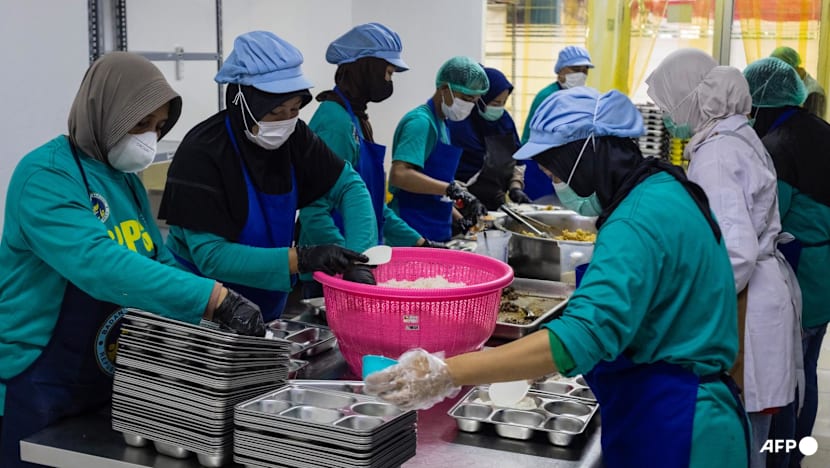 Workers prepare free nutritious meals at a Nutrition Fulfillment Service Unit (SPPG), part of a government programme to provide free nutritious meals for children and mothers through local kitchens aiming for nationwide implementation, in Bogor, West Java, on Oct 9, 2025. (Photo: AFP/Aditya Aji)
This is not the first time Indonesia has launched initiatives to increase state control over commodities.
Yusof noted that in the 1990s, the son of then-President Soeharto, businessman Tommy Soeharto, also established a special agency to oversee the trade of a crucial commodity at the time, cloves, but it did not succeed in increasing state revenue.
However, previous presidents were not as aggressive as Prabowo, said Wijayanto, adding that the country’s current eighth president appears to be confident that the government and state-owned enterprises can improve the economy.
Economist Andry from INDEF, said that stronger state control, particularly in strategic export sectors, would not necessarily solve the underpricing issue.
He said that the idea that Indonesia has been deprived of revenue through underinvoicing and transfer pricing is likely to resonate with voters, especially when framed as a matter of national sovereignty, but establishing a new body to fix the problems may not be the answer.
While the government could frame the policy as an effort to ensure that the country’s natural wealth benefits the Indonesian people rather than intermediaries, multinational buyers or politically connected exporters, the economic risks are equally clear, he said.
“If the new body becomes a single compulsory export channel, it could reduce competition (through monopolising the market), create uncertainty over pricing, delay transactions and limit the flexibility of private exporters,” said Andry.
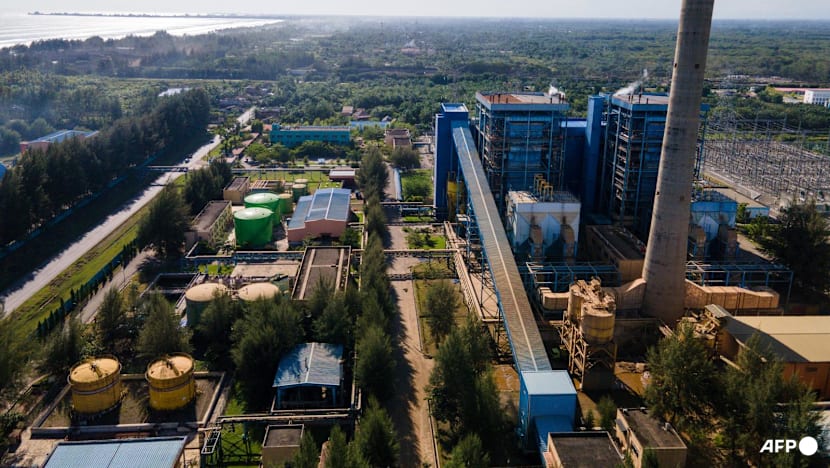 A general view of a coal powered plant in Nagan Raya, west coast of Aceh province on May 29, 2025. Experts warn that in sectors such as coal, where global buyers can switch suppliers or adjust contracts quickly, any disruption from a new mechanicms could carry costs. (Photo: AFP/Chaideer Mahyuddin)
In sectors such as palm oil and coal, where global buyers can switch suppliers or adjust contracts quickly, any disruption could carry costs, he added.
Between June and August, private companies are expected to turn over export transaction records and contracts to DSI, according to draft government regulation cited by the Jakarta Globe.
And by September, DSI is expected to manage all trade transactions between foreign buyers and domestic sellers.
All overseas contracts and export transactions will be handled by the state-owned entity, which will have full authority and responsibility over their management, the Jakarta Globe added.
Andry said that if the real problem is inaccurate export reporting, the government does not necessarily need to create a centralised export monopoly to solve it.
A more targeted solution, he said, would be to strengthen customs enforcement, improve data matching, compare export and import declarations across jurisdictions, and tighten tax audits.
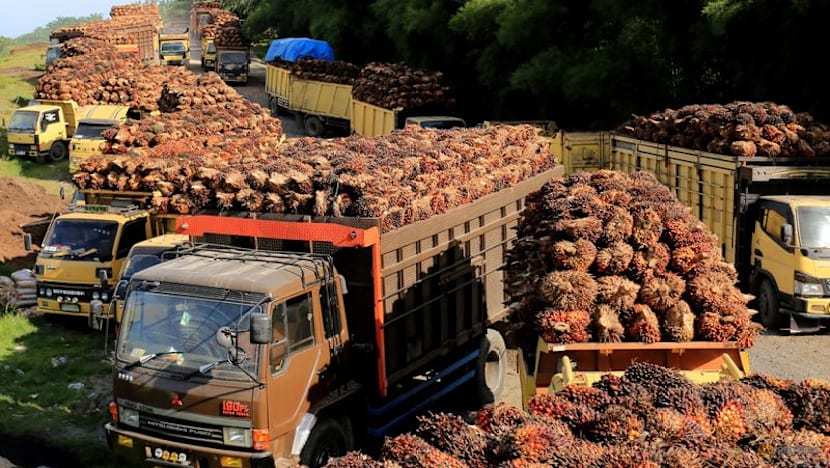 Trucks with palm oil fresh fruit bunches queue for unloading at a factory in West Aceh, Indonesia, on May 17, 2022. (Photo: Antara Foto/REUTERS/Syifa Yulinnas)
TESTING BUSINESS CONFIDENCE?
Wijayanto said that the DSI could increase state revenue, but it should be approached with caution.
“If not managed properly, it has the potential to worsen the investment climate,” he said.
“This is certainly a concern for the business world and investors.”
On Tuesday, prior to Prabowo’s address, the Indonesian stock index fell 3.5 per cent amid talks that a new export body would be announced soon.
On Wednesday, the stock exchange dropped by 0.82 per cent after the announcement of the new export body under Danantara, followed by the central bank’s announcement to raise its policy interest rate by 50 basis points.
On Thursday, the stock exchange fell by around 3.5 per cent.
Finance Minister Purbaya Yudhi Sadewa acknowledged on Thursday that the selloffs were likely due to market uncertainty over the new export body, but said that pressure on the stock market would likely not be permanent and that investor sentiment could improve once the policy becomes clearer.
“Usually when there’s uncertainty, people get scared and sell first,” Purbaya said after a coordination meeting at the economic affairs ministry, as quoted by local media.
Mansuetus Darto, chairman of Indonesian Palm Oil Farmers Association, said on Friday that the prices of crude palm oil had fallen from 15,300 rupiah per kilogram to 12,150 per kilogram in the past few days since Prabowo’s announcement.
He attributed the fall to uncertainty, causing businesses to hold back from buying palm oil from external parties.
He urged the government to ensure DSI’s role be limited to documentation and monitoring of export data and giving administrative oversight.
Analysts said that while Indonesia wants to increase its revenue from natural resources, it has to take into consideration businesses’ concerns about policy unpredictability.
Commodity exporters need clarity on contracts, pricing mechanisms, payment flows, foreign-exchange rules, tax treatment and dispute resolution, said economists Andry and Yusuf.
If a new state export body is introduced without clear rules, businesses may delay investment or reduce exposure to affected sectors, said Andry.
He added that the policy could damage investor sentiment if it creates uncertainty over pricing or opens the door to price controls.
“For example, investors could potentially choose products from other countries instead of Indonesia’s,” said Andry.
Palm oil buyers' attention could now shift to Malaysia until more is known about how the export mechanism in Indonesia will be implemented, said Parmalingam Supramanium, director at Malaysia-based vegetable oil brokerage Penlindung Bestari, as quoted by market intelligence platform S&P Global.
Andry also noted that commodity markets cannot be managed in isolation, as they are connected to global demand, substitute products, domestic producers, workers, and regional economies.
That concern is especially relevant because Indonesia’s natural resource policy already plays a major role in its industrial strategy.
The country has previously used export controls to drive downstream processing, particularly in the minerals sector.
Downstreaming is the government’s attempt to prevent export of Indonesia’s raw materials and instead create higher-value products locally before exporting them.
The new export mechanism could be seen either as a continuation of that strategy or as a sharper turn towards direct state control, experts told CNA.
A centralised export body could give the government better visibility over export volumes, prices and proceeds, help the tax office detect suspicious pricing and ensure that more foreign-exchange earnings return to Indonesia.
But centralisation also creates concentration of power.
If the body lacks transparency, favours certain firms, imposes opaque pricing or delays transactions, it may worsen the problems and could become a new source of inefficiency or rent-seeking, said observers.
Yusuf from CORE Indonesia said the policy deserved appreciation if its purpose was to make export reporting fairer and increase state revenue.
But he stressed that the government must explain how the new body will work: whether it will be a regulator, a commercial intermediary, a price setter or a mandatory export platform.
He said the government must clarify the institution’s mandate and accountability structure.
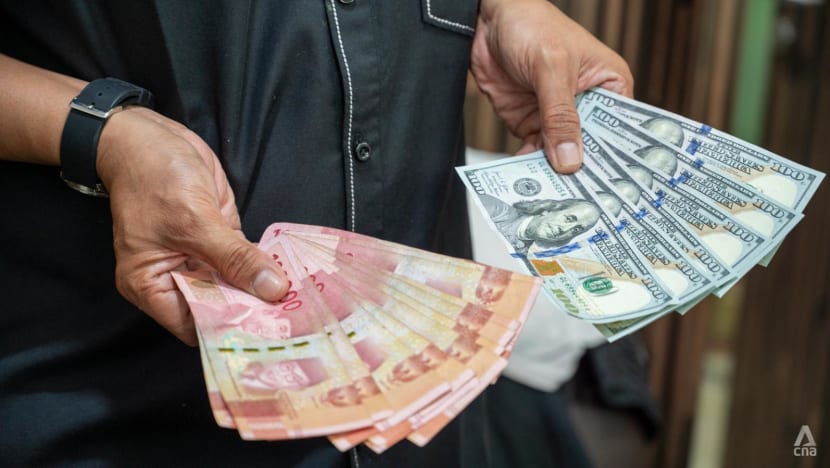 An officer displays US dollars and Indonesian rupiah banknotes at a foreign currency exchange outlet in Jakarta. (Photo: CNA/Ridhwan Siregar)
FISCAL AMBITIONS TOO AMBITIOUS
Analysts said that the export issue has become intertwined with the government’s fiscal targets for next year, which were also part of Prabowo’s address to parliament on Wednesday.
Yusuf said the 2027 growth target in the range of about 5.8 per cent to 6.5 per cent that the president announced would be treated cautiously by businesses if they see it as too optimistic.
“Companies use government assumptions to plan investment, production and hiring, but unrealistic projections can weaken confidence rather than strengthen it,” he said.
Last year, Indonesia’s economic growth was 5.11 per cent, while this year it is projected to be at around 5 per cent to 5.2 per cent.
Yusuf also said an exchange-rate range around 16,800 rupiah to 17,500 rupiah per US dollar in 2027, which Prabowo targeted in his address, would signal official recognition that the currency could remain under pressure.
The rupiah has been weakening in recent months to reach record lows in recent weeks, surpassing even the levels seen during the Asian financial crisis in June 1998 when the currency exchange was about 16,800 rupiah per US dollar.
It was trading at around 17,600 rupiah per US dollar on Thursday.
A weaker rupiah could raise the cost of imported goods and raw materials, forcing firms either to absorb higher costs or pass them on to consumers.
Wijayanto from Paramadina was also critical of the fiscal assumptions, saying the targets for growth, the exchange rate and the deficit appeared too optimistic.
Prabowo said Indonesia’s budget deficit would be around 1.8 per cent to a maximum of 2.4 per cent of the gross domestic product (GDP).
This is lower than the budget deficit of 2.92 per cent of its GDP last year. The forecast for this year's deficit is about 2.68 per cent.
Andry from INDEF said parts of Prabowo’s speech relied too much on political rhetoric and not enough on technically robust fiscal explanations.
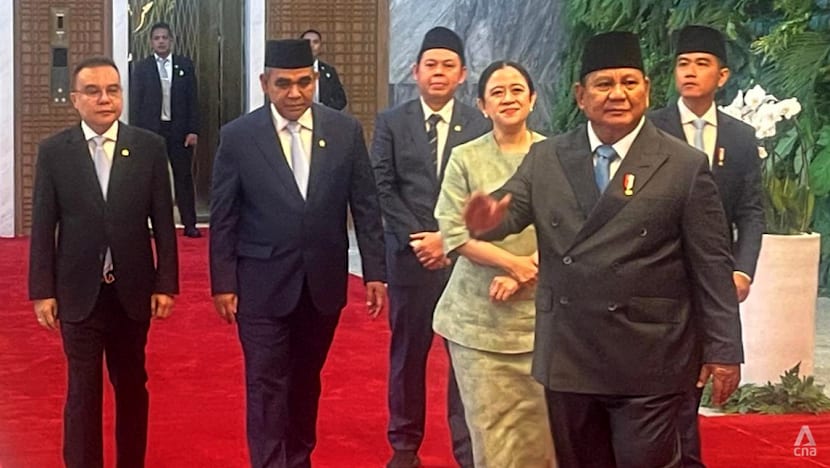 President Prabowo Subianto leaves the parliament after delivering his economic address at the parliament in Jakarta on May 20, 2026. (Photo: CNA/Kiki Siregar)
Meanwhile, Yusuf noted that the president’s direct presentation of fiscal policy material in parliament on Wednesday was politically significant, as such details had never been given by a president before.
It is usually the finance minister's task.
Prabowo said he wanted to show his people that he is present for them amid global uncertainties, giving his address on the day Indonesia celebrates its National Awakening Day.
Yusuf said that personal involvement sends a message that the fiscal agenda is central to Prabowo’s presidency.
It may show commitment, but it also raises questions about how centralised economic decision-making will become.
“So, moving forward, people might be wondering about the direction of a policy, whether it will be centralised or not,” said Yusuf.
“And whether every decision-making must ultimately be based on the president's will.”





 English (US) ·