
 7 hours ago
9
7 hours ago
9
ADVERTISE HERE
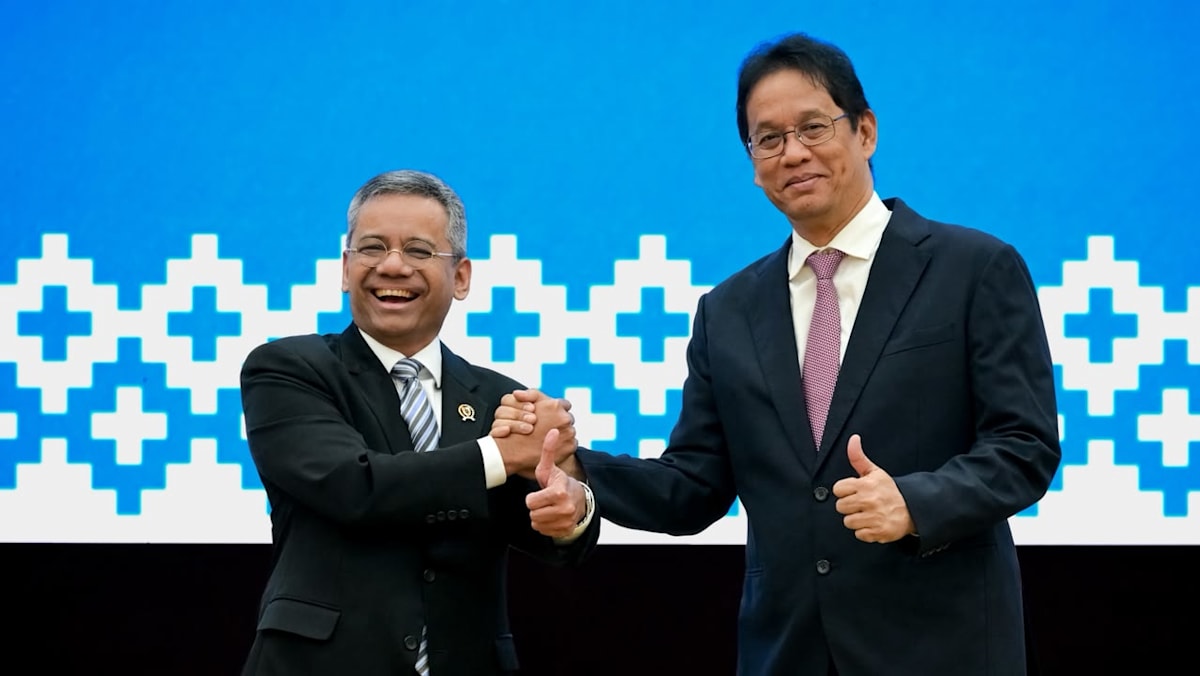
 Wan Lizozman (fourth left) presenting a memento to Abang Johari at the the Sarawak SOEs Transformation Programme – Phase 2: A Pledge for Good Governance, High Performance and Value Creation ceremony held at a hotel on Sept 22, 2026,
Advertisement

By Karen Bong
KUCHING, Sept 22: Premier Datuk Patinggi Tan Sri Abang Johari Tun Openg today signalled that Sarawak could undertake mergers, consolidations and other structural reforms across its State-owned enterprises (SOEs) to eliminate overlapping functions, reduce duplication and improve organisational effectiveness as part of the State’s transformation agenda.
Speaking at the Sarawak SOEs Transformation Programme – Phase 2: A Pledge for Good Governance, High Performance and Value Creation ceremony, Abang Johari said the Phase 2 review had identified preliminary opportunities for consolidation, greater strategic focus and structural transformation across several state entities.
Advertisement

“Where there are overlapping mandates, duplicated functions or structures that no longer serve us effectively, we must be prepared to make difficult decisions,” he said.
The Premier said portfolio rationalisation has become a key pillar of the transformation programme as the State seeks to ensure every subsidiary, investment and organisation continues to serve a clear strategic purpose.
He stressed that every entity must be able to demonstrate how it supports its parent mandate, creates value, provides distinct capabilities or opens strategic opportunities for Sarawak.
Entities that fail to meet those objectives, he said, may need to be restructured, consolidated, divested or, where necessary, wound up. The review has also highlighted a number of dormant, inactive and underperforming subsidiaries that require immediate attention.
“We should not continue to maintain an entity simply because it once served a purpose,” he said.
Among the proposals already being considered is the possible consolidation of several port authorities under the Sarawak Ports Authority (SARPA).
However, Abang Johari stressed that the proposal remains at a preliminary stage and would require comprehensive feasibility studies, due diligence and detailed assessment before any decision is made.
He said the State must be willing to challenge existing structures and determine whether current arrangements remain the most effective for Sarawak’s long-term interests.
“If the current structure is still the best structure for Sarawak SOEs, strengthen it. If it can be improved, improve it. If two organisations can create greater value by working together, bring them together. If an organisation needs to return to its core mandate, refocus on it,” he said.
Abang Johari emphasised that restructuring should not be viewed as a retreat but as a strategic effort to concentrate resources, capital and talent on areas where organisations possess genuine competitive advantages.
Stronger portfolios, he said, are built not by expanding endlessly but by focusing on what matters most.
Beyond organisational restructuring, the Premier said the review had uncovered several cross-cutting challenges that individual entities cannot solve on their own, including policy and regulatory issues, inter-agency coordination, funding constraints, infrastructure gaps and market-related challenges.
He said these issues require direct government intervention and highlighted the need to review regulations that no longer reflect current realities.
“Where regulatory and operational roles overlap, we must clarify them. Where regulations have not kept pace with changing circumstances, we must be prepared to review them,” he said.
Citing the Sarawak Rivers Board (SRB) as an example, Abang Johari noted that its regulatory fees have remained unchanged for more than three decades, limiting its ability to strengthen revenue generation and improve long-term sustainability.
He also pointed to prolonged student visa processing as an obstacle to Sarawak’s ambition of becoming a regional education hub, saying universities alone cannot address the issue without cooperation from both State and federal authorities.
“Transformation does not depend on the entity alone. The wider system must also move with it,” he said, calling on ministries, State agencies and SOEs to work together under a framework of shared accountability rather than operating in organisational silos.
The Premier also highlighted opportunities for greater collaboration among State entities, particularly in agriculture and research. He said organisations such as the Sarawak Land Consolidation and Rehabilitation Authority (SALCRA), Sarawak Land Development Board (SLDB), Sago and Nipah Development Berhad (SNDB), Sarawak Rubber Industry Board (SARIB) and CRAUN should work more closely across research, technology, production and market development.
“The potential synergies between SNDB and CRAUN, for example, should be explored to bring together their respective strengths and unlock greater value through research and commercialisation,” he said.
Deputy Premiers Datuk Amar Dr Sim Kui Hian and Datuk Amar Douglas Uggah Embas, Minister of Tourism, Creative Industry and Performing Arts Dato Sri Abdul Karim Rahman Hamzah, Minister for Women, Childhood and Community Wellbeing Development Dato Sri Fatimah Abdullah, and Sarawak Financial Secretary Dato Sri Dr Wan Lizozman Wan Omar were among the distinguished guests present. — DayakDaily


 English (US) ·