


 9 months ago
75
9 months ago
75
ADVERTISE HERE

Fadillah (seated, fifth right) in a group photo with the recipients during the event. – Photo by Roystein Emmor
KUCHING (Dec 15): The proposal to supply electricity from Sarawak to Peninsular Malaysia still requires detailed studies before it can be realised, said Deputy Prime Minister Datuk Amar Fadillah Yusof.
Fadillah, who is also Minister of Energy Transition and Water Transformation, said that although the project has received policy approval in principle, its implementation remains at the technical stage, involving various considerations such as engineering requirements, costs and cross-border cooperation.
He said that among the key requirements is the conduct of a seabed cable route survey involving Indonesian waters, as the power transmission route from Sarawak to Peninsular Malaysia would need to pass through the area.
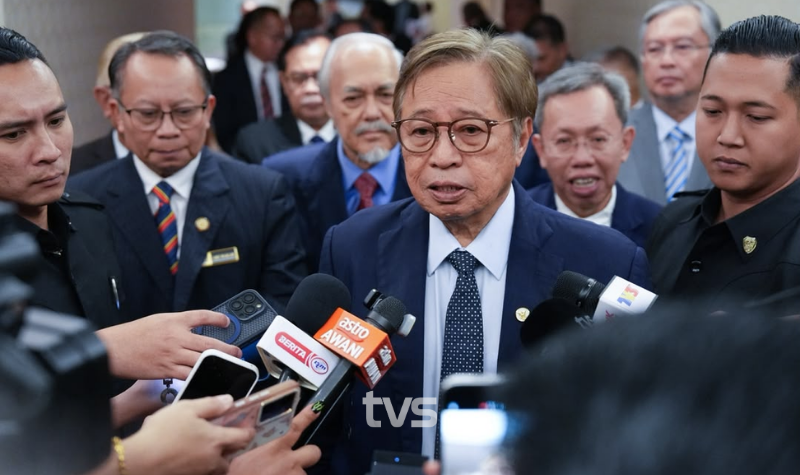
“We need to inform Indonesia first before the survey can be carried out. After this survey is finalised, only then can the feasibility study be conducted,” he told reporters after the Ceria Ke Sekolah Programme for P194 Petra Jaya with Tenaga Nasional Berhad (TNB) at a hotel here.
Elaborating further, Fadillah said the project is expected to be managed by TNB and may also involve other strategic partners such as Petroliam Nasional Berhad (Petronas) and Sarawak Energy Berhad as the power supplier.
He stressed that cost aspects and tariff rates have yet to be determined, as they depend entirely on the outcome of the detailed studies to be carried out later.
“Tariffs cannot be determined now because we need to know the actual cost of this project first. Only after that can tariff negotiations be conducted between Sarawak Energy and TNB,” he explained.
Commenting on infrastructure, he said the concept of a subsea cable whether one or two routes has yet to be finalised and will depend on the outcome of technical studies as well as approvals from the Indonesian authorities.
According to him, there are several options, including a cable landing in Peninsular Malaysia before being connected to Singapore, or a separate cable directly to Singapore, depending on the agreement of all parties involved.
In this regard, the cost of the cable transmitting electricity to Singapore would be fully borne by Singapore, while the cost of the cable to Peninsular Malaysia would be borne by TNB together with appointed strategic partners.
“It is still too early to confirm whether two separate subsea cables will be built, as everything is subject to the results of the feasibility study,” he said.
Touching on the implementation timeline, Fadillah said the government hopes the initial study process can begin next year, but this depends heavily on approvals and cannot yet be confirmed as it largely depends on Indonesia’s approval process.
Meanwhile, Fadillah also commented on the Ceria Ke Sekolah Programme for P194 Petra Jaya with TNB, which involved 250 students from his parliamentary constituency.
He said the programme reflects TNB’s continued commitment to supporting education and community welfare, especially for students from low-income families.

Fadillah (centre) presenting one of the recipients with a school bag during the event. – Photo by Roystein Emmor
“This programme is a TNB initiative that has been implemented since 2013, but its organisation in Sarawak is being held for the first time in the Petra Jaya parliamentary constituency.
“It is actually a TNB programme and coincidentally, TNB is currently under my ministry, which is why it can be implemented in Sarawak, whereas previously it was only organised in Peninsular Malaysia,” he said when speaking at the event today.
“Through the programme, a total of 250 primary and secondary school students in the P194 Petra Jaya parliamentary constituency received complete and high-quality basic school supplies,” he said.
The recipients were identified and selected carefully by branches of Parti Pesaka Bumiputera Bersatu (PBB) in the N6 Tupong, N7 Samariang and N8 Satok constituencies to ensure that only those who truly deserved the assistance received the aid.
“Programmes such as this complement the various forms of educational assistance provided by the Federal and Sarawak government, including cash aid and other support for students,” he said.
He added that contributions in the form of school bags, stationery, clothing and shoes greatly help parents prepare their children for the new school term.


 English (US) ·