
 7 hours ago
10
7 hours ago
10
ADVERTISE HERE

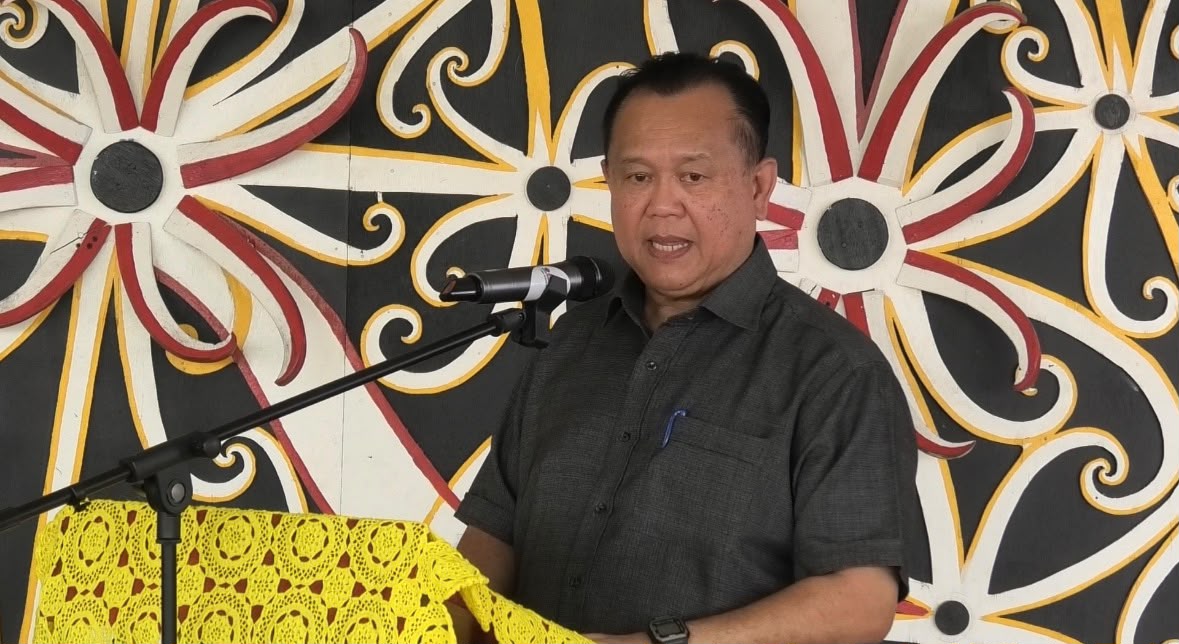
Abang Johari speaks during the event. — Photo by Desiree David
KUCHING (Sept 22): Sarawak-owned enterprises (SOEs) could potentially generate an additional RM9.62 billion in revenue by 2030 through initiatives identified under Phase 2 of the SOEs Transformation Programme, said Premier Datuk Patinggi Tan Sri Abang Johari Tun Openg.
He said the initiatives could also generate an additional RM1.6 billion in adjusted profit after tax and approximately RM1.27 billion in dividends between 2027 and 2030.
“Based on the consolidated projections available at the time of assessment, these initiatives could potentially generate RM9.62 billion in additional revenue by 2030, RM1.6 billion in additional Adjusted Profit After Tax, and approximately RM1.27 billion in dividends between 2027 and 2030,” he said during the Sarawak SOEs Transformation Programme — Phase 2 here today.
However, Abang Johari stressed that the figures were projections, not achievements, and their realisation would depend on how effectively the initiatives were translated into results.
He said the transformation cannot depend only on a few large entities, such as Sarawak Energy Berhad and Petroleum Sarawak Berhad (Petros), to carry the transformation story.
“Every entity must improve from its own starting point. A RM5 million improvement in one entity may be as significant as RM500 million in another, depending on its mandate, capability, and starting position,” he said.
Abang Johari said SOEs should pursue new revenue streams, reduce costs, unlock the value of assets through commercialisation and explore new markets.
He said financial self-reliance did not mean every state entity should operate in the same manner, as some had regulatory, social, public-service or strategic mandates for which government support might remain necessary.
“For these entities, government support may remain necessary — but it must be matched by clear mandates, measurable outcomes, and financial discipline.
“For commercially oriented entities, the expectation is different. They must strengthen revenue, improve productivity, manage costs, optimise assets, and reduce unnecessary dependence on government support.
“Government support should serve a clear purpose. It should not create permanent dependency,” he said.
At the same time, Abang Johari said the Phase 2 assessment projected an increase in grant dependency of approximately RM339.2 million, or 121.9 per cent.
He said the increase largely reflected greater government support for education and human capital development, as well as public functions including arts and culture, scientific research and development, and environmental protection and regulation.
“We must distinguish between dependency that should be reduced and government funding that is necessary to serve an important public purpose.
“Education, from early childhood to tertiary level, is a good example.
“This is not simply expenditure. It is an investment in the human capital and capabilities that will shape Sarawak’s future,” he said.




 English (US) ·