


 6 months ago
109
6 months ago
109
ADVERTISE HERE

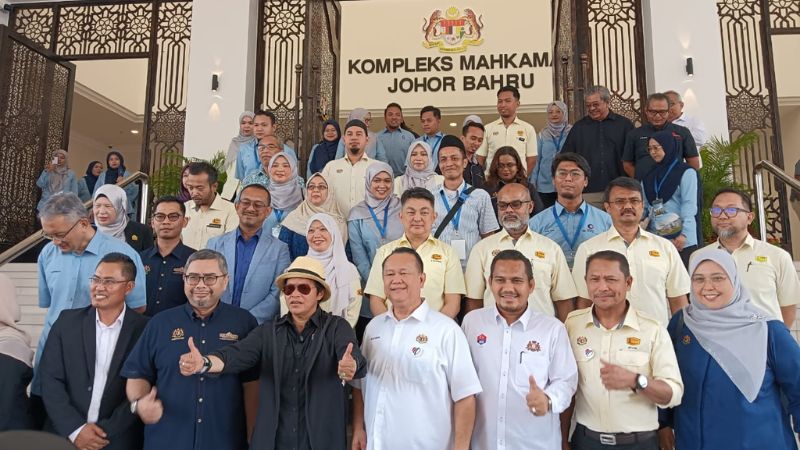
A federation grows stronger when the agreements that created it are respected. — Bernama photo – Bernama photo

MORE than 60 years after the formation of Malaysia, a question written into the Federal Constitution is still waiting to be answered.
Sabah wants its 40 per cent. Not as charity, not as a special grant, but as a constitutional entitlement.
The issue has resurfaced in recent weeks as Sabah leaders and Sabahans called for Putrajaya to honour the 40 per cent revenue formula promised during the formation of Malaysia in 1963.
Partial payments are even being suggested, while negotiations continue to stir debates.
For many Sabahans, however, this is not merely a fiscal discussion.
It is about a promise made at the birth of the nation.
When Sabah together with Sarawak, Singapore (which left later) and Malaya formed the Federation of Malaysia, financial safeguards were written into the Federal Constitution to protect the interests of the Borneo states.
Under Article 112C read with subsection (1) of section 2 of Part IV of the Tenth Schedule of the Federal Constitution, Sabah is entitled to receive 40 per cent of the net revenue collected by the federal government in the state.
The logic behind the provision was straightforward, as Sabah is geographically vast, sparsely-populated and lacking basic infrastructure, its development would require significant resources.
The 40 per cent formula was meant to ensure that Sabah would have the financial capacity to build roads, schools, hospitals and essential public services.
In other words, it was designed so that Sabah would not be left behind in the new federation.
Yet somewhere along the way, the formula faded into the background.
Instead of the constitutional calculation, Sabah has received special grants negotiated periodically with the federal government – an arrangement that many in the state feel fall short of what the original formula might have produced.
And so, the question has lingered – what happened to the 40 per cent?
For years, the issue simmered quietly in the background of Malaysian politics.
However, it has returned to the national conversations.
In October 2025, the Kota Kinabalu High Court ruled that the federal government had unlawfully failed to pay Sabah its 40 per cent net revenue entitlement for decades, as provided under Articles 112C and 112D of the Federal Constitution.
The court’s decision reignited debate over the constitutional formula and Sabah’s long-standing claim.
At the time, statements from the federal leadership suggested that the government was not inclined to appeal the ruling, signalling a willingness to resolve the matter through negotiation.
However, subsequent developments indicate that the federal government may be challenging aspects of the judgment related to the review process, even as discussions continue between Sabah and Putrajaya.
Suddenly, a constitutional clause written more than six decades ago is being examined again with fresh urgency.
In Kuala Lumpur, the debate is often framed as a technical financial matter.
In Sabah, however, it is deeply personal.
For many Sabahans, they are not asking for more; they are asking for what was promised.
Despite being rich in natural resources, Sabah remains among the poorer states in the federation.
In many rural areas, communities still struggle with unreliable water supply, limited electricity and difficult road access.
For Sabahans, the 40 per cent provision symbolises more than just revenue-sharing.
It represents the belief that development within the federation should be fair.
That belief is why the issue refuses to disappear, decade after decade.
Across the South China Sea, Sarawak is watching the discussion with quiet interest.
The issues may not be identical, but the underlying principle is familiar.
Sarawak too has been pressing for greater recognition of its rights under the Malaysia Agreement 1963 (MA63), particularly in areas such as oil and gas (O&G) regulation, administrative authority and revenue-sharing.
Sabah’s 40 per cent entitlement, therefore, resonates beyond its borders.
It reminds Malaysians that the federation was formed not simply by expanding an existing nation, but through negotiated arrangements designed to ensure that Sabah and Sarawak could develop on equal footing within Malaysia.
A mature federation does not weaken when such questions are raised.
If anything, it becomes stronger when the agreements that created it are respected.
Resolving the 40 per cent issue will not be simple.
It will require careful negotiations, fiscal considerations and political goodwill from all sides.
The solution may involve revised formulas, phased payments, or new financial mechanisms, but the principle itself should remain clear.
Agreements made at the birth of a nation deserve respect.
In the end, Sabah’s demand is not complicated.
It is asking that a promise written into the Constitution more than 60 years ago be honoured.
And until that promise is fully addressed, Sabah will continue to ask its quiet question – patiently, persistently and firmly: where is our 40 per cent?
EXPLAINER: SABAH’S 40 PCT REVENUE ENTITLEMENT
What is it?
> A constitutional provision entitling Sabah to 40 per cent of the net revenue collected by the federal government in the state.
Where is it written?
> Federal Constitution – Article 112C and the Tenth Schedule.
Why was it created?
> When Sabah joined Malaysia in 1963, the provision was meant to ensure that the state would have sufficient funds for development due to its large territory and infrastructure needs.
Has it been implemented?
> Not fully. Instead, Sabah has received special grants negotiated periodically with the federal government.
Why is it controversial now?
> Recent court rulings and negotiations have revived calls for the federal government to honour the original formula.
Why it matters?
> The issue has become a symbol of fairness and federal-state relations within Malaysia.







 English (US) ·