


 7 months ago
85
7 months ago
85
ADVERTISE HERE

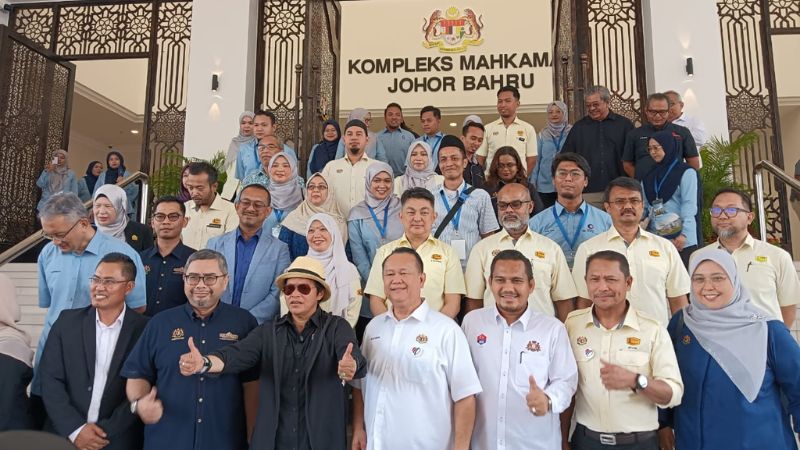
Yap (seventh left) poses for a group photo with the media night organising committee members and other distinguished guests.
KUCHING (Feb 6): Media practitioners should take extra steps to verify statements before publication to qualify for protection under the Reynolds defence in defamation cases, said Kota Sentosa assemblyman Wilfred Yap.
Yap, a lawyer by training, said journalists must go beyond merely reproducing press statements and should instead check the accuracy of information with relevant parties before publishing.
“Personally, I’m a lawyer by training, and we’ve got a defence. I just want to share with the media practitioners. That defence is what we call Reynolds Defence,” he said during a media night organised by Chinese community leaders ahead of Chinese New Year at a restaurant here on Thursday night.
He explained that if a media outlet publishes a defamatory statement, it may be sued, but the Reynolds defence offers protection if journalists take an additional step to verify claims.
“For example, I say A is a bad person, and you go a step further — not just ‘A is a bad person’ — but ‘A said this’. And you go a step further and say, ‘A, did you actually say what B said you said?’ If you actually do that, that one step further, you are covered by Reynolds Defence, apart from the usual qualified privilege and all that,” he said.
Beyond legal considerations, Yap emphasised the broader societal role of the media as Sarawak advances its Post Covid-19 Development Strategy 2030, which includes initiatives in the digital economy, hydrogen development and infrastructure improvement.
“I think we are at a juncture. When our Premier talks about Post-COVID development strategy, when he talks about the digital economy, when he talks about the hydrogen roadmap, when he talks about having better infrastructure and all that, I think the media plays a very important role,” he said.
He stressed that policies must be reported in their complete and accurate form, adding that the time for rhetoric has passed and observing that some reporting tended to simply regurgitate what is given.
Yap also reminded journalists to remain neutral and guided by conscience, particularly when dealing with press statements that may carry bias or ulterior motives.
“When you receive a piece of news, and if that particular press statement is biased and has ulterior motives, then the duty is upon yourselves to actually make sure that what is released to the public will enable the public to receive the correct information so that they are able to make the correct decision,” he said.
He added that accurate and fair reporting ultimately benefits society and the state.
Touching on state policies, Yap reiterated that Sarawak’s approach is inclusive and merit-based rather than race- or religion-based, urging the media to help disseminate this message more widely.






 English (US) ·