


 5 months ago
166
5 months ago
166
ADVERTISE HERE

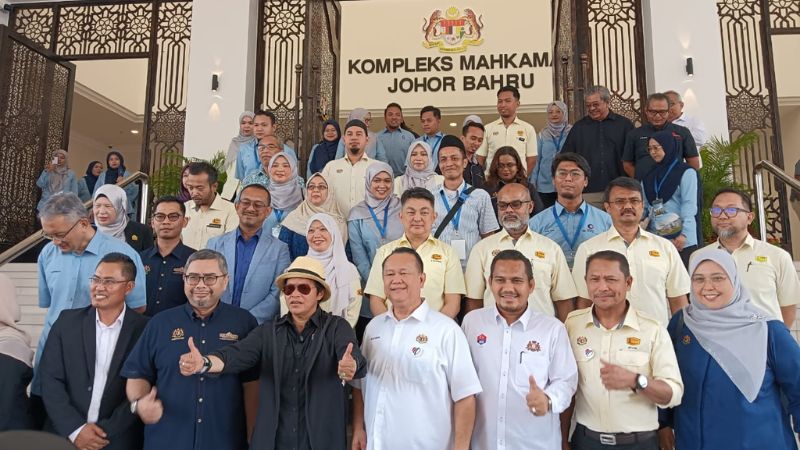
MPs giving up their petrol allowance is less about saving the national budget and more about sending a message that those making difficult decisions are willing to share the inconvenience. — Bernama photo

PETROL is one of those things that Malaysians will talk about the way homemakers would talk about the price of food – frequently, passionately, and often with strong opinions.
Recently, the Malaysian Youth Council suggested that the members of Parliament should share the burden of subsidy reforms by giving up their petrol allowance.
The proposal sounded reasonable enough. After all, the government has been signalling a move towards targeted fuel subsidies.
If ordinary Malaysians are expected to tighten their belts, should elected representatives not do the same?
At first glance, the numbers appear straightforward.
An MP receives a petrol allowance of about RM1,500 a month, plus around RM300 for tolls.
In the grand scheme of government spending, that is hardly a staggering figure.
In fact, compared to the overall remuneration and allowances that MPs receive, the petrol component is relatively small.
Yet politics has never been only about numbers. It is also about symbolism.
The idea of MPs giving up their petrol allowance is less about saving the national budget and more about sending a message that those making difficult decisions are willing to share the inconvenience.
But like most issues in Malaysia, the story becomes more complicated the moment one looks beyond the surface.
For ministers and deputy ministers, the question is obvious.
Many of them are already provided with official government vehicles, complete with drivers and fuel covered for official duties.
In such cases, the RM1,500 petrol allowance may appear somewhat redundant.
Critics naturally ask – if the government is already paying for the official car, what exactly is the petrol allowance for?
But step outside the Klang Valley bubble, and the picture changes.
For MPs representing rural constituencies, especially in Sabah and Sarawak, travelling is not merely a matter of driving from Parliament to the office and back.
Constituencies can stretch across vast areas, sometimes involving long journeys between towns, villages and remote settlements.
A single round trip could mean hundreds of kilometres on the road.
In such places, petrol is not just a political talking point – it is a practical necessity.
A hardworking MP visiting longhouses along muddy logging roads, or travelling from one district to another in a single day, may burn through more fuel than what the allowance comfortably covers.
In fact, many MPs privately admit that the allowance barely keeps up with the demands of constituency work.
This is where the irony emerges.
While urban critics see the RM1,500 allowance as excessive, some rural MPs quietly feel that it is insufficient.
And so, the debate becomes a familiar Malaysian balancing act: fairness, perception, and geography colliding in the same policy discussion.
The truth is that allowances are rarely designed to be perfectly fair.
They are usually compromises such as administrative conveniences meant to simplify reimbursement for expenses that vary widely from one MP to another.
But in an age where public scrutiny is constant and social media amplifies every perceived privilege, even relatively modest allowances can become lightning rods.
Politics, after all, runs on perception as much as policy.
To many Malaysians struggling with rising living costs, the idea of elected representatives enjoying allowances can easily appear detached from everyday reality.
But whether or not the allowance is justified becomes almost secondary.
What really matters is how it feels, and feelings, as we know, travel faster than facts.
Perhaps the real lesson in this petrol debate is not about the RM1,500 itself, but about the expectations placed on public office.
People increasingly want to see leaders sharing not just authority, but inconvenience.
When citizens are asked to accept reforms whether fuel subsidies, taxes or cost-of-living adjustments, they expect those making the decisions to show some degree of solidarity.
It is less about the amount saved, and more about the gesture made.
At the same time, policymaking should not be driven solely by symbolism – practical realities still matter.
An MP who spends most of the week travelling across a sprawling constituency may well need that petrol allowance.
This is Malaysia, after all, a country where the distance between two ‘kampungs’ (villages) can be longer than the distance between two political arguments.
And so perhaps the most sensible approach lies somewhere in the middle.
Ministers with official vehicles might reasonably forgo the allowance, while MPs who rely on their own transport for constituency work continue to receive it.
Simple adjustments, rather than sweeping gestures.
Because in the end, the petrol allowance debate reminds us of something familiar about Malaysian politics.
Even a tank of fuel can carry a surprisingly heavy load of expectations.






 English (US) ·