


 6 months ago
84
6 months ago
84
ADVERTISE HERE

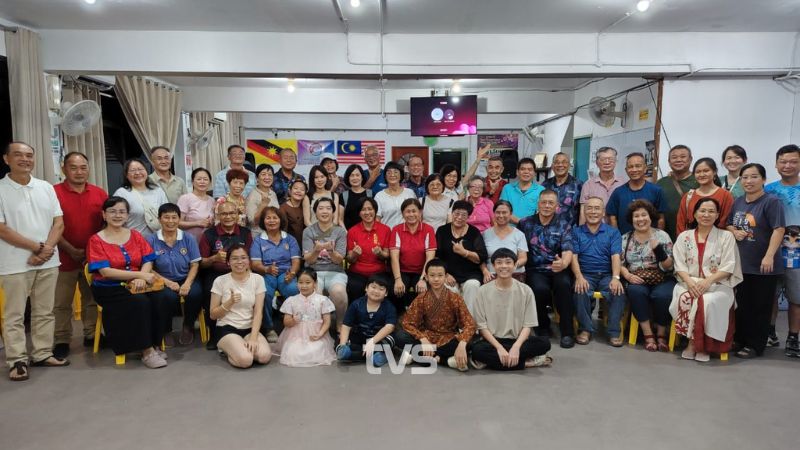
The writer (centre) with Goh (left) and Nur Syahirah.

INTERNATIONAL Women’s Day 2026 carries the theme “Give to Gain” – a phrase that resonates deeply in plantation life. In estates, we understand this instinctively. When we give time to training, we gain competence. When we give trust to young executives, we gain leadership.
When we give space to women to lead, we gain resilience, balance and perspective.
Gender equality in plantations is not achieved through grand declarations or glossy brochures, but through everyday acts of generous inclusion – mentoring without bias, opportunities without hesitation, recognition without qualifiers. The Give to Gain mindset reminds us that when organisations invest sincerely in women executives – in talent development, safety and progression – the returns are not symbolic. They are tangible: stronger teams, better decisions and an industry that grows not just taller, but wiser.
It was in this spirit that I felt compelled to write this story. Last year, I wrote about women across the palm oil supply chain, celebrating their contributions beyond the estate gates. This year, I return to where everything in oil palm truly begins – the upstream estates, where decisions are made before sunrise and leadership is tested long before products reach markets. That intention was sharpened by a moment that unfolded quietly in Sandakan not too long ago.
A morning in Sandakan, a clearer picture
One morning in Sandakan felt quietly significant. I was invited to share at the Incorporated Society of Planters (ISP)’s International Junior Management Programme (IJMP) for Cadets, Assistant Managers and Senior Assistants. I had earlier conducted a sharing session with the senior group, but this session with younger group carried a different energy: curious, alert and refreshingly unguarded.
What stayed with me was meeting two female planters from SD Guthrie in Sabah: Assistant Manager Shirley Goh Chin Lon, 5 years into the field graduating from University of Reading with degree in Agriculture and Senior Assistant Nur Syahirah Che Ismail, thirteen years seasoned. I was struck not just by their technical grasp, but by their hunger to learn – and their ease in expressing ideas with clarity and confidence. This was not borrowed confidence. It was field-earned – the quiet kind that comes from having walked blocks, solved problems, and stayed long enough for experience to settle.
I was also told that there are now more than 40 female executives across SD Guthrie estates. At that point, the picture became clearer. SD Guthrie’s programmes are no longer theoretical pipelines; they are bearing fruit in real people, real estates, real leadership. Credit where it is due – SD Guthrie is walking the talk on inclusivity and leadership development.
And equal kudos to the ISP for organising training platforms that embrace both genders without fuss or fanfare. Sometimes progress does not announce itself. It simply turns up – competent, confident, and ready for the next field round.
In the course of preparing this piece, I have also engaged with several women executives in plantations, whose professionalism, competence and confidence left a strong impression on me. Their experiences form part of this story – not because they are the only example, but because they are a visible one.
I believe that other plantation houses in Malaysia and Indonesia are also moving in the same direction, quietly embracing gender diversity and inclusivity at executive and senior management levels. This is not a claim of completion, but a signal of progress. What is shared here is one set of lived experiences, offered as an illustration of a broader shift taking place across the industry.
Bias: The quiet gatekeeper
Bias in plantations is rarely shouted. It is printed. For years, recruitment advertisements in the palm oil sector stated their preferences plainly. Quoting a 2022 published study from Indonesia. Under 28, single, willing to remain single during training – preferably male, sometimes male only. When questioned, senior managers expressed no discomfort. The rationale was presented as practical, not prejudicial.
Field work, they said, was physically demanding. It required stamina. Let men take it. Some even claimed women themselves had no objection. Bias, repeated often enough, begins to sound like common sense.
Many young women absorbed this message. Estate work was labelled “unsuitable” or “unfeminine”. Managerial roles became unattractive not because they lacked substance, but because the path was quietly weighted against them. Those who entered found that promotion took longer and scrutiny came sooner.
One female manager recalled passing every recruitment hurdle – exams, medicals, interviews – only to face questions about fear: managing male subordinates, working in isolation, rumours of danger. Her reply was direct: “I am a strong woman who is not scared of anyone.” She stayed. She delivered. Yet today, she would likely be disqualified – because she is a mother.
From the employer’s perspective, bias was justified as efficiency. Training was costly. Resignations were risky. Policies designed for cost control, a general manager admitted, did not ensure gender equality. And therein lies the problem. Bias in plantations is rarely framed as exclusion. It is framed as prudence. As economics. As risk management.
What it quietly filters out, however, is talent before it matures. Leadership before it emerges. Women who – when allowed to stay – have shown they perform, lead and deliver no differently from their male peers. Bias did not protect the industry. It merely slowed it down.
Listening to women who manage Malaysia’s oil palm estates
Plantations have always been good at producing numbers – yields, costs, ratios and variances. What they have been far less good at is listening. That is why a 2023 qualitative study by researchers from Universiti Teknologi MARA (UiTM) and Universiti Malaysia Sarawak (Unimas) matters. Not because it proposed a grand theory, but because it did something rare in plantation discourse: it sat down quietly with women planters – cadet planters, assistant managers and an estate manager – and listened to what estate life actually feels like from their side of the block.
What emerged was not grievance, but clarity. The first myth to fall was the idea that women in estates are given “lighter” work. The women interviewed were unequivocal. Same position, same workload. Field rounds begin at 6.30am. Days are split roughly between field and administration. Supervision, audits, data collection and emergency problem-solving are non-negotiable and physically and mentally demanding. As one participant observed matter-of-factly, the job does not adjust itself for gender. The palms do not know. The workers do not wait. The audit does not care. Equality in estates is literal.
The study neither portrays women as fragile nor romanticises toughness. Instead, it highlights endurance. Pregnancy, fatigue and long hours accumulate over time. One estate manager put it plainly: when she was pregnant, the job did not change – she did. This is not a call for exemption, but a reminder that plantation systems were historically designed around a male norm, and adaptation has lagged behind recruitment.
Safety emerged as one of the most sobering themes. Women spoke of isolation, distance from help, difficult terrain, wild animals and the reality of being alone in estates after working hours. One cadet noted that nothing had happened – yet – but the awareness lingered: if something does, help is far away. This is not fear-mongering. It is situational awareness. Estates are not office parks. Leadership does not end at 5pm. Safety, the study reminds us, is a management responsibility.
Managing male workers was another recurring test. While supervision, discipline and labour management are core duties for all executives, several women described having to prove competence repeatedly – to workers, peers and sometimes superiors. Instructions required firmer reinforcement. Mistakes were noticed faster. This is not unique to plantations, but estates magnify hierarchy. Leadership by women often comes with an unspoken probation period, even after formal appointment.
Stereotypes, meanwhile, remain the longest-living weed. Participants recalled being questioned – by society, recruiters and seniors – about whether plantation work was too “soft” or “unfeminine”, or whether maternity made them inconvenient hires. Some shrugged it off; others felt its weight. The study links this to a persistent assumption: think manager, think male. The irony is stark. Women outperform men in educational attainment, yet leadership acceptance lags. The problem, the researchers suggest, is not capability, but perception inertia.
The UiTM-Unimas study does not accuse. It observes. And in doing so, it implies something important: women who succeed in estates do not do so because the system favours them. They succeed despite a system that is often indifferent. They adapt, endure, learn the field quickly, manage people carefully, and earn acceptance not through rhetoric, but through results.
The researchers conclude that women can and do build successful plantation careers. Their quiet challenge to the industry is simple: listen to these women. Because policies written without lived experience may look good on paper, but they fail quietly in the field. And plantations, as every planter knows, reward those who read signs early – whether in palms, pests or people.
When listening turns into faces
Studies help us listen better. Stories help us remember. The UiTM/Unimas findings tell us what women in estates experience – the sameness of the work, the endurance required, the safety calculations, the extra proving, the stereotypes that linger like stubborn weeds. But numbers and themes, however clear, still remain abstractions until they take human form.
And that is where Siti Zuwairiah Abdullah from Malaysia and Lilis Suryani from Indonesia come in. They are not exceptions conjured for a conference slide. They are what happens when the field tests patience long enough and talent is allowed to stay.
If life were a plantation, Siti Zuwairiah would be a resilient palm – rooted, weathered, and productive without fuss. Her journey was never about titles, but about recognising opportunity and committing to growth.
Today, she manages a 1,800-hectare estate at Tampin Tinggi under SD Guthrie. That alone is notable. That it is led by a woman in a traditionally hierarchical sector makes it enduring, not novel.
Siti began with an interest in law before pivoting to agriculture at Universiti Putra Malaysia. A scholarship through the former Golden Hope Plantation Academy opened the door; only four of 17 recipients were women. She did not seek attention – only excellence.
Her learning took place largely in the field, where theory meets weather, labour and logistics. Agriculture, she learned, has no shortcuts – only seasons. In 2019, after more than a decade of steady progression, she became the group’s first female estate manager. She did not see herself as a “woman in charge”, but simply as a planter accountable for results. That distinction matters.
By pairing field mastery with professional rigour, earning her ISP Licentiate, and managing labour, sustainability and community relations with calm focus, she quietly dismantled a myth: plantation leadership rewards commitment and competence, not gender. She did not break ceilings. She walked through open fields.
If Siti’s story shows opportunity meeting preparation, Lilis Suryani’s shows what staying power can compound. Her career was built the old plantation way – block by block, season by season, problem by problem. She entered prepared to work, not to be noticed, starting close to the ground where estates teach their hardest lessons: consistency matters more than brilliance.
And she stayed. In plantations, staying is active endurance. It means managing losses without blame, understanding responses instead of hiding behind recommendations, and absorbing responsibility when problems arise.
Lilis progressed through accumulated credibility, learning continuously and earning trust. Her appointment as Senior Manager at PT Sampoerna Agro and now in PAR Prime Agri Resources was not symbolic. It was a conclusion.
Her journey matters not because she is a woman, but because it proves a simple truth: when plantation systems allow talent to mature without prejudice, leadership emerges. Not loudly. But reliably. Plantations remember those who stay long enough to understand them. Lilis stayed.

When women stay long enough, the estate answers back
This next reflection is an interpretive synthesis shaped by a questionnaire with nine (9) women executive planters from SD Guthrie across Sabah, Peninsular Malaysia, Indonesia and Papua New Guinea – Shirley Goh and Fazirah from Sabah; Noraziah Saari, Nithiyashini Kanthasamy and Hareena Haron from Peninsular Malaysia; and Nur Hasanah, Benita Septiana Sinaga and Elpri Syalsabilla Nurdin from Indonesia; and Margaret Kevin from PNG – and I thank each of them for their openness, honesty and generosity of insight from the field.
Across the many oil palm planting regions, the answers came from different accents, different estates, and different stages of seniority – but they echoed one another with striking consistency. When women enter the oil palm estate, the first thing they are asked to prove is rarely just competence. It is credibility. Belonging. Authority. Sometimes all three at once.
For the younger executives, especially those without plantation lineage, the steepest climb was not learning fertiliser regimes or reading yield trends – those can be taught. What took longer was earning a sense of belonging in an ecosystem where relationships, routines and trust are deeply embedded. The estate does not welcome quickly. It watches. It waits. Only those who show up consistently – at muster, in the field, in difficult conversations – are gradually allowed in.
Across regions, many women described the early years as a period of quiet testing. Instructions questioned more often. Mistakes noticed faster. Staying late not because of gender alone, but because newness itself attracts scrutiny. Yet the response was remarkably similar: less argument, more results. Instead of contesting assumptions, they outperformed them. Authority, they learned, is not demanded in estates. It is accumulated.
One assumption surfaced repeatedly, regardless of country: that women are naturally better suited to offices than fields. Documentation, audits, filing – “safe” work. Several respondents challenged this gently but firmly. Field exposure, they argued, should not be gendered. When women are confined to compliance roles, estates do not just limit women – they limit their own leadership pipeline. Balanced exposure produces better managers, not just fairer ones.
What kept these women from leaving when others did was not a single factor. For some, it was curiosity that slowly turned into conviction. For others, sheer stubbornness. Many cited mentors – male and female – who saw potential before confidence arrived. Family support mattered, especially at senior levels, but so did systems that slowly evolved: training, safety structures, clearer policies, and in some cases, gender committees and institutional backing. Stability, learning opportunities, and the quiet dignity of estate life also played a role. Plantations, when they work, reward those who stay.
When asked about the future, the leadership they imagined was strikingly consistent across borders. Not command-and-control. Not fear-based authority. They spoke of leaders who are approachable but firm, data-driven yet humane, technically strong yet open to feedback. Leadership defined not by volume, but by reliability. To make this future possible for more women, they pointed to changes that go beyond slogans: objective performance systems, mentoring, mechanisation to reduce brute labour dependency, work-life balance, and a deliberate shift away from “old-timer” mentalities that confuse stamina with leadership.
Their advice to younger women was neither romantic nor discouraging. Give yourself time. Three years was a recurring benchmark – long enough to understand the estate, the people, and yourself. Do not wait to feel ready. Read doubt as awareness, not weakness. The estate is demanding, sometimes unkind, often unforgiving – but it is also one of the most honest classrooms available. Those who enter with integrity, curiosity and resilience do not just survive. They grow.
What emerges from these voices is not grievance, but clarity. Women who succeed in estates do not do so because the system favours them. They succeed because they learn to navigate a system that was not designed with them in mind – and, over time, quietly reshape it.
Across all operations, the message is the same: when women are allowed to stay long enough, supported well enough, and judged fairly enough, the estate responds. Not with applause. With results. And in plantations, that is the only language that truly matters.
What is striking is that a fresh round of Q&A interviews with nine women executive planters today aligns closely with the UiTM/Unimas study, confirming that the field has not changed its story – only its cast.
From whisper to proof
The UiTM/Unimas study asked us to listen. Siti, Lilis, and the younger women now stepping into estates show us what listening makes possible. They are not symbols, not slogans, not diversity statistics. They are outcomes.
They remind us that when systems invest sincerely, when bias loosens its quiet grip, and when women are allowed to stay long enough to master the field, leadership does not need applause to be legitimate. It does not arrive with banners or speeches. It earns its place through results.
The field whispered. These women answered – with proof.



 English (US) ·