


 8 months ago
99
8 months ago
99
ADVERTISE HERE

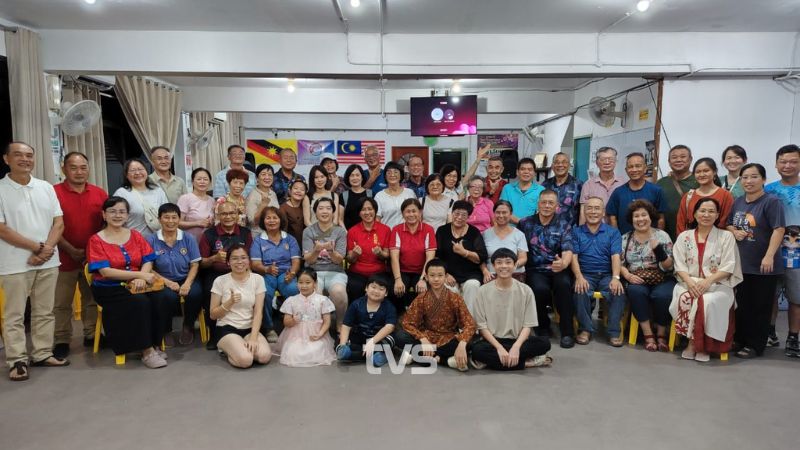
Wong noted that GST, also known as VAT, is implemented in over 160 countries and is widely regarded as more efficient than Malaysia’s current SST. – Photo by Peter Boon
SIBU (Jan 11): Sarawak United People’s Party (SUPP) Dudong branch chairman Wong Ching Yong has urged the federal government to reinstate the Goods and Services Tax (GST), calling it the most effective way to stabilise national tax revenue while easing the cost of living.
Wong noted that GST, also known as value-added tax (VAT), is implemented in over 160 countries and is widely regarded as more efficient than Malaysia’s current Sales and Services Tax (SST).
“The most effective way to stabilise national tax revenue while easing the people’s burden is not through repeated adjustments to the e-invoicing policy or the SST threshold, but by reinstating the GST,” the SUPP’s central assistant publicity and information secretary said in a statement.
“Almost all developed nations have adopted it and proven it to be a more ideal tax system than Malaysia’s current SST,” he added.
He criticised the Pakatan Harapan-led government for abandoning GST after coming into power, arguing that the switch to SST has led to rising prices due to what he described as disguised multiple taxation.
Wong’s remarks followed Prime Minister Datuk Seri Anwar Ibrahim’s recent announcement of another adjustment to the e-invoicing policy, which raised the mandatory annual revenue threshold and gave small and medium enterprises more time to comply.
While the government framed this as easing business burdens, Wong said repeated changes reflect a lack of clear direction in tax reform.
“If Pakatan Harapan leaders want to portray the Prime Minister’s announcement as being considerate towards the people, then they should go down to the ground and ask the rakyat themselves, to see whether they are merely deceiving themselves,” he said.
The e-invoicing initiative, first announced in 2023 with a full implementation target of July 2025, has faced multiple revisions due to public backlash, Wong said.
Thresholds shifted from universal coverage to RM150,000, RM500,000, and later RM1 million in annual revenue, with businesses earning RM1–5 million recently granted an extra year to comply.
Wong said these changes signal poor planning by the Ministry of Finance and political U-turns influenced by electoral pressures.
He stressed that the issue is not the e-invoicing tool itself, but the flawed tax framework under which it operates.
“When the tax system itself is flawed, even the most advanced implementation tools will only become stop-gap measures that treat the symptoms but not the root cause,” he said.
Wong argued that reliance on e-invoicing and an expanded SST base has created a “halfway” solution that increases compliance costs and operational pressure on businesses, ultimately pushing prices higher for consumers.
He explained that SST lacks a comprehensive input tax credit mechanism, causing taxes to accumulate along the supply chain. In contrast, GST allows businesses to claim credits for taxes already paid, reducing multiple taxation and making the tax burden more transparent and predictable.
Wong suggested that GST could be reinstated at a low initial rate of two per cent, with basic necessities zero-rated or taxed minimally, and gradually adjusted according to circumstances.
“If the government is truly concerned about people’s livelihoods, Pakatan Harapan would be better off reinstating GST as soon as possible, with a low rate, clear exemptions and targeted subsidies for vulnerable groups, rather than repeatedly adjusting e-invoicing thresholds or timelines,” he said.


 English (US) ·