


 1 week ago
13
1 week ago
13
ADVERTISE HERE

Seah said most construction tenders are awarded on a fixed-price basis, leaving contractors exposed to changes in the cost of steel, cement, fuel, logistics and labour. File photo shows the group’s ongoing State Archive project.
KUCHING (September 22): Hartanah Kenyalang Bhd (Hartanah Kenyalang) wants Budget 2027 to shield contractors from rising material and fuel costs on fixed-price public contracts and to set out a firm, multi-year pipeline of infrastructure projects.

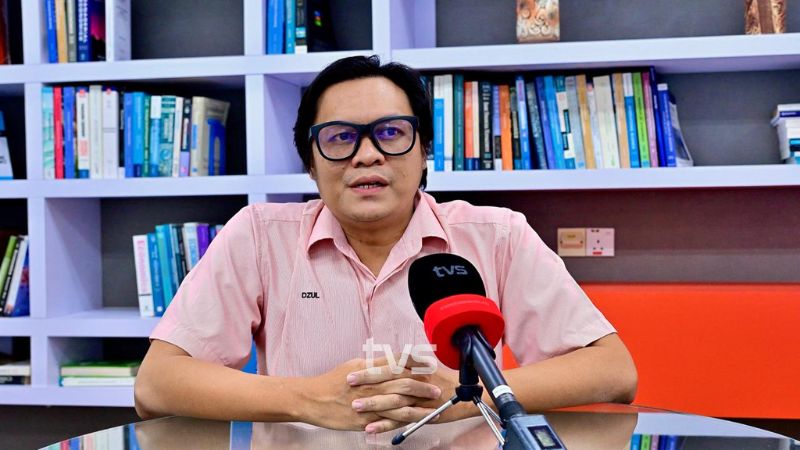
Seah Boon Tiat
Managing director Seah Boon Tiat said a price fluctuation mechanism would be the single measure that would most change the group’s investment in 2027.
“We are cautious with our cashflow as our contracts are fixed priced and the prices of construction material and fuel have been on the upward trend due to uncertainty in world events,” he told The Borneo Post in an exclusive interview.
Budget 2027 is scheduled to be tabled in Parliament on October 9, the second budget under the 13th Malaysia Plan (13MP).
Cost pressures on the ground have been building, with Department of Statistics Malaysia (DOSM) data showing cement prices in Kuching and Miri up 7.2 per cent year-on-year in July, the second-highest increase in the country after Perak.
Seah said most construction tenders are awarded on a fixed-price basis, leaving contractors exposed to changes in the cost of steel, cement, fuel, logistics and labour.
“A fair and transparent variation of price mechanism for exceptional cost movements would allow risks to be shared more appropriately without compromising project quality,” he said.
Over the longer term, he said the most meaningful measure would be a firm, multi-year implementation pipeline for public infrastructure projects, supported by clearly defined tender and award timelines.
“For contractors, certainty of implementation is what translates budget allocations into long-term investment, employment opportunities and stronger local construction capabilities,” he said.
For Budget 2026, it carried nearly RM2 billion to upgrade more than 520 dilapidated schools, particularly in Sabah and Sarawak, RM3.3 billion for basic rural infrastructure and nearly RM2.2 billion to build, maintain and repair government quarters. The development allocation for Sarawak was raised to RM6 billion.
Seah said he hoped Budget 2027 would continue to prioritise institutional buildings and essential infrastructure in Sarawak, particularly dilapidated schools, government facilities, rural roads, bridges, water infrastructure and civil servant quarters.
“These projects are important not only for economic development, but also for improving access to education, public services and connectivity across rural communities,” he said.
He noted Hartanah’s work on dilapidated schools across the state, the State Archive Project, the Sebauh Bridge Project and the Sg Padas Bridge Project.
On the service tax, which has applied at six per cent to construction services since July 1, 2025 for providers with annual revenue above RM1.5 million, with residential works exempted, Seah said it had introduced an additional consideration in tender pricing, particularly for institutional and non-residential projects.
He said the greater challenge arises where project budgets or contract values were set before the tax was introduced, especially for fixed-price contracts where the additional cost may not be fully recoverable.
“The service tax adds another layer to this cost structure and may place further pressure on margins if it cannot be passed through or reimbursed,” he said.
In stating this, he called for greater clarity and targeted relief for public-sector projects that serve essential social purposes, such as schools, healthcare facilities, rural infrastructure and government quarters, whether through a wider exemption, a reimbursement mechanism or clear contractual treatment of the tax.





 English (US) ·