


 59 minutes ago
3
59 minutes ago
3
ADVERTISE HERE
KUCHING, Oct 5: Sarawak’s electricity demand is expected to rise as the state attracts more data centres, artificial intelligence infrastructure and semiconductor investment.
Deputy Minister of Energy and Environmental Sustainability Datuk Dr Hazland Abang Hipni said Sarawak’s renewable energy surplus should not be regarded as an unlimited resource.
“The more successful we are in attracting digital investment, the greater the demand placed on our energy system.
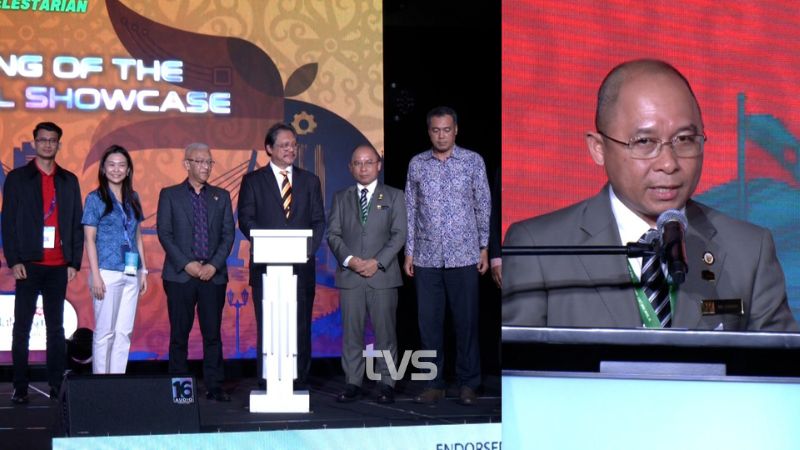
“Today’s surplus can become tomorrow’s demand,” he said at the International Digital Economy Conference Sarawak (IDECS) 2026 here.
Hazland said growing demand from energy-intensive industries would be a sign of increased economic activity, but would also require Sarawak to continue expanding and diversifying its energy supply.
He added attention would also have to be given to transmission infrastructure, energy storage and how new digital loads interact with the wider electricity grid.
“We must manage the demand as carefully as we develop the supply,” he said.
Sarawak’s electricity generation capacity stood at 5,898 megawatts in 2025 and is targeted to reach about 10,000MW by 2030.
Hazland said, this could increase further to around 15,000MW after 2030 as additional generation capacity comes online.
The additional supply is expected to include floating solar, cascading hydropower and combined-cycle gas generation.
He further said Sarawak had an estimated hydropower potential of 20 gigawatts and solar energy potential of about 30 gigawatts.
Hazland added electricity would become increasingly important as Sarawak develops industries which rely heavily on computing infrastructure.
“Every data centre requires energy. Every semiconductor facility requires energy.
“Every AI model, every high-performance computing system and every emerging space technology ultimately depends on infrastructure that can support the whole initiative,” he explained.
He said Sarawak’s renewable energy advantage should therefore be viewed as capacity for future economic growth rather than simply electricity left in surplus.
“The more important question is what value can we create with this surplus,” he said. – TVS





 English (US) ·