
 5 hours ago
5
5 hours ago
5
ADVERTISE HERE
As International Day of Sign Languages highlights the importance of linguistic inclusion, Deaf Kuching resident Azizan sees sign language not as a barrier, but as another language that can bring people closer together.
The Language of Connection
Conversation comes naturally to most people — until two people realise they do not speak the same language. For Deaf people, being left out of a lively conversation is not necessarily about an unwillingness to connect, but about having a language that many around them do not understand.
For Azizan, it happens when there is chatter among hearing people. At times, the situation would leave him feeling alone.
“Usually the Deaf would want to be included in the conversation as well.”
For Azizan, the answer is not to see sign language as a barrier, but as another language — one that he believes can be interesting for everyone to learn.
On this International Day of Sign Languages, Azizan shares his thoughts on the struggles and barriers he faces as a Deaf person in Kuching, Sarawak.
The day highlights the importance of recognising, protecting and promoting the rights of Deaf people. For Azizan, however, it is simply about wanting to be understood.
Despite the challenges, they do not deter him. Rather, they have ignited within him the determination to move forward.
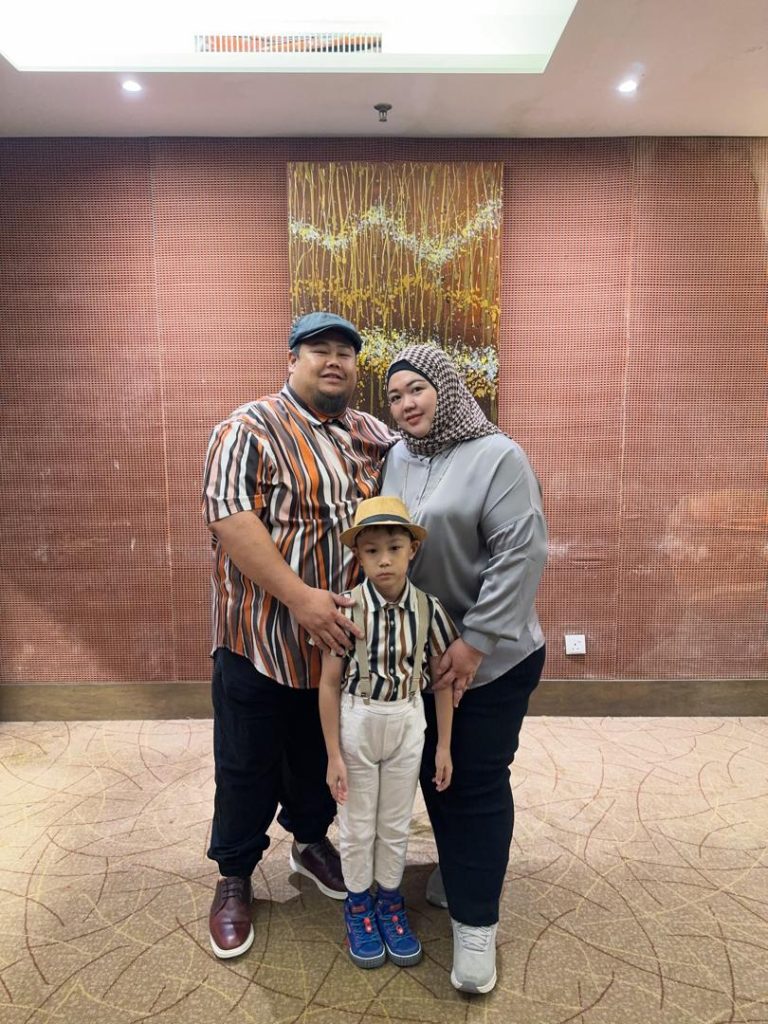 Azizan worked as a Grab rider during the pandemic.
 Azizan during his time in Singapore, where he worked as a safety trainer.
Working as a QA/QC officer for an offshore company, Azizan said Deaf people, like hearing people, have the same potential and should have the same opportunities based on their capabilities.
“We are the same despite our challenges of being a Deaf person. The difference is that we cannot talk and hear. But apart from that, we can do anything we want and be successful in the things that we do,” said the 43-year-old.
Before his current job, Azizan studied graphic design and worked as a designer for a company in Brunei. Later, he worked as a safety trainer for a training centre in Singapore.
During the pandemic, he worked as a Grab rider to make ends meet. He also opened a kampua mee stall at an eatery in Satok with his wife.
Through the different chapters of his working life, sign language has been more than a means of communication. It has allowed him to learn, work and build relationships with the people around him.
At home, that communication extends to his family.
His wife, children and extended family, including his cousins, nieces and nephews, have learned to sign with him. He was the one who taught them and, because they have grown up communicating together, signing has become part of their everyday interactions.
But outside that familiar circle, communication can become considerably more complicated.
At restaurants, shops and government counters, Azizan said the situation is familiar: the person on the other side of the counter does not understand sign language.
“When that happens, I would usually turn to two solutions. Either I write them a note, or I video call my wife to let her communicate with them instead. Usually, the latter is more effective.”
More than an identity
Language is often closely tied to identity. It carries culture, experiences and a sense of belonging, allowing people to express not only what they think, but also who they are.
For the Deaf community, sign language can similarly serve as an important means of connection and expression. Yet the way people relate to it can differ from one person to another.
Having grown up using sign language, Azizan sees it less as a defining part of his identity and more as another language he has learned.
“I would say it’s not part of my identity, but as I know another language compared to people that don’t know sign language,” he said.
That perspective is reflected in the way he communicates with his own family. His wife, children, cousins, nieces and nephews have all learned to sign with him, with Azizan teaching them himself.
It has become less about difference and more about understanding — a language shared within the family so that everyone can take part in the conversation.
In Malaysia, Azizan said the country has its own Malaysian Sign Language (BIM), which differs from sign languages used in other countries.
“BIM is just a sign language from Malaysia. Different countries have different sign languages.”
BIM is the sign language used by Malaysia’s Deaf community and was formally recognised by the Malaysian Government following the Persons with Disabilities Act 2008.
 Azizan at work as a QA/QC officer.
 Azizan during a Professional Association of Diving Instructors (PADI) licence examination. He is also a certified diving instructor.
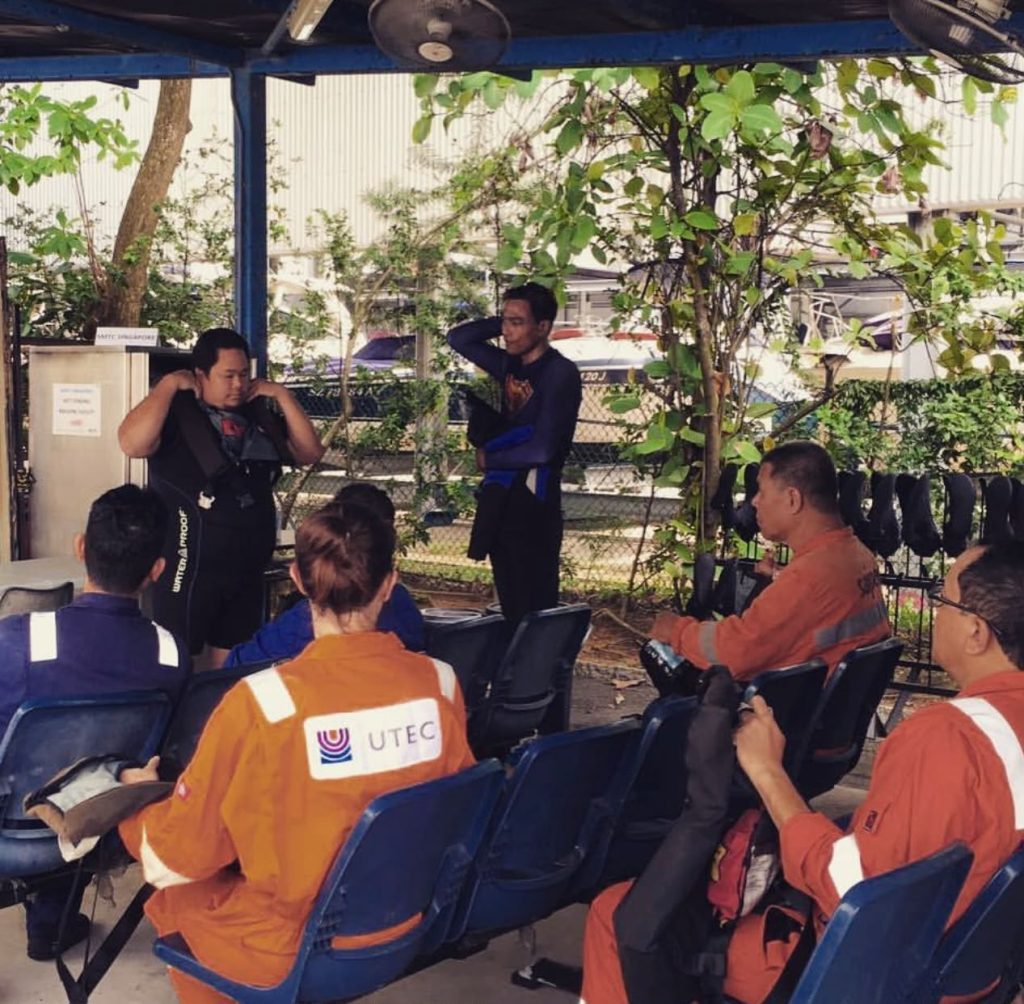 Azizan during his time in Singapore, where he worked as a safety trainer.
BIM is a complete visual language with its own grammar, sentence structure and syntax. Beyond hand movements, it uses hand shapes, facial expressions, body movements and space to convey meaning, including tone, emotion and intent.
For Azizan, however, knowing a language is only one part of being understood. When communicating with hearing people who do not know BIM, he often has to provide more detail or find another way to make his meaning clear.
“As a Deaf, we usually explain things very detailed, but when it comes to hearing people, they don’t understand this part and treat us as so different. When we sign, we cannot simply sign. Sometimes we need to put in a few characters to make the situation clearer.”
It is a reminder that the gap is not necessarily in the language itself, but in how much effort both sides are able to make to understand one another.
Inclusion does not always require grand gestures. Sometimes, it begins with the simple willingness to understand.
Sign language should not be seen as something exclusive to the Deaf community, but as another language that anyone can learn. If more people took the time to understand BIM, fewer Deaf people might find themselves watching conversations from the sidelines, waiting to be included.
After all, communication is not only about speaking or hearing. It is about making the effort to understand one another.






 English (US) ·