


 9 months ago
92
9 months ago
92
ADVERTISE HERE

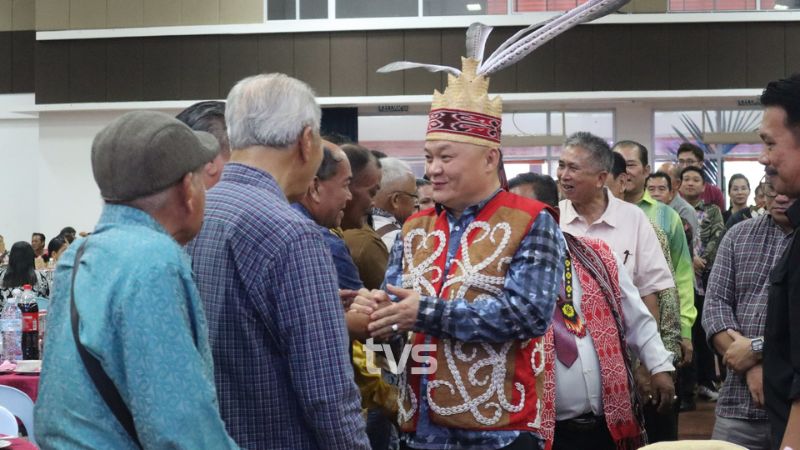
Tourism, Arts and Culture Minister Datuk Seri Tiong King Sing (second left) at the 33rd ASEAN Socio-Cultural Community Council Meeting with the Premier of Sarawak (second right) and others, while donning the traditional Selampai Sulaman Burie. This handcrafted piece features intricate embroidery made using hard, smooth freshwater snail shells, sewn into the fabric to form decorative motifs traditionally worn by the Iban community of Sarawak.
KUALA LUMPUR (Dec 10): The Association of Southeast Asian Nations (ASEAN) has undergone a remarkable evolution since its establishment in 1967 with the signing of the Bangkok Declaration.
What began as a platform to promote political stability and regional security has expanded into a comprehensive regional framework that now includes deep economic cooperation and socio-cultural development.
This transformation materialised in 2015 with the formal launch of the ASEAN Community, anchored on three major pillars: the ASEAN Political-Security Community, the Asean Economic Community and the ASEAN Socio-Cultural Community (ASCC).
The ASCC stands apart as the people’s pillar because it is dedicated to ensuring that regional progress is inclusive and centred on improving the lives of ASEAN citizens.
It aims to build a community that is socially responsible, environmentally sustainable and strongly grounded in identity and shared values.
Within this pillar, the Culture Sector—led by the ASEAN Ministers Responsible for Culture and Arts—plays a vital role in strengthening unity, safeguarding heritage and promoting cultural exchanges.
This sectoral body works closely with national ministries across ASEAN, including Malaysia’s Ministry of Tourism, Arts and Culture (MOTAC) which serves as the driving force behind Malaysia’s cultural leadership at the regional level.
In 2025, Malaysia assumed the Chairmanship of the ASCC, and Motac emerged as a central institution supporting the socio-cultural agenda. MOTAC’s stewardship of the Culture Pillar brought renewed focus to cultural diplomacy, heritage preservation and creative economy development.
Recognising that ASEAN’s greatest asset is its 680 million people whose cultural diversity and creative talents shape the region’s identity, Malaysia introduced five priority areas for the ASCC 2025 Chairmanship.
These focus areas are Cultural Heritage Value Creation; Artificial Intelligence and Digitalisation, including Green Jobs to future-proof essential skills; Healthy ASEAN Initiatives; Youth and Sports Potential for Growth and Unity; and Climate Action for Regional Stewardship.
MOTAC’s leadership in the Culture Pillar was especially prominent in advancing the first priority area, Cultural Heritage Value Creation. Through this focus, Malaysia cast culture not only as a symbol of historical identity but as a strategic driver of economic opportunity.
Cultural diplomacy, the creative economy, traditional crafts, performing arts and community heritage initiatives were placed at the forefront of regional discussions.
MOTAC’s efforts showcased how heritage and culture can be integrated into sustainable development, tourism growth, income generation and international cultural cooperation.
Malaysia’s commitment to the ASCC was further demonstrated through the scope of work undertaken throughout the year.

Tourism, Arts and Culture Minister Datuk Seri Tiong King Sing (centre) at the ASCC High-Level Forum 2025, attended by all ASEAN Member States, the ASEAN Secretariat, Timor-Leste as Observer, as well as wide-ranging sectoral stakeholders.
More than 130 meetings and programmes were held across all 14 Malaysian states, many of which were coordinated or supported by MOTAC to highlight Malaysia’s cultural richness and promote people-to-people connectivity.
These engagements ranged from Ministerial Meetings and Senior Officials’ Meetings to specialised Working Groups, expert roundtables, symposiums, educational programmes and cultural showcases. Each session helped strengthen cooperation across ASEAN while also amplifying the visibility of Malaysia’s arts, crafts and creative communities.
These collective efforts produced strong results. Seven outcome documents were adopted under Malaysia’s Chairmanship, reflecting ASEAN’s determination to address contemporary socio-cultural challenges while honouring shared values and heritage.
These documents cover initiatives to safeguard cultural heritage, expand cultural and creative industries, promote responsible social media use, advance higher education cooperation, enhance public health collaboration and reaffirm regional commitment to climate action.
MOTAC’s input into documents related to culture and heritage ensured that the Culture Pillar remained central to ASEAN’s socio-cultural agenda.
Cultural heritage was a key highlight of Malaysia’s Chairmanship. MOTAC advocated for a more dynamic approach to heritage management where preservation efforts are integrated with capacity-building, digital innovation and sustainable tourism.
From promoting indigenous crafts to strengthening regional cultural institutions, Malaysia encouraged ASEAN Member States to view culture as a living resource that supports identity-building and community empowerment.
Malaysia also led robust discussions on artificial intelligence, digitalisation and green jobs.
The Chairmanship emphasised the need to prepare today’s workforce for tomorrow’s digital landscape by promoting digital literacy, responsible technology use and future-ready skills. These efforts aim to create a workforce that can thrive in an increasingly technology-driven world.
Health cooperation was another strategic focus under the Healthy ASEAN Initiatives. Malaysia encouraged Member States to strengthen disease prevention, enhance public health surveillance and expand community health programmes.
The work in this area reflects ASEAN’s growing awareness that economic growth and social resilience depend heavily on the well-being of its people.
Youth empowerment and sports development were given strong attention as well. With a large and energetic youth population, ASEAN recognises that young people are crucial drivers of innovation, unity and progress.
Malaysia supported platforms that allow youths to participate in volunteerism, leadership exchanges and sports development activities.
Malaysia’s leadership also reinforced ASEAN’s shared responsibility in addressing climate change. Discussions centred on sustainable development, disaster resilience and greener economic pathways.
The focus was to ensure that ASEAN strengthens its environmental stewardship while building long-term resilience for future generations.
Through its ASCC 2025 Chairmanship, and with MOTAC’s leadership in the Culture Pillar, Malaysia has pushed the socio-cultural agenda beyond planning into effective implementation. With policy directions now established, the region is entering a crucial phase where delivery and community-level impact will determine success.

The ASEAN Arts and Craft Bazaar was also held to enliven the ASCC event at Sunway Pyramid Convention Centre.
As ASEAN looks ahead to the ASEAN Community Vision 2045, Malaysia’s 2025 leadership has set strong foundations for a more inclusive, sustainable and culturally cohesive region.
The work continues and its impact will shape the lives of millions across ASEAN for years to come.
With Visit Malaysia 2026 approaching, Malaysia remains committed to positioning culture and the arts as key pillars of sustainable tourism and the creative economy.
Through strengthened ASEAN cooperation, MOTAC aims to showcase Malaysia’s diverse cultural heritage, artistic excellence and warm hospitality on the global stage.


 English (US) ·