


 9 hours ago
8
9 hours ago
8
ADVERTISE HERE
TO understand what the baruk meant to a Bidayuh village, Dr Charlie Ungang begins with a word: ‘binua’.
He describes it as a world of its own, a community whose daily life, protection and responsibilities are closely bound together.
Within that world, the baruk helped determine when farming could begin, how disputes were settled, where visitors slept and how people gathered to celebrate.
“In the past, the ‘panga’, ‘baruk’ and ‘Bale Gambang’ were the buildings that brought the Bidayuh together as one,” he said.
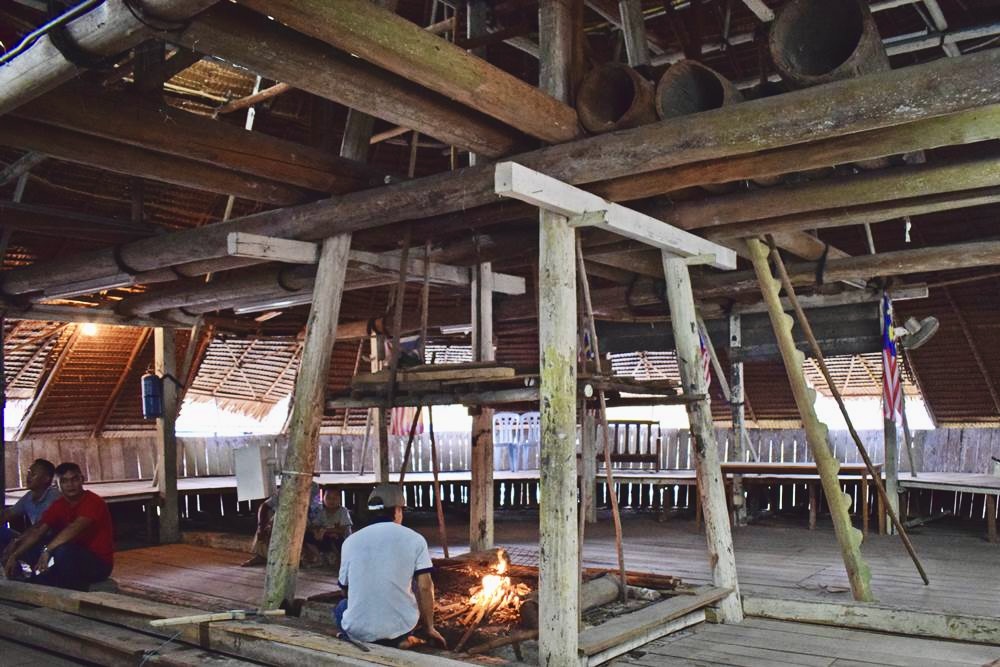 Inside the Baruk at Kampung Opar during Gawai Sowa, the Bidayuh annual Harvest Festival. Photo: Borneo Dictionary
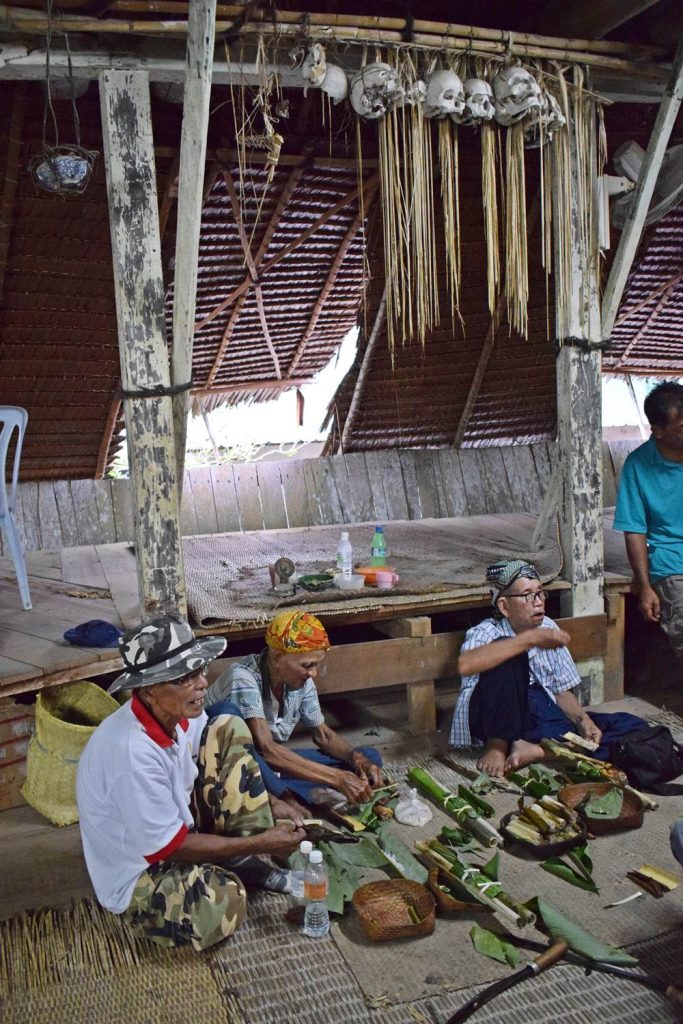 Community members gather inside a baruk at Kampung Opar during Gawai Sowa. Photo: Borneo Dictionary
Charlie’s book, ‘Etnik Bidayuh dan Bale Gambang-Baruk: Identiti, Tradisi dan Perubahan’, invites readers to look closely at the institutions behind those familiar cultural forms.
Their significance, he explained, lay in the lives organised around them and the customs they helped uphold.
The 63-year-old researcher said the ‘baruk’ in Bau, ‘pangah’ in the Penrissen-Padawan area and ‘Bale Gambang’ in Bukar-Sadong shared functions, although their architecture differed.
For communities surrounded by forest and connected to the outside world mainly by walking paths and rivers, these institutions helped meet needs that reached across village life.
Community needs
One of those needs was protection, understood in both physical and spiritual terms.
Charlie explained that ancestors living without access to hospitals and clinics depended on forest resources while also believing that ancestral spirits and the spirits of nature watched over them.
The baruk provided a setting for the rituals and offerings through which that relationship was maintained.
It also offered shelter during attacks from outside, with elevated structures allowing villagers to gather under the protection of village warriors.
These roles helped explain why the institution occupied such an important place in the community’s understanding of safety and survival.
Its authority extended to customary justice, with village elders and the village head hearing cases involving breaches of adat.
A person accused of misconduct could be brought before them, with penalties or fines imposed according to customary rules.
“In short, the institution of the baruk acted as our court,” he said.
Customary rules
The book’s back-cover description places particular emphasis on this role in upholding the social and customary rules of each ‘binua’.
It explores how traditions, shared values and expectations helped regulate behaviour, alongside the changes brought by modernisation.
Those principles could be seen in the ordinary tasks on which village life depended, including the cultivation of paddy.
Charlie recalled that a farmer could not simply burn a cleared plot once it had dried because the timing had to be discussed and agreed upon collectively.
The village head’s decision, reached through discussions at the baruk, governed when the work could proceed.
There was also ‘pingirih’, the practice of labour exchange through which villagers took turns working on one another’s farmland.
A day’s work on one family’s land would be followed by work on another’s, drawing the community into a shared effort during planting.
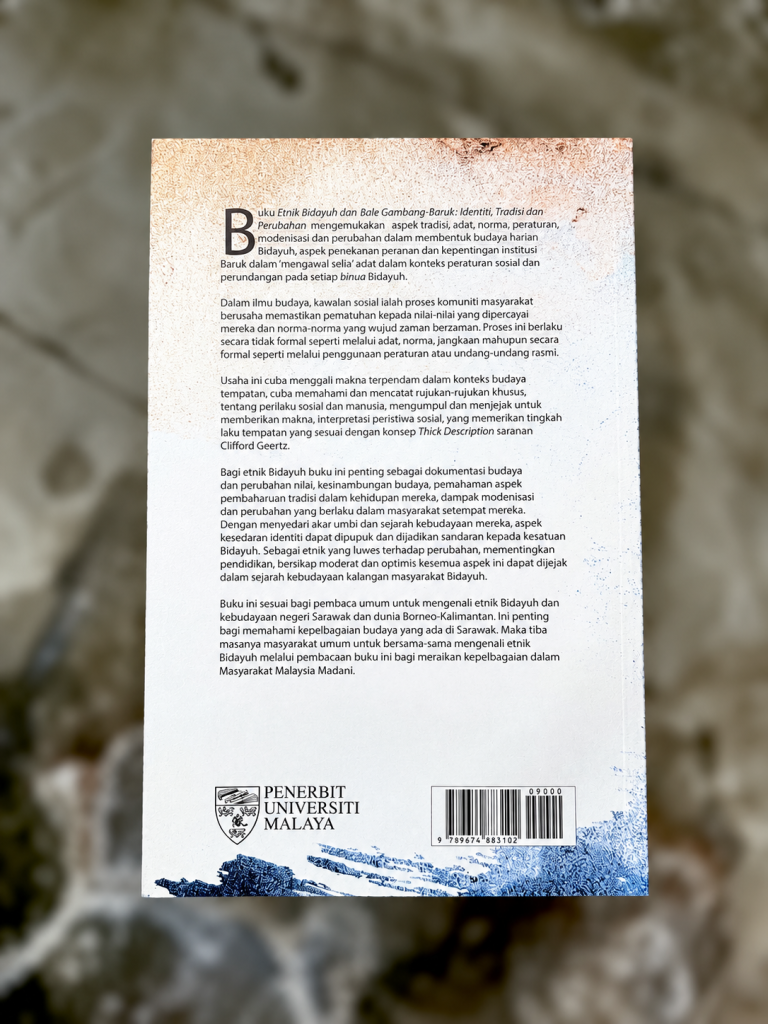 The book’s back cover outlines its exploration of Bidayuh identity, customary practices and the changes brought by modernisation.
Charlie had experienced such arrangements in his younger days, giving him a personal connection to the cooperation described in his research.
Preparations for visitors also brought people together, with decisions about ‘gotong-royong’ and village cleaning organised through the baruk or Bale Gambang.
The buildings themselves could provide accommodation for guests arriving from outside the binua.
In Charlie’s account, a Bale Gambang at Munggu Babbi, now known as Kampung Taee, received Rajah Charles Brooke’s wife and her entourage during a visit.
He said Kampung Taee preserved a replica associated with that history, offering a connection to the institution’s role in receiving visitors.
Celebrations, too, began there, with Gawai offerings and processions starting at the baruk, panga or Bale Gambang before continuing through the village and longhouse.
People then gathered at the awah, the longhouse platform, to celebrate together.
Taken together, these practices revealed how work, belief, leadership and celebration were connected within the binua.
Changing scenarios
Today, many administrative and communal functions have shifted to the balai raya, or community hall, as settlements and ways of living have changed.
Charlie said some villages continued to preserve their structures, including baruk in Bau and panga in Bunuk and Annah Rais.
Preserving knowledge of their purpose remains part of the challenge, particularly when younger generations recognise a building’s distinctive appearance but are less familiar with its history.
As Head of the Culture, Traditions and History Section at the Council for Native Customs and Traditions, Charlie discusses these concerns with community leaders and village elders.
While cultural performances remained part of many celebrations, Charlie expressed concern that they were often confined to the opening before modern music, dances and karaoke took over.
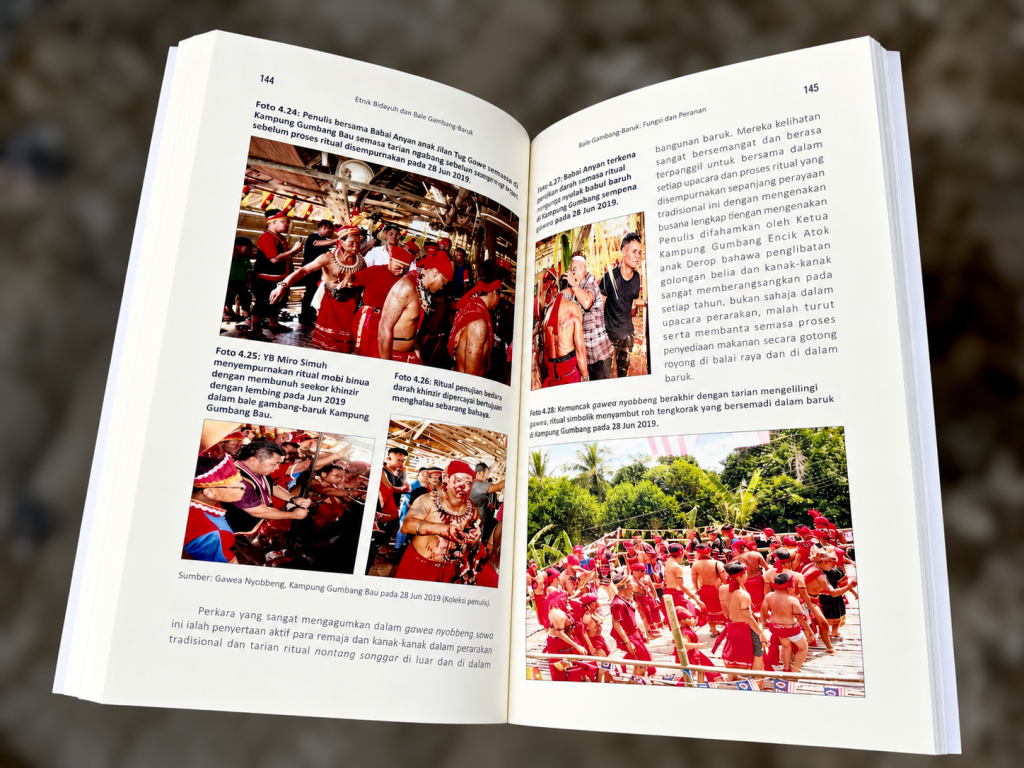 Pages from Charlie’s book document rituals and celebrations at Kampung Gumbang in Bau in June 2019.
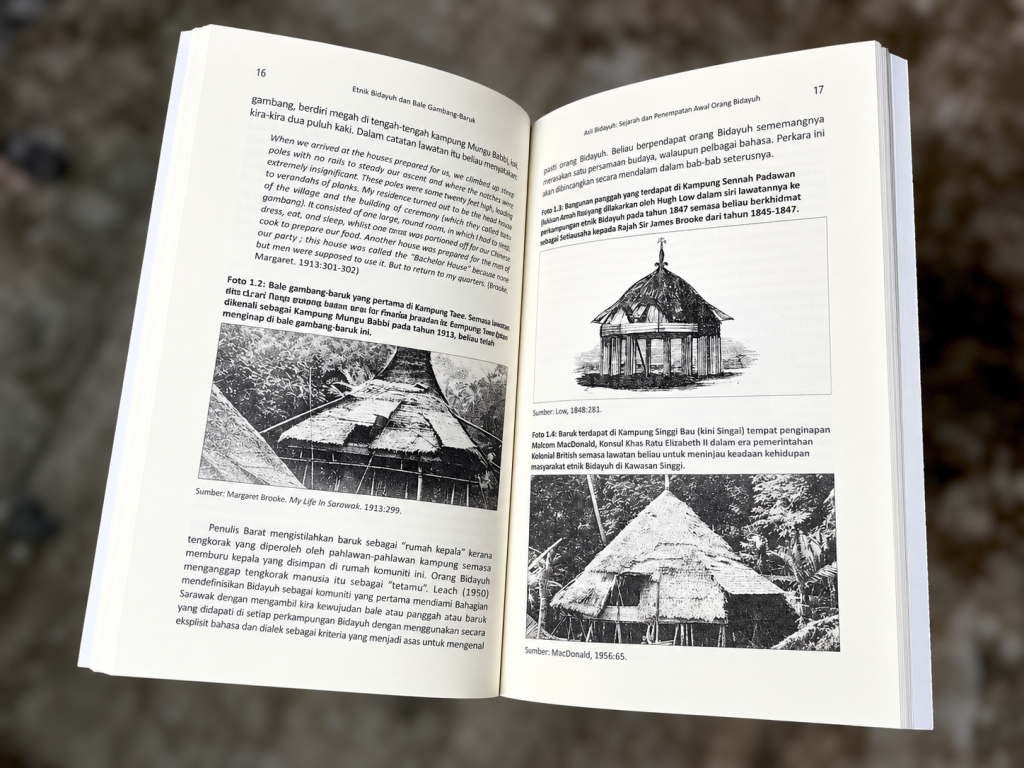 Historical photographs and an illustration in Charlie’s book depict the Bale Gambang, panga and baruk in different Bidayuh villages.
He hoped communities would give their own music and dances a greater place in the programme, allowing younger generations more opportunities to experience these traditions.
Still, he found encouragement in seeing people across generations wear traditional attire during Gawai in many villages he visited.
For Charlie, that pride in their identity offers hope that cultural practices will continue to find a place in changing village life.
“We cannot stop those changes. Generations change with time, and we develop with time.
“But we shouldn’t forget to include elements of our culture in those celebrations,” he said.



 English (US) ·