


 8 months ago
76
8 months ago
76
ADVERTISE HERE

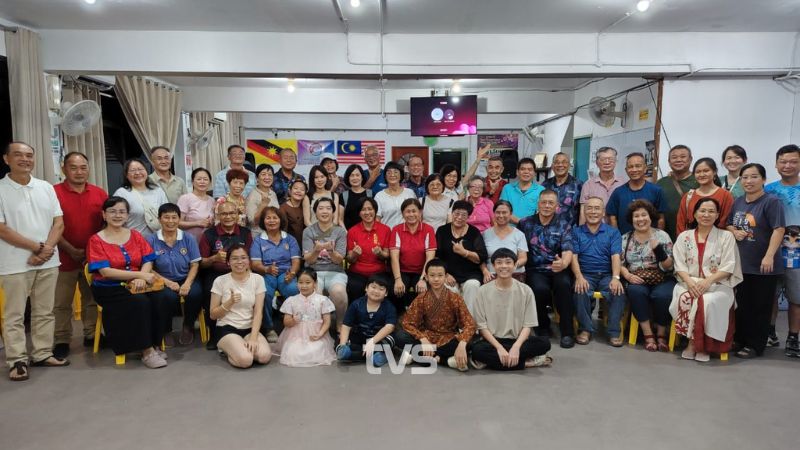
Dr Jeffrey (seventh right) with investors at the World Economic Forum in Davos, Switzerland.

A FEW days ago, an exclusive STAR WhatsApp group had a picture of Datuk Dr Jeffrey Kitingan on a snow-covered landscape, raising questions on where he was. One of us said he was in Davos, Switzerland, attending perhaps as an observer in the World Economic Forum then going on.
But when I texted him what his mission was in Davos he replied, “I was invited by a group investing in Sabah. And my role is in promoting Nature Capital and Conservation…”. As it turned out he did give a speech to expound on investment opportunities in Sabah to the group of investors at the World Economic Forum itself.
It was surprising. Not for the role he was playing there but the fact he was there to plan for Sabah socioeconomic future despite him not being a Cabinet member nor holding any state-appointed portfolio. It was quite obvious that his past work on nature-based economic capital and nature conservation had established his name at the global level, making him the preferred personality to be conferred with by cross-border investors towards possible investment in Sabah.
The unpublished development of him being in Europe on an economic mission reminds us again that Dr. Jeffrey is far from being exiled from the Sabah politico-economic scene. In fact, despite the reduced position of STAR with a mere two-seat win in the GE17, his political future is not heading south, for he remains still a giant among Sabah and national leaders. Continuing to be in a cheerful and positive mood, he is poised to move forward with renewed plans with zest. But what should he do now post GE17?
We can say that after GE17, Sabah’s political situation has once again entered a period of uncertainty and reassessment. For Dr Jeffrey Kitingan, this moment should not be seen purely through the lens of electoral success or failure. Instead, it is a time to seriously reflect on what role he should play next in shaping Sabah’s political direction.
Dr Jeffrey is one of the few remaining Sabah leaders with a long and consistent record of fighting for state rights, autonomy, and dignity within the federation. His struggle is well known and respected. However, the political mood on the ground has shifted. Many Sabahans today are tired of political instability and endless power struggles. They are now asking for stability, clear leadership, and real outcomes that improve daily life, not just historical narratives or symbolic victories.
First, Dr Jeffrey should clearly separate the Sabah rights agenda from short-term federal politics. Issues like MA63, autonomy, and revenue rights should not be activated only during elections or coalition negotiations. When these issues are treated as bargaining tools, public trust slowly erodes. If Sabah’s rights are to be protected in a meaningful way, they must be strengthened through proper laws, strong institutions, and continuous public education — not temporary political deals that fade once governments change.
Second, Sabah can and should learn from Sarawak’s approach, though not by copying it blindly. Sarawak’s strength lies in consistency and unity. It presents a united front when negotiating with Putrajaya, regardless of which coalition controls the federal government. Dr Jeffrey is well placed to encourage Sabah leaders across parties to do the same — to put state interests above party rivalries and personal ambitions.
To do this effectively, Dr Jeffrey may need to step back from day-to-day party politics. Instead of focusing on tactical alliances and short-term positioning, he could take on a broader role as a unifying figure — someone who shapes ideas, promotes policy discussion, and keeps the Sabah agenda focused on long-term goals rather than political survival.
Third, this stage of his career should be about building a lasting legacy, not preparing for the next election cycle. Initiatives such as proposing a Sabah State Development Council, pushing for clear and fair revenue-sharing mechanisms, or helping to institutionalise Sabah’s rights would leave a stronger and more permanent impact. Just as important is his potential role in mentoring younger leaders who understand both Sabah’s historical struggles and the demands of modern governance.
The reality is that Sabah’s political future belongs to the younger generation. Younger voters are practical and results-oriented. They care deeply about jobs, infrastructure, education, healthcare, and good governance. The struggle for autonomy must translate into better roads, better schools, and better economic opportunities. If it does not, it risks becoming irrelevant. Dr. Jeffrey can play a critical role in bridging ideals with implementation by guiding leaders who can turn principles into policies.
Finally, Dr Jeffrey should speak less as a conventional opposition politician and more as a guardian of Sabah’s political values. This means supporting good policies regardless of which party proposes them, criticising government failures calmly and constructively, and refusing to legitimise unstable coalitions that weaken governance. Such a stance would help restore public confidence and raise the overall quality of politics in the state.
GE17 should not be viewed as the end of Dr. Jeffrey Kitingan’s relevance or influence. Instead, it can mark a new phase — one where he redefines his role from an active political player to a key architect of Sabah’s long-term future and institutional strength. In fact he has assured his party lieutenants that the immediate step forward is to restrengthen STAR with the present and future leadership lineups, to boost up the performance of the divisions and to prepare for the forthcoming parliamentary general election in which he says STAR will likely be contesting in about six seats.
Definitely, with possible surprises coming soon from STAR, it is premature to the party Dr Jeffrey off as a political force to be reckoned with.



 English (US) ·