


 14 hours ago
10
14 hours ago
10
ADVERTISE HERE
KUCHING: Sarawak needs to build greater resilience in its rice farming ecosystem by developing varieties capable of withstanding drought, extreme heat, flooding and high soil salinity, said Minister of Food, Commodity and Regional Development, Datuk Seri Dr Stephen Rundi Utom.
He said such resilience is particularly important given Sarawak’s extensive low-lying, flood-prone areas and peatlands, which could be affected by increasingly unpredictable environmental and climate conditions.
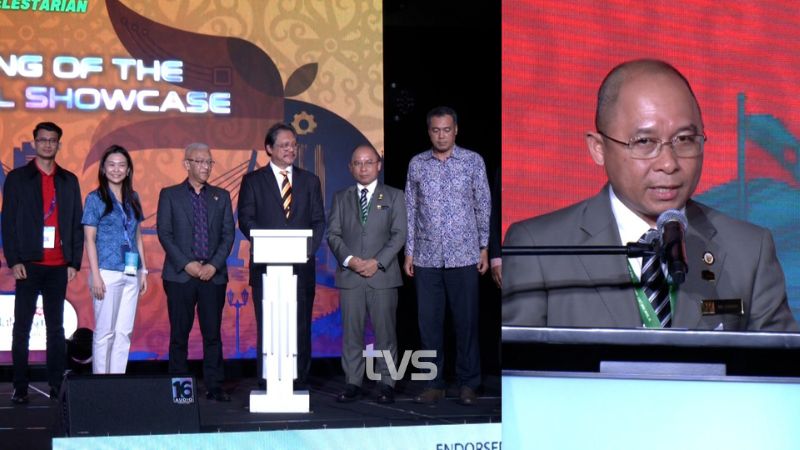
“Resilience means the capacity of a rice farming ecosystem to withstand, recover from, and adapt to environmental shocks, extreme climate conditions, and economic pressures,” he said during the closing ceremony of the 2nd Sarawak Rice Conference (SARICON II) 2026 here today.
His speech was read by Deputy Minister of Food Industry, Commodity and Regional Development (Commodity and Regional Development), Datuk Martin Ben.
He said building a resilient rice industry also required reducing reliance on synthetic chemical fertilisers and pesticides, while accelerating the adoption of Integrated Pest Management, biopesticides and alternative organic nutrient inputs.
He also called for greater use of geospatial technology and remote sensing to enable real-time crop monitoring and early intervention against pests and diseases.
Dr Rundi said innovation remained critical as Sarawak currently produced only about 21 per cent of its rice needs, leaving the State vulnerable to disruptions in major rice-exporting countries.
“To mitigate this risk, the Sarawak Government has set a firm target to achieve a 60 per cent Rice Self-Sufficiency Level (SSL) by 2030, which is less than four years away,” he said.
He said achieving the target would require targeted research and innovation, including the development of high-yielding varieties, more efficient fertilisers and eco-friendly pest control methods, as well as machinery suited to local field conditions.
The industry should also integrate technologies such as agricultural drones, Internet of Things (IoT) devices and field sensors, he said, adding that existing technologies must be adapted to Sarawak’s unique landscape.
Dr Rundi said selective breeding programmes should also focus on producing high-yielding rice varieties without compromising the taste and quality associated with local traditional and heirloom varieties.
He added that sustainable production methods are equally important, particularly as wet paddy cultivation contributed to global methane emissions.
“Mitigation strategies such as Alternate Wetting and Drying (AWD) techniques, smart irrigation, and sensor-based monitoring should therefore be actively adopted,” he said.
On collaboration, Dr Rundi said Sarawak and Malaysia has a strong pool of technical expertise, including agronomists, biotechnologists, soil chemists and data analysts, supported by research and academic institutions.
He called on stakeholders across government agencies, universities and the private sector to align their research and development efforts, particularly to ensure smallholders benefited from advances in the industry.
“By pooling our expertise, we ensure that everyone, especially our smallholders, reaps the rewards of our shared progress, enabling us to achieve our production targets much sooner than expected,” he said.
Rundi said SARICON II 2026, themed ‘Sustainable Rice Future: Innovation, Collaboration, and Resilience’, provided a timely platform for stakeholders to exchange knowledge and experience while charting a sustainable future for Sarawak’s paddy and rice industry.



 English (US) ·