


 8 months ago
65
8 months ago
65
ADVERTISE HERE
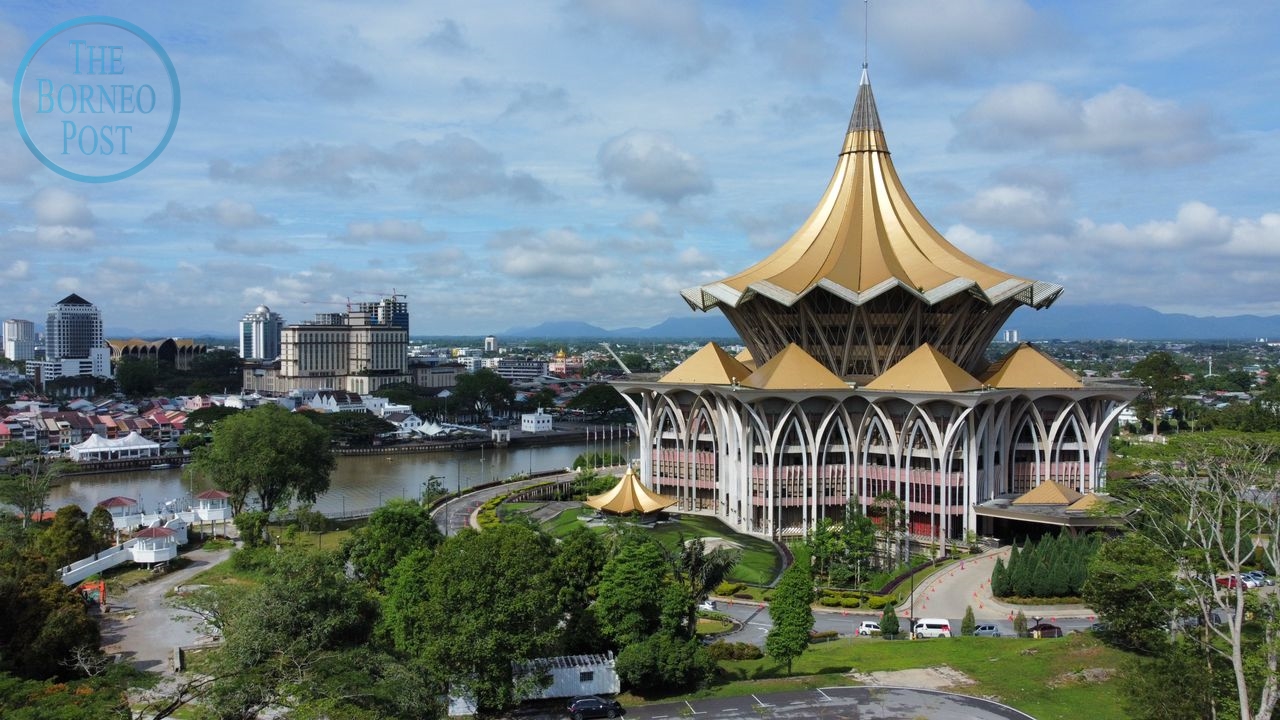
A view of the Sarawak State Legislative Assembly Complex. – Photo by Roystein Emmor
KUCHING (Jan 25): Civil action group Rise of Social Efforts (ROSE) has called for a comprehensive redrawing of all State Legislative Assembly (DUN) boundaries in Sarawak, based on the latest voter and population data at the electoral districts (DM) level.
ROSE said the exercise should go beyond creating new seats and include the division of existing DMs where necessary to ensure fair and effective representation.
“This principle is clearly articulated in Section 2(c) of the Thirteenth Schedule of the Federal Constitution, which states that the number of electors within each constituency in a state should be approximately equal, with some weightage allowed for rural areas due to access and logistical challenges,” it said in a statement.
According to ROSE, existing disparities dilute the value of urban votes and erode the democratic principle that every voter’s voice should carry roughly equal weight.
The statement was issued in response to Minister in Prime Minister’s Department (Law and Institutional Reform) Datuk Seri Azalina Othman Said’s recent affirmation that the Sarawak delineation process now rests with the Election Committee (EC), following the Sarawak DUN’s decision in July last year to increase its seats from 82 to 99.
ROSE proposed that the EC adopt a voter variation limit of plus or minus 20 per cent from the state average.
While rural constituencies may justifiably have fewer voters due to population density, access, transportation and community cohesion issues, it said such considerations must not result in extreme imbalances.
“The gap between the smallest and largest constituencies must be reasonably minimised and constitutionally defensible,” it stressed.
ROSE added that the redelineation exercise must strictly adhere to the Thirteenth Schedule of the Federal Constitution, ensuring the process is fair, non-partisan and free from gerrymandering and malapportionment, in line with fundamental democratic principles.
Based on the latest available data, Sarawak had approximately two million registered voters as of May last year.
If representation were strictly equal, each DUN constituency would have around 20,000 voters.
While acknowledging Sarawak’s unique geographical realities, spanning approximately 124,450 sq km, ROSE said the current level of disparity remains unacceptable.
“For example, constituencies such as Gedong have approximately 10,000 voters, while urban constituencies like Senadin exceed 73,430 voters. In simple terms, a Gedong voter’s vote carries seven times more weight than that of a Senadin voter, even though both elect one representative.
“Such extreme discrepancies undermine the principle of equal representation,” it said.
ROSE also urged the EC to conduct public roadshows and consultations to gather feedback from citizens.
In parallel, the organisation said it would organise a series of capacity-building workshops to educate citizens and political party members on the redelineation process, their constitutional rights, and how to submit informed objections if boundaries are drawn unfairly.
The workshops, to be held with Tindak Malaysia, are scheduled for Bintulu on Jan 24, Kuching on Jan 31, Sibu on Feb 7, Miri on Feb 28, Sri Aman on March 7, and Bau on March 14.
“Once the EC publishes its proposed boundaries, ROSE will support citizens in preparing and submitting formal representations and objections as provided under the Thirteenth Schedule of the Federal Constitution,” it said.
ROSE also called on Sarawakians to actively participate in the process.
“Complaining online without action will not result in fair representation. This is a critical opportunity for citizens to exercise their rights and ensure every vote carries fair and equal value in shaping the future of the state,” it added.



 English (US) ·