


 5 hours ago
6
5 hours ago
6
ADVERTISE HERE
KUCHING, Oct 5: Sarawak’s future nanosatellites could potentially carry quantum security technology capable of protecting sensitive communications from threats posed by next-generation quantum computers.
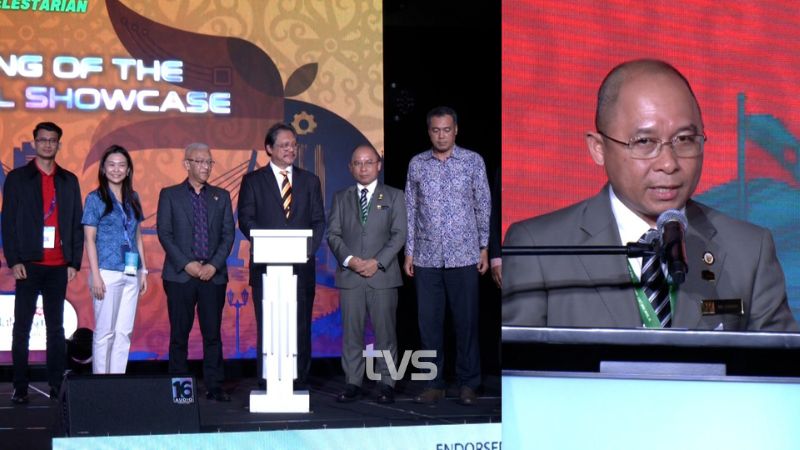
SpeQtral co-founder and Chief Technology Officer Dr Robert Bedington said quantum payloads could now be integrated into nanosatellites, providing a way to distribute highly secure encryption keys between locations on Earth.
“If you wanted to fly quantum payloads in your own nanosatellites, we can provide you with that hardware and teach you how to use it,” he said during the International Digital Economy Conference Sarawak (IDECS) 2026, here.
Bedington said the technology, known as quantum key distribution (QKD), was designed to protect highly sensitive communications from future quantum computers, which could eventually break conventional encryption systems.
He said the threat was not limited to the future, as encrypted information intercepted today could be stored and decrypted later once sufficiently powerful quantum computers become available.
“This is something that we need to be worrying about right now,” he said.
Bedington said cybercriminals and state actors could already be harvesting encrypted data passing through vulnerable networks and keeping it until the technology became available to break the encryption.
He said QKD could provide an additional layer of security for areas such as government and defence communications, critical infrastructure and connections between data centres.
Bedington also drew parallels between Sarawak’s current interest in CubeSat technology and Singapore’s earlier experience.
He said Singapore began experimenting with CubeSats more than a decade ago before the technology eventually led to commercial applications and companies working in quantum communications.
“So there’s a Singapore story of how, like you’re endeavouring to do now, we started with CubeSats and we ended up with businesses deploying these CubeSat technologies,” he said.
Earlier, Premier Datuk Patinggi Tan Sri Abang Johari Tun Openg said Sarawak aimed to develop its first nanosatellite using CubeSat technology by 2030.
He said the project was not simply about placing a satellite into orbit, but also about using the data generated for Earth imagery, geolocation, planning, environmental monitoring and resource management.
The Premier said satellite data could also support agriculture, forestry, disaster response and natural resource management, while opening opportunities in research, engineering and new businesses.
“The technology may extend into orbit, but the value ultimately comes back to our economy, our industries and our people,” he said. – TVS




 English (US) ·