
 1 hour ago
4
1 hour ago
4
ADVERTISE HERE
SIBU: The Sibu Eng Ann Teng Tua Pek Kong Temple came alive with festive activities as devotees gathered to celebrate the Mid-Autumn Festival.
The Mid-Autumn Festival are two important festivals which include the Lantern Festival for Chinese people. During these festivals, believers not only go to temples to burn incense but also pray for peace.
The temple Trustee Board vice-chairman Soon Choon Kui said the annual celebration was part of the temple’s tradition and provided an opportunity for the community to come together in a festive atmosphere.
He said the programme at 7pm this evening, featured singing, dancing, stage performances and music, with mooncakes also distributed to those attending.
“We are a traditional Chinese religious community, and the Mid-Autumn Festival is an important celebration for us. We organise this event every year as part of our tradition,” he said to reporters today.
Soon said the evening’s programme would continue until about 10 pm, while a worship ceremony would be held at 11 pm.
“We have arranged a song-and-dance troupe, singers and various other performances for everyone to enjoy. We are also honoured to have many distinguished guests with us tonight,” he said.
He said the temple had attracted an even larger crowd the previous night, when about 3,000 to 4,000 devotees came to pray at midnight.
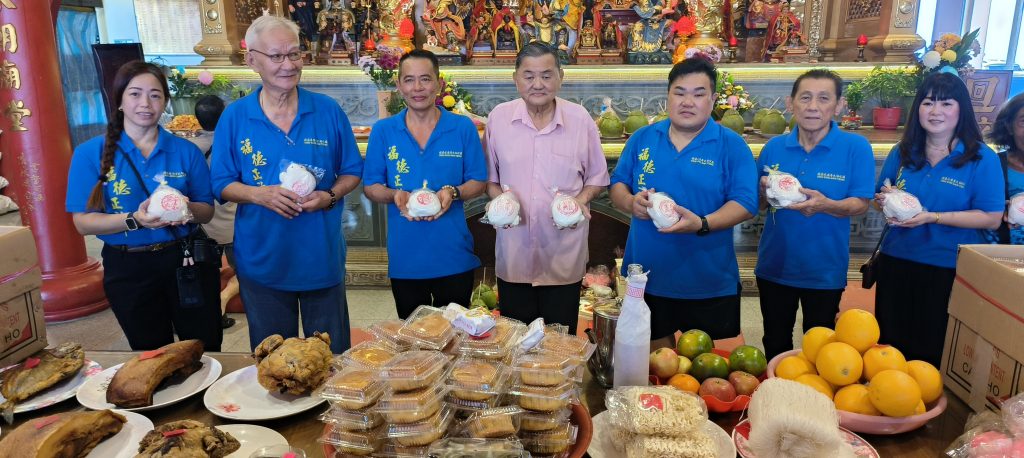 Soon (centre) and his board members show the longevity tortoise.
“The number of worshippers is even greater during Chinese New Year. Tonight, we expect the crowd to grow after people finish work and come to the temple,” he said.
One of the sideline activities is the borrowing of a longevity tortoise from the Tua Pek Kong (Grand Uncle God), which the worshippers believe will bring good fortune. The longevity tortoise is in the form of buns.
According to folk beliefs, receiving treasures from the gods at the beginning of the Lunar New Year is considered borrowing good fortune, hoping for prosperous business and abundant wealth in the coming year.
Borrowing a longevity tortoise is a prayer for health, smooth work, safe travel and long life. Making vows at the beginning of the year and fulfilling them at the end is believed to be a sincere act of kindness. According to almanacs, the fifteenth of the first and eighth lunar months is the day when the “Grand Uncle” (a deity in Chinese folklore) publicly reveals his treasury.
Those who borrow wealth should first worship the Tua Pek Kong, then kneel respectfully before the altar. They should then inform the Tua Pek Kong of their name, age, address, and the amount they wish to borrow (limited to RM2).
They must pray for the Tua Pek Kong’s permission and obtain his “holy chalice” (divination blocks) approval. Next, they should ask the Tua Pek Kong how much to repay in gratitude the following year. They will then “drop the chalice” to inquire of the Tua Pek Kong. If there is no “holy chalice,” the amount to be repaid the following year will double until a “holy chalice” is obtained. The more money repaid in gratitude the following year, the more prosperous your fortune will be.
Meanwhile Soon said the construction of a decorative gateway and the expansion of the Temple waterfront precinct has started.
“Piling work has started and construction will continue regardless of the weather. The project is expected to be completed within 18 months,” he said.
He added that the completed extension would also enhance the temple’s presence along the riverfront and could become another attraction for visitors to the area.
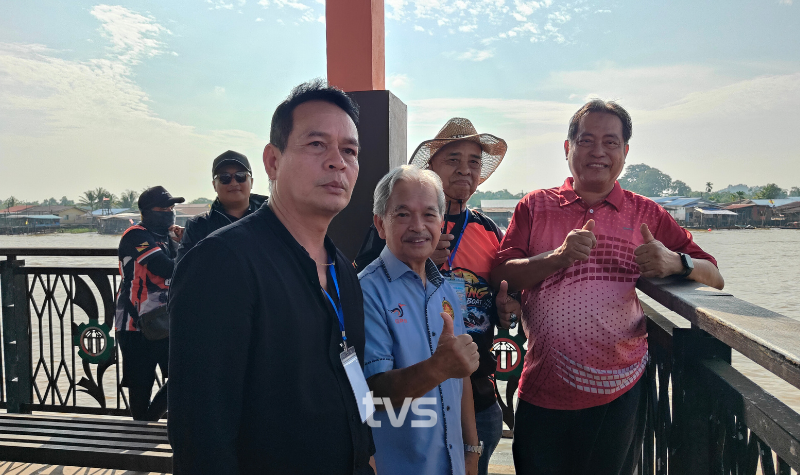
The Sibu Eng Ann Teng Tua Pek Kong Temple is located along the town’s waterfront beside the Rajang River and is one of Sibu’s prominent landmarks. The temple’s official website traces its history to the 19th century, with a Chinese temple recorded in Sibu in an 1871 government gazette.




 English (US) ·