
 9 hours ago
3
9 hours ago
3
ADVERTISE HERE
Along the Sarawak River at Kuching Waterfront were wharves, each serving a purpose when the river was central to everyday life. These ‘pangkalan’ provided places to dock, with some becoming closely tied to the history of the communities around them.
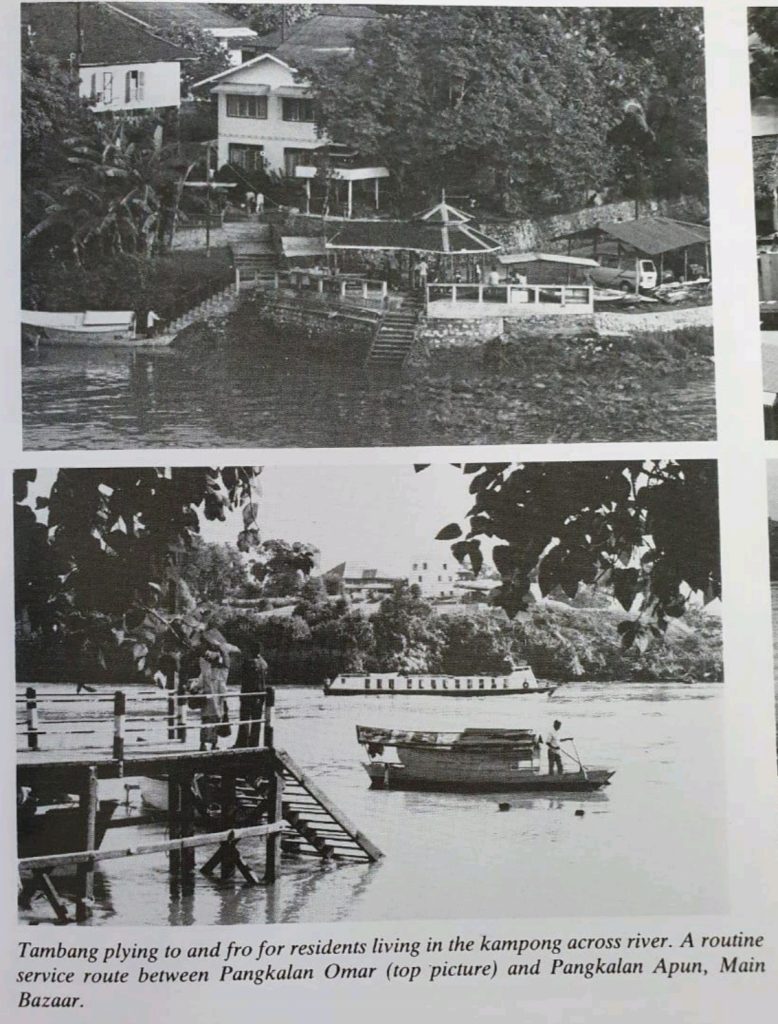
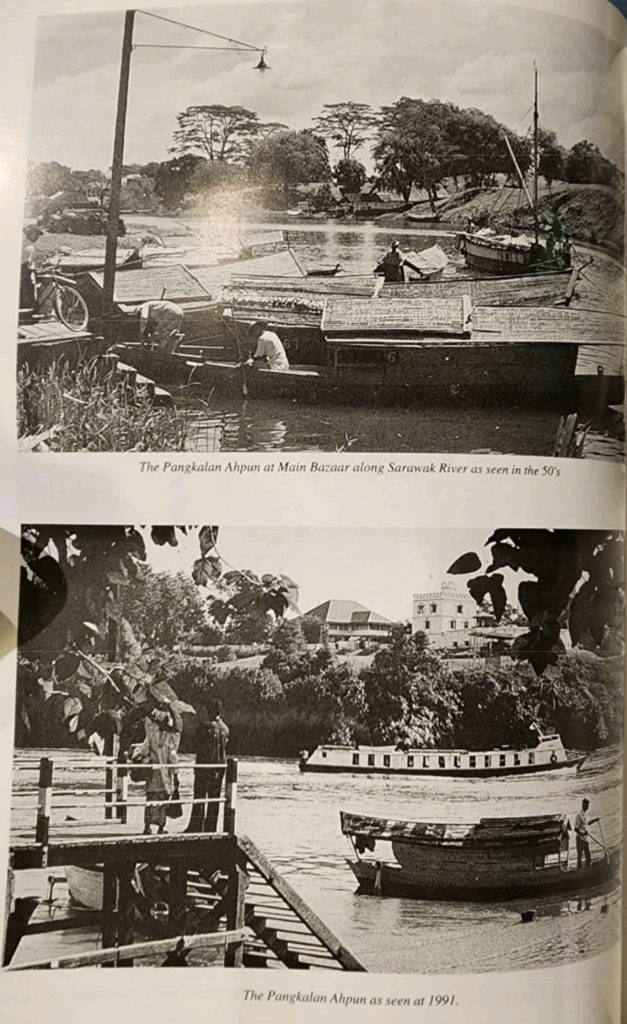
Many of these wharves had existed since the Brooke era. Among them was ‘Pangkalan Ah Pun’, which is no longer there today, having been replaced by Pangkalan Haji Omar. Yet, the name remains remembered by his descendants.
Built in the late 1800s by businessman Lim Ah Pun, the pangkalan was associated with his business, Chop Eng Huat, located at 86 and 88 Main Bazaar.
According to Ah Pun’s great-great-grandson, Timothy Lim, Ah Pun’s arrival in Kuching was different from that of many other Chinese immigrants who came from China in search of better opportunities.
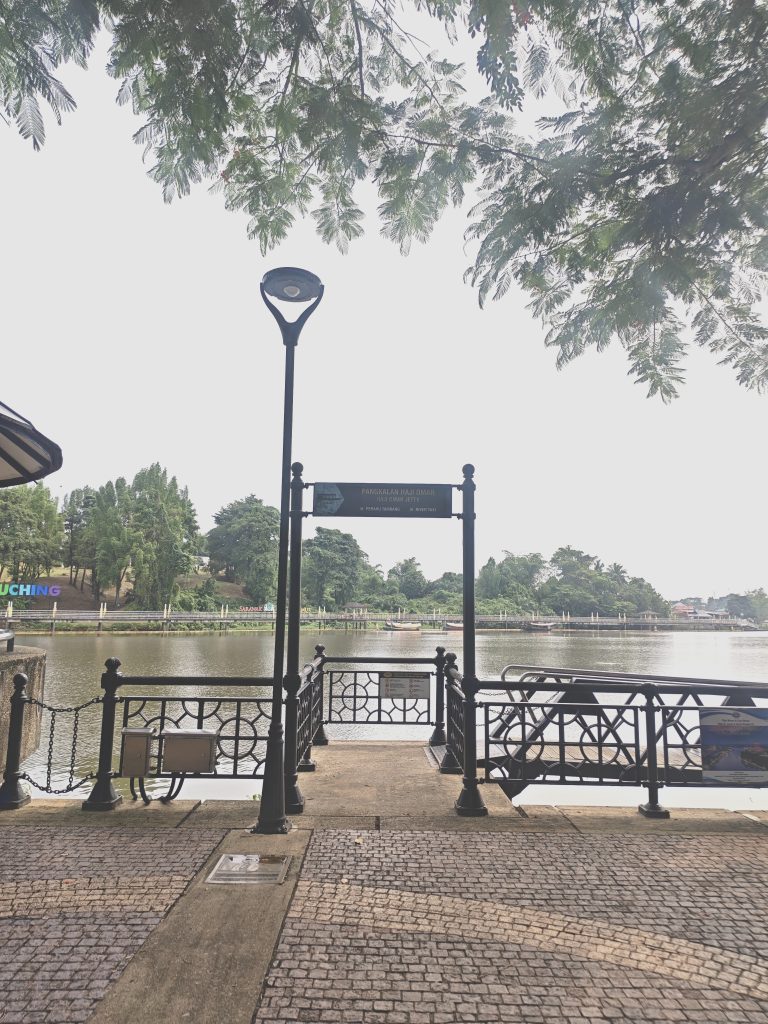 The site of the former Pangkalan Ah Pun at the Kuching Waterfront is now occupied by Pangkalan Haji Omar.
For Ah Pun, Kuching was not simply a place to seek greener pastures. Rather, he saw the region as an opportunity to expand his business.
“My great-great-grandfather built the ‘Pangkalan Ah Pun’ then to facilitate his business, which was just across from it. At some point, the wharf was also used by the public to get across.”
Though not many stories have survived the generational gap, Timothy has heard tales about his great-great-grandfather, his businesses and the wharf. Family members have remembered his ancestor as kind-hearted.
“One of Ah Pun’s descendants, his third son, Lim Tian Ho, was born in the shophouse at Main Bazaar and worked at the shop before World War II. Tian Ho was apparently generous and kind. When the workers couldn’t work due to illness or injury, he would ask his wife, Teo Ngiau Ho, to cook rice for the workers’ families.”
This, Timothy said, was the culture he would like to think Ah Pun upheld during his time at the Eng Huat company, and which he passed on to his children.
Eventually, Ah Pun returned to China and died there before the war.
Pangkalan Ah Pun in memories
As ‘Pangkalan Ah Pun’ was one of the important wharves at the Kuching Waterfront, many people remembered the convenience it provided.
In Life in the Malay Kampongs of Kuching, Fifty Years Ago, A. Zainal Abidin and Abdullah Mohd Salleh described the wharf:
“At the off-loading point near ‘Pangkalan Ah Pun’ on the south side of the river the bank is much higher than the level of the boat even at the highest tides and slopes at a rather steep angle to the water’s edge.”
According to the authors, the wharf was engineered to be at the same level as the main road, making it convenient for unloading. They described it as the nearest suitable unloading point for people from Kampung Tanjong, as other parts of the south bank were “either too swampy or too high, or occupied by buildings and wharves.”
“The unloading point is also used by those Malays who collect sand further upstream near their homes at Batu Kitang,” the authors recalled.
As young boys in Kuching in the 1950s, the authors recalled seeing more than 20 Malays return to their villages via the wharf at 5am after working night shifts as watchmen or hospital attendants. By 6am, working men began arriving, with activity peaking at 8am.
At 7.30am, schoolchildren from Kampung Boyan and Gersik passed by the wharf on their way to English-medium schools in Kuching town.
Throughout the day, the next peak periods were at noon and in the evening.
Though the scene has changed today and the wharf no longer sees these peak periods, the stories remain. ‘Pangkalan Ah Pun’ may no longer stand along the waterfront, yet its name continues to surface through old photographs, written accounts and memories passed down through generations.
In its own quiet way, the wharf tells us how the river was once woven into the everyday rhythm of Kuching — from early morning workers making their way home to schoolchildren crossing the river, and traders and villagers moving their goods.
And perhaps this is what makes a river different from any other part of a city. It changes, but it also remembers.




 English (US) ·