


 10 months ago
261
10 months ago
261
ADVERTISE HERE

Mawan commended Abang Johari for presenting a forward-looking financial plan that not only sustains the state’s development momentum but ensures progress is shared across all communities.
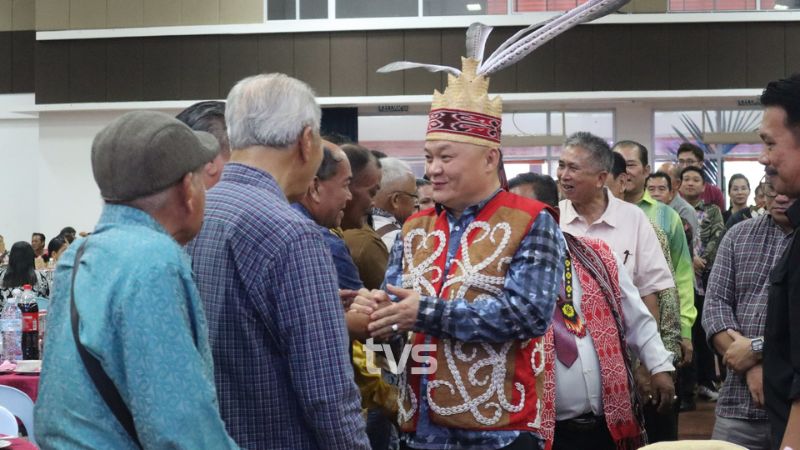
KUCHING (Nov 28): The 2026 State Budget sets a visionary and inclusive path for Sarawak’s continued transformation, keeping the state on track for long-term prosperity and social equity, said Pakan assemblyman Tan Sri William Mawan Ikom.
During the debate on the Supply (2026) Bill 2025 at the Sarawak Legislative Assembly (DUN), Mawan commended Premier Datuk Patinggi Tan Sri Abang Johari Tun Openg for presenting a forward-looking financial plan that not only sustains the state’s development momentum but ensures progress is shared across all communities.
Describing the Budget as a fiscal roadmap, Mawan said it strengthens Sarawak’s economic foundations while integrating rural and urban development into a cohesive and mutually beneficial framework.
He highlighted key allocations that reinforce the state’s commitment to strategic growth in areas such as the digital economy, renewable energy, and advanced green technologies.
“The digital economy continues to be a cornerstone, fostering innovation and creating high-value jobs,” he said, adding that initiatives in hydrogen production, carbon capture, and renewable energy will position Sarawak as a regional leader in sustainable energy.
Mawan noted that robust funding for connectivity, water and electricity supply, and smart city initiatives underscores the government’s dedication to building an infrastructure ecosystem capable of unlocking the state’s full economic potential.
Equally important, he said, is the Budget’s focus on inclusive growth to ensure no Sarawakian is left behind.
“This is a strategic effort to cultivate economic opportunities in rural areas, strengthen social safety nets, and bolster human capital development,” he said.
He praised increased allocations for education, healthcare, vocational training, and affordable housing, noting that these measures will benefit Sarawakians across all walks of life.
Mawan emphasised that the state’s approach places rural communities and the B40 income group not merely as beneficiaries but as active contributors to Sarawak’s economic transformation.
He said the Premier’s vision to bridge the rural-urban divide resonates deeply with constituencies like Pakan.
“For many of us from the rural areas, the strategies articulated by the Premier are reassuring. They strengthen our resolve to step up and participate actively in the wider development agenda,” he said.
He noted that equity and partnership are becoming key pillars of rural economic planning, giving renewed clarity and hope for the state’s development direction.
“Residents in Pakan welcome the government’s assurance that rural development and infrastructure projects will continue to be accelerated to narrow gaps between regions.
“Strengthening regional economic development and enhancing urban –rural integration will be popular narratives among the rural population,” he said.
Mawan, who is advisor in the Sarawak Premier’s Office (Food Industry, Commodity and Regional Development), also highlighted substantial support for small and medium enterprises (SMEs) and the modernization of the agricultural sector.
“These allocations are crucial for uplifting local livelihoods and strengthening Sarawak’s long-term food security,” he said.
He described the Premier’s approach as grounded in social justice and egalitarian values, ensuring prosperity is shared more equitably.
Sustainability, Mawan stressed, is now central to Sarawak’s development strategy, with environmental and social responsibility forming the foundation of future plans.
“Rather than being peripheral, sustainability is the defining element shaping the state’s development roadmap,” he said, noting that Sarawak’s integrated approach positions the state for enduring prosperity.
He also underscored the importance of increasing rural participation in economic ventures, particularly in natural resource management and downstream industries.
“As ADUNs (assemblymen) from rural areas, we must respond by strategising development plans and promoting participatory approaches to widen rural economic potential,” he said, urging non-governmental organisations and government agencies to organise more seminars and community talks to raise awareness about rural equity opportunities.
Mawan highlighted the Premier’s ambitious initiative to eliminate all “rural” classifications in Sarawak by 2030.
“This means that by 2030, no part of Sarawak will be considered rural,” he said.
He acknowledged that major infrastructure developments have already begun reducing disparities but emphasised that an integrated, comprehensive approach is critical to guide communities through the transition to more urbanised environments.
In closing, he said the Budget reflects a clear, structured, and ethical framework aligned with participatory development and equitable wealth distribution.
“The outlook for Sarawak’s development trajectory is highly encouraging. The state is successfully executing its strategy for comprehensive and balanced growth,” he said.

 English (US) ·