


 14 hours ago
10
14 hours ago
10
ADVERTISE HERE
KUCHING, 7 Oct: Government of Sarawak aims to increase the State's Satisfaction Level (SSL) rice supply from 21 percent to 60 percent by 2030 to strengthen local food security.
Deputy Under-Minister for Food Industry, Commodities and Regional Development of Sarawak, Datuk Martin Ben said that the current rice production of 21 per cent puts Sarawak in a risk situation if supply chain disruption or export restrictions from major rice producing countries occur.
" Achieving these goals requires focused research and innovation.
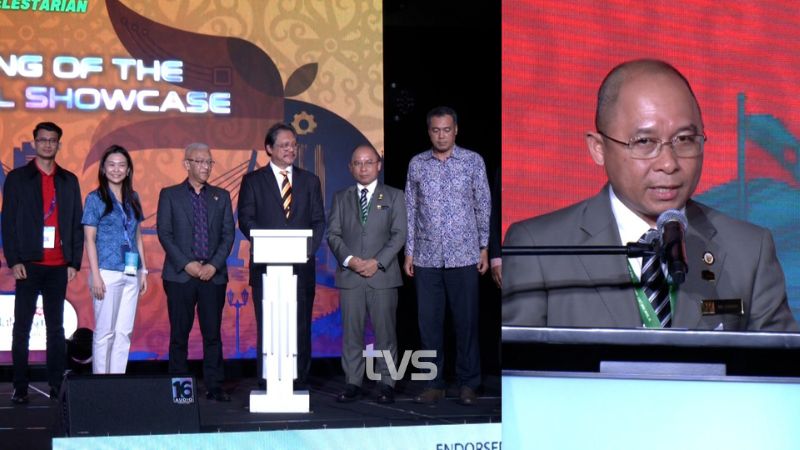
"We need to focus on producing high-yield breeds, formulating more efficient fertilisers and environmentally friendly pest control methods, using machines specifically for local farm conditions and integrating high-level technologies including agricultural drones, Internet of Things (IoT) technology and field sensors", he said while reading the text of the Minister of Food Industry's speech, Commodities and Development of Sarawak Region, Dato Sri Dr. Stephen Rundi Primary Child as he officially closed the 2nd Sarawak Rice Conference (SaRiCon II 2026) on Wednesday.
He added that although most of the agricultural technologies have been adopted globally, they need to be adapted to local adaptations and landscapes.
"For example, modern rice cultivated locally is still lagging behind hybrid varieties in countries like China. On the other hand, our local heritage breeds have high flavor quality but low yield.
"So our priority is a selective breeding program to produce high-yield rice without sacrificing quality and taste", he said.
In addition to production innovation, the environmental sustainability aspect is also emphasized as field rice cultivation contributes to methane gas emissions.
Sarawak said it will implement mitigation strategies such as Alternate Wetting and Drying (AWD) techniques, smart irrigation, as well as sensor-based monitoring.
At the same time, he stressed the importance of building resilience of local agricultural systems to climate challenges such as drought, floods and salty soils.
This step is clearly supported by reducing dependence on synthetic chemical fertilizers through Integrated Pest Management (IPM), organic nutrient inputs and real-time geospatial monitoring technologies.
To realize this desire, he called for close cooperation between various parties including research and academic institutions such as Sarawak Department of Agriculture, UiTM, UNIMAS, Swinburne, UPM, iCATS, UTS and Curtin University, in addition to active involvement of the private sector.
"Today is not the end, but rather a starting point for us to chart a sustainable path for the rice industry in Sarawak and Malaysia", he stressed.
The two-day conference "Sustainable Rice Future: Innovation, Collaboration, and Resilience" brought together policymakers, industry experts as well as various stakeholders to exchange knowledge and expertise for the future of the state rice industry. -TVS


 English (US) ·