


 10 months ago
251
10 months ago
251
ADVERTISE HERE

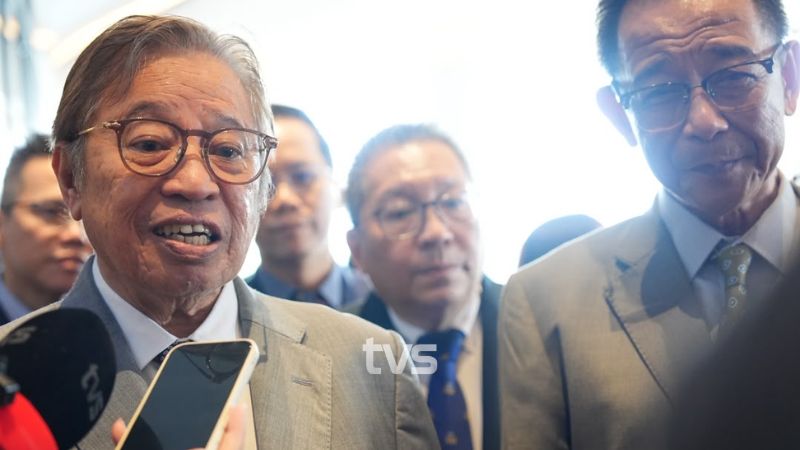
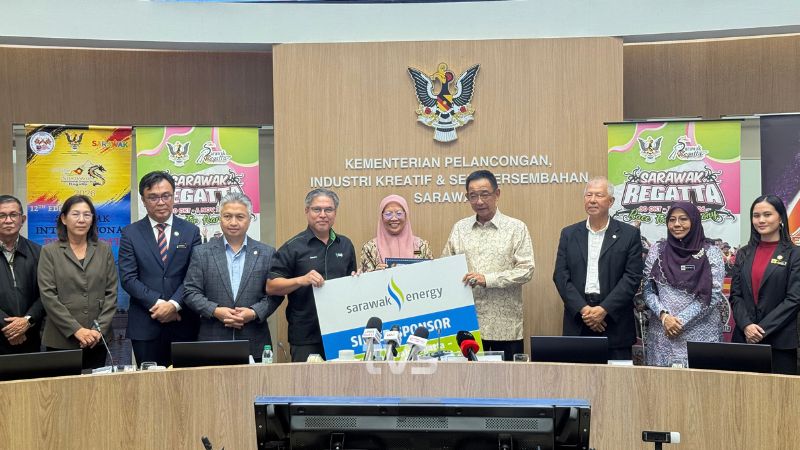
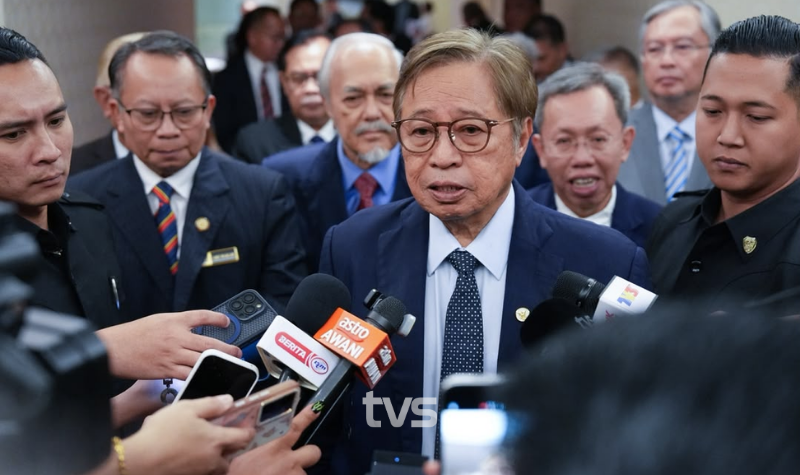
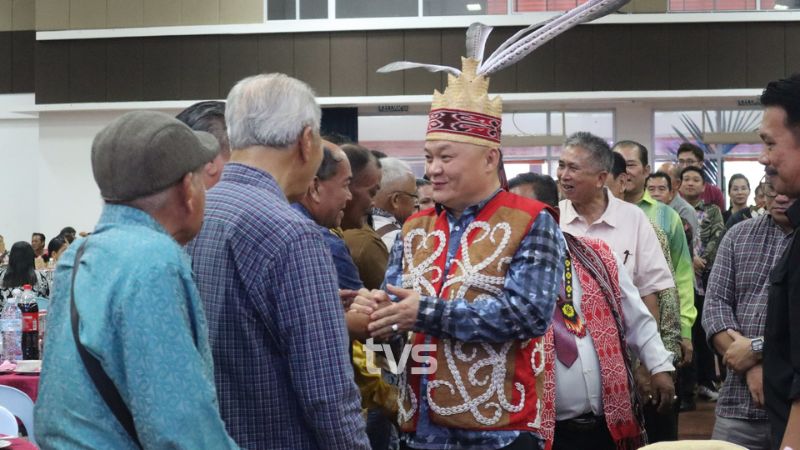
Under the initiative announced by Abang Johari, no areas in Sarawak are considered rural by 2030, and that strategic measures will be set in motion to facilitate such transformation. — Sarawak Public Communications Unit photo
 A MAJOR government initiative to eliminate all rural classifications in the state by 2030 has been initiated by Sarawak Premier Datuk Patinggi Tan Sri Abang Johari Tun Openg.
This means that no areas in the state are considered rural by 2030, and that strategic measures will be set in motion to facilitate the change in the character of the rural setting and justify the departure from the once-called ‘rural’ to what eventually is ‘urban’.
Following a public declaration at the start of the Samarahan Division’s energy supply upgrade project recently, the conversation over this has gained momentum.
While acknowledging that notable infrastructure advancements have already started to close the gap between rural and urban areas, the Premier stressed the necessity of a comprehensive, integrated strategy that would successfully lead rural communities through a significant transition to urban living.
The social value system and the human factor go hand in hand with the key economic growth indicators.
Together, they decide and impact the pattern of rural-to-urban transition.
It is a definer of the human dimension of development that sits deep in the development philosophy of the Premier Abang Johari.
It speaks volumes of the extended force of social justice, which is central to the policy thrust of distributive growth.
No more rural classification by 2030
The Sarawak government has set 2030 as the target for eliminating ‘rural’ classifications in an effort to hasten planned urbanisation.
This needs to be assessed and understood from the standpoint of large-scale strategic year meant to alter the economic and demographic infrastructure of previously rural areas.
This ambitious target coincides with Sarawak’s broader goal of achieving developed state status, a milestone expected to be realised upon the completion of its Post-Covid-19 Development Strategy (PCDS) programme.
These planned interventions by the government under its redefined socio-economic development policy aim to expedite the transition by ensuring that historically dispersed rural settlements acquire the density, services, and character typical of urban environs.
The development of conceptual and legal frameworks that facilitate the reclassification – moving seamlessly from what was previously recognised as a ‘rural’ area to a functional, fully integrated ‘urban’ landscape throughout the state map – is also crucial.
Co-prosperity that arises is tantamount to shared prosperity across the urban-rural divide.
The transition from a rural environment to an urban identity occurs not because of the number of people, but due to an amalgamation of structural and economic factors that substantially transform the role and morphology of the region.
Community leaders, NGOs important players
In this, more strategic planning and progressive review of the changes during the transition have to be done effectively by the different government agencies and local authorities in an integrated and coordinated manner.
Lest we forget, local community leaders and non-governmental organisations (NGOs) are important actors in supporting and driving the transition.
They understand the sentiments and needs of the people at the grassroots level as they are in touch with the local people more frequently.
Hence, they should be consulted and even roped into the transitioning outfit.
To understand and come to grips with the underlying social and human values in the Premier’s policy statement, one needs to acknowledge that urbanisation transcends mere demographics, occurring instead through a potent amalgamation of structural and economic factors.
Integral part of transformation
The concept presents itself neatly as an integral part of the transformation process that Sarawak is undergoing, where movement and change – both horizontal and vertical occurs.
This means that the transformation of the rural involves the departure from agricultural primacy toward diversified secondary and tertiary industries, specialised labour markets, and financial interdependence.
These changes at the base level change both the physical shape of the rural area, which is marked by dense, specialised infrastructure, integrated transit hubs, and multi-story development, and the functional role of the rural area.
The first factor that defines the culture shift decisively has to do with the shift in the economic setting: from resource extraction and agriculture to specialised services, advanced manufacturing, and trade.
Indeed, the rural region is on the cusp of a major transformation, a shift driven primarily by the rapid diversification of the economy under the premiership of Abang Johari.
Paradigm shift
However, in the wake of the new industries arising to meet the shift in the financial landscape, the paradigm that was once the model for the region – a model consisting of ‘loosely dispersed’ rural areas – is no longer sustainable.
Indeed, the rural areas’ very life now requires it to undergo a paradigm shift in all regards related to its natural resources.
This calls for the development of a vast, interconnected, and effective regional infrastructure, building a cascade network of transportation services and adhering to zoning laws in order to provide utilities and other essentials on a large scale.
The high density of the increasing number of residents leads to the emergence of the region’s heterogeneity at the level of society and institutions, abandoning the familiarity of the countryside’s homogeneity.
The rural region’s identity will have changed as inter-dependency through common infrastructure, and specialised non-agricultural job needs emerge as the most important aspects of the environment.
The traditional rhythms of functionality in the rural areas will overlap with the urban beat of functionality through density, administration, and the never-ending network of continuous economic interaction.
In contemporary urban and economic development, the phrase ‘rural-urban co-prosperity, or more commonly ‘rural-urban partnerships’ or ‘linkages’ by students of social-anthropology, refers to a sustainable development framework that promotes integrated regional development and mutual benefit.
This modern concept emphasises interdependence, integrated policy, and shared growth.
Expanded, conjoined space
Ultimately, the economic growth is shared and does not lead to excessive disparities between urban and rural areas.
This drives the overall regional development, creating an enabling ecosystem for the flow of people, goods, and resources between areas across an expanded and conjoined space.
Urbanisation drives profound transformations in rural areas and in food systems, presenting both challenges and opportunities for poverty reduction, rural development and food security.
Policies at the local, national, regional and global scales are of critical importance in shaping rural-urban linkages and the political economy of food systems.
The global shift of populations from rural villages to burgeoning cities, a process termed urbanisation or rural-urban transformation, is a fundamental aspect of development, particularly in emerging economies.
This widespread phenomenon is propelled by numerous inter-connected forces, resulting in profound and multifaceted changes.
Consequently, this transformation necessitates significant alterations in land use patterns, with former agricultural or undeveloped areas giving way to residential, commercial, and industrial structures.
Along with this will be a change in the character of the social value system and attitudinal behaviour of the citizens of the socio-economic sphere that integrates the values and attributes of ‘rural’ and ‘urban’.
* Toman Mamora is ‘Tokoh Media Sarawak 2022’, recipient of Shell Journalism Gold Award (1996) and AZAM Best Writer Gold Award (1998). A holder of PhD in Social Anthropology (Nottingham UK), this communication and research consultant remains true to his decades-long passion for critical writing as he seeks to gain insight into some untold stories of societal value.

 English (US) ·