


 2 hours ago
7
2 hours ago
7
ADVERTISE HERE
Fairness is what justice really is.
– Potter Stewart, American lawyer and judgeFormer law minister Datuk Zaid Ibrahim has returned to a familiar argument: that Sarawak’s determination to give PETROS a greater role in its gas industry threatens PETRONAS. It is a serious concern deserving examination, but repeating a warning does not establish that the feared damage has occurred.
Zaid argues that gas aggregation is commercially important and that transferring the role could diminish PETRONAS’s business. Fair enough as a starting question, but the next question is equally important: what precisely has been transferred, what remains protected, and what benefits might arise?
Sarawak has supplied oil and gas to Malaysia’s economy for decades, helping generate revenue, exports and industrial opportunities far beyond its borders. Yet communities across this resource-rich state still confront long journeys, patchy connectivity and costly gaps in essential infrastructure.
That contrast explains why Sarawakians are increasingly impatient with assurances that development will eventually reach them. They want a practical voice in how resources are managed and how the proceeds support jobs, roads, schools, hospitals and modern industries at home.
PETROS is part of that aspiration, not automatically an assault on the national oil company. A state seeking a larger role in domestic gas distribution need not be seeking the destruction of the corporation that helped build Malaysia’s petroleum industry.
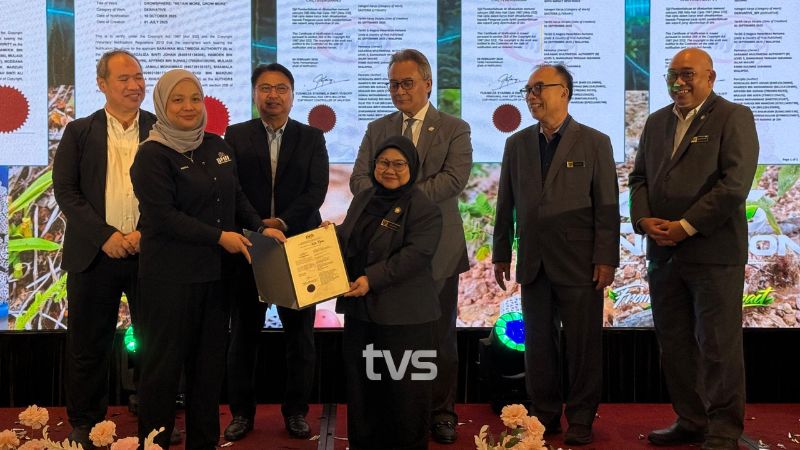
Indeed, the strongest answer to Zaid lies not in slogans but in a document signed by Malaysia’s own leaders. On May 21, 2025, Prime Minister Datuk Seri Anwar Ibrahim and Premier Datuk Patinggi Tan Sri Abang Johari Tun Openg endorsed a joint declaration defining a path for PETRONS and PETRONAS.
The declaration recognises PETROS as Sarawak’s gas aggregator while expressly preserving PETRONAS’s functions under the Petroleum Development Act 1974. It also safeguards existing arrangements for LNG exports, an important distinction that cannot simply disappear whenever somebody invokes the prospect of commercial losses.
If PETRONAS retains its statutory functions and existing export commitments, how does recognition of PETROS necessarily spell national economic disaster? The honest answer is that the financial consequences require transparent accounting, careful implementation and negotiated commercial terms, rather than predictions presented as settled facts.
Zaid has suggested that Sarawak’s gas business is worth around RM10 billion annually and warned of serious implications for PETRONAS. But the value of a business is not identical to the profit lost, and neither figure alone measures the net effect on Malaysia.
There may be adjustments to revenue streams, contracts and operating responsibilities, and those deserve scrutiny. Equally, new domestic industries, energy infrastructure and investments could expand the economic opportunities available to both companies instead of merely dividing an unchanged commercial pie.
Consider the proposed Kuching LNG regasification terminal, which PETROS is developing with Norway’s Höegh Evi. Targeted to deliver its first gas by the end of 2029, it is intended to support power generation, gas distribution and industrial growth in Sarawak.
Hey Zaid, that is not an abstract quarrel over corporate territory; it is a concrete attempt to build capacity and create downstream value. Success will depend on execution, financing and demand, but the ambition itself deserves to be assessed on those merits.
Abang Johari has addressed the accusation directly: “Many people say I want to kill PETRONAS, or that PETROS will undermine PETRONAS. That is simply not true. We share opportunities with PETRONAS.” Those words set out an intention that should be tested against agreements and results, not dismissed out of hand.
Zaid is entitled to ask whether that intention will be honoured, especially when legal and payment disputes remain unresolved. Sarawak is equally entitled to ask why its pursuit of participation is repeatedly framed as a threat before the promised cooperation has been fully implemented.
I have an uncomfortable question here: why should the national interest be defined solely through the immediate commercial position of one company? National prosperity also includes the welfare of producing communities and the long-term development of places whose resources sustain the federation.
A stronger Sarawak can strengthen Malaysia through new industries, skilled employment, reliable energy supplies and wider economic activity. That possibility is not guaranteed, but it is surely relevant whenever critics calculate what PETRONAS might lose without calculating what the country might gain.
For decades, debates over petroleum royalties have reflected a deeper argument about distribution, fairness and federal responsibilities. Sarawak’s longstanding five per cent cash payment has not resolved the wider question of whether its resource wealth has translated into development commensurate with its needs.
Some warn that revisiting one producing state’s arrangements would invite demands from other states, including Terengganu. Perhaps it would, but the possibility of additional negotiations is hardly a convincing reason to avoid examining whether existing arrangements are fair.
Every producing state has its own history, legal circumstances and development requirements, and those distinctions matter. Federalism should provide mechanisms for discussing such differences, not a convenient excuse to treat every request for reconsideration as an intolerable precedent.
Sarawak does not have to deny the development needs of poorer communities elsewhere to argue for its own. Its remote settlements, vast geography and expensive infrastructure challenges also warrant priority, even as federal allocations and ongoing projects are acknowledged.
That is why arguments about national solidarity must work in both directions, rather than only when revenues flow towards the centre. Sharing national wealth is a legitimate federal purpose, but so is ensuring that producing regions are not left waiting indefinitely for basic services.
Abang Johari’s approach has emphasised building Sarawak’s own capacity instead of relying exclusively on future federal spending. PETROS, downstream investment and energy infrastructure belong to that broader strategy, whose effectiveness should ultimately be measured in tangible improvements for ordinary people.
The legal questions cannot be wished away, however, and Sarawak’s laws must be considered alongside federal legislation. The 2025 declaration itself expressly calls for both legal frameworks to coexist and be respected, making negotiation and clarity essential rather than optional.
It is therefore inaccurate to reduce the entire dispute to a simple refusal by Sarawak to recognise PETRONAS. The documented agreement preserves PETRONAS’s role while recognising PETROS, although outstanding interpretations and commercial disagreements still require resolution through proper processes.
Zaid also warns that other oil-producing states could seek similar powers and undermine PETRONAS’s scale. That hypothetical deserves discussion, but one should not confuse the possibility of future claims with proof that Sarawak’s specific arrangement will produce those consequences.
The better response is a clear framework setting out responsibilities, contractual protections, dispute resolution and fair returns. Such safeguards would protect investors, consumers, PETRONAS and PETRONAS alike while giving Sarawak a credible path towards greater participation.
My preferred principle is straightforward: give to Sarawak what belongs to Sarawak, and to Putrajaya what belongs to Putrajaya. That is not a demand to ignore the law; it is a call to establish respective entitlements fairly and honour them consistently.
Nobody benefits if PETRONAS is weakened unnecessarily, just as nobody benefits if Sarawak’s aspirations are permanently subordinated to fears of change. The challenge for both governments is to ensure that a new division of responsibilities creates more value, rather than merely shifting costs.
Zaid’s questions about commercial exposure should be answered with evidence, not personal hostility, and Sarawak’s development case deserves the same seriousness. A genuine national discussion must examine the entire balance sheet, including the opportunity costs of leaving resource-producing regions like my state, Sarawak, underdeveloped.
PETRONAS’s national role and Sarawak’s ambition need not be mutually exclusive, provided both sides implement their commitments in good faith. Malaysia will be better served by transparent cooperation and fair outcomes than by endlessly repeating that every additional Sarawak responsibility must represent a national loss.
I rest my case.
The views expressed here are those of the columnist and do not necessarily represent the views of Sarawak Tribune. The writer can be reached at [email protected]





 English (US) ·