


 9 months ago
83
9 months ago
83
ADVERTISE HERE

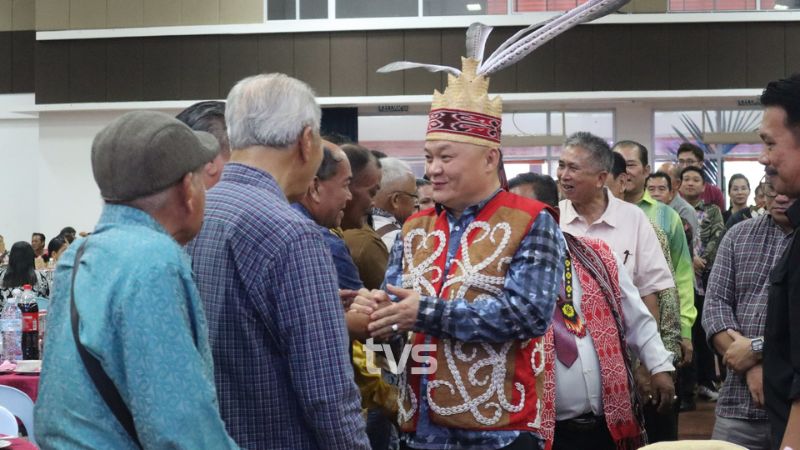
Abang Johari (fourth left), with deputy premiers Datuk Amar Douglas Uggah Embas, on his left, and Datuk Amar Dr Sim Kui Hian (second left), in a delegation visiting Sarawak’s first industrial micro-algae production facility, which comes under the collaborative effort led by Japan’s Chitose Group, with SEB and Sarawak Biodiversity Centre.
 SARAWAK state-owned enterprises (SOEs) have been known to extend well beyond the traditional boundaries of a mere business.
Rather, they can be said to be a visible manifestation of the rakyat’s (people’s) collective ownership of Sarawak’s vital strategic resources.
Indeed, the SOEs have become the embodiment of the rakyat’s direct interest in their administration.
They are unequivocal drivers of the Sarawak economy, functioning as both strategic executors of state policy and commercial entities that generate significant non-resource revenue.
The objective of SOEs in Sarawak is simple and straightforward in that they are to become financially independent that uphold stringent governance and are dedicated to generating long-term value for the region.
The success of these SOEs will eventually depend not just on their financial returns, as they are also assessed in terms of their broader positive consequences, such as the development of stronger industries, the provision of better public services, and the expansion of opportunities for all Sarawakians.
Custodians of Sarawak’s future
SOEs are an integral part of the state’s socio-economic sovereignty and they must not be viewed solely from a commercial perspective.
They are not just profit centres, but also responsible in protecting the people’s legacy and interests.
They work in crucial areas like financial stewardship, sustainable energy production, digital infrastructure development, and strategic resource management.
Their robust performance is the ultimate measure of the government’s stewardship over the state’s strategic assets.
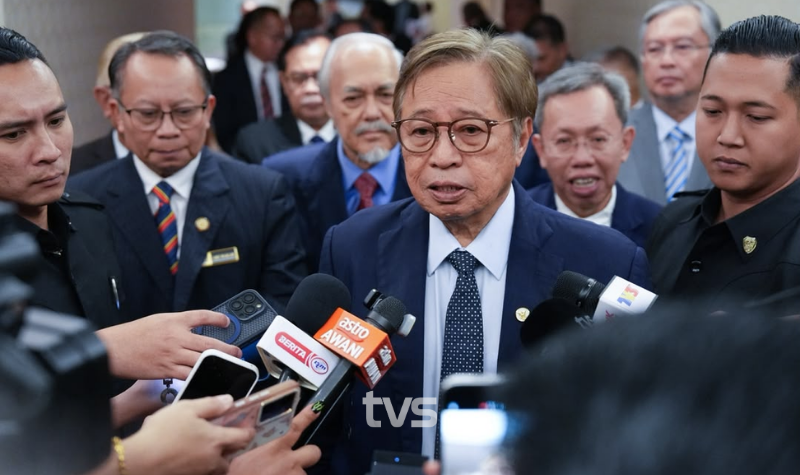
The importance of the SOEs within the broader framework of the Post-Covid-19 Development Strategy (PCDS) was brought to light by the Premier Datuk Patinggi Tan Sri Abang Johari Tun Openg during his winding-up speech at the State Legislative Assembly (DUN) sitting last week.
The SOEs are both commercially guided entities and government operating arms that work within the framework of government policy to meet people’s socioeconomic requirements.
SOEs are primarily analysed within the framework of microeconomics, as they operate as individual firms making specific business decisions.
However, due to their unique nature and significant government influence, their collective impact often has macroeconomic implications as well.
Catalyse economic development
The Sarawak government uses SOEs to implement specific state economic policies, address market situations, provide public goods and services, and catalyse economic development, which are all macroeconomic objectives.
Their investment and operational decisions have some bearing on investment levels, employment, and the State budget.
SOEs provide equity for future generations, sound governance, and resilience in their strategic planning in addition to short-term quarterly financial gains.
A strong portfolio of these SOEs is needed to finance Sarawak’s development ambitions, promote economic diversification outside of conventional industries, and respond to significant global shifts.
This means moving toward a hydrogen economy and putting the PCDS 2030 digital economy ambitions into practice.
When these companies are successful, they create social benefits, keep prices stable in the markets, and ensure the income from Sarawak’s natural resources are ploughed back into the state for community development and infrastructure.
Keeping public trust and guaranteeing prosperity for all Sarawakian residents are closely related to sustaining the long-term competitive advantage of Sarawak’s SOEs.
The strategic policy push by the Sarawak government leadership outlines the ambitious transformation of SOEs from purely administrative institutions to powerful, self-sustaining economic catalysts.
Fundamentally, these companies undergo significant transformation to demonstrate their true commercial viability and become independent of government subsidies.
This calls for a fundamental change in the direction of financial independence, where SOEs function with the vigour and profitability of private businesses.
They generate their own capital and contribute significantly in terms of dividend contributions to the state coffers.
Strict governance is inexorably linked to this pursuit of profitability.
ESG frameworks
To ensure good and ethical management, SOEs are governed by robust environmental, social and governance (ESG) frameworks.
It is also crucial to uphold the highest international standards of honesty, responsibility, and openness.
The ultimate objective is to make sure that each SOE is dedicated to generating long-term advantages for Sarawak.
Making sure that every SOE is dedicated to generating long-term benefits for Sarawak is the ultimate goal.
They are committed to maintaining the economic stability and long-term prosperity of Sarawak.
Apart from providing financial benefits, these Sarawak-owned enterprises also play an active role in encouraging the growth of local talent and creativity, and investing in essential infrastructure.
Economic advancement, community development
The most notable achievements, such as economic advancement and community development, will embolden the process towards a prosperous and sustainable future for Sarawak as a whole.
Wide-ranging ‘ripple effects’ such community growth, economic advancement and tangible community contributions, are achievements that eventually open the door for Sarawak to have a more affluent and sustainable future.
The SOEs and government-linked companies (GLCs) serve as both commercial organisations that provide substantial non-resource revenue and strategic implementers of state policies.
They are unequivocally drivers of the Sarawak economy.
Their role goes beyond simple commercial competition.
They are required to carry out high-impact, capital-intensive projects for accomplishing PCDS 2030 targets.
Strategic infrastructure investment, fiscal health contribution and economic diversification are the three main elements that support this assertion.
Catalytic investment
Compared to wholly private enterprises, Sarawak government-owned businesses are able to take on large-scale, high-risk infrastructure projects that are essential for the state’s long-term growth but would not yield rapid profits that would attract foreign investors.
One such example is Sarawak Energy Berhad (SEB).
The corporation, which is more than just a utility supplier, is the foundation of Sarawak’s industrialisation mandate, particularly the Sarawak Corridor of Renewable Energy (SCORE) plan.
This strategic investment has a substantial economic multiplier effect, creates an industrial ecosystem, and boosts the company’s profitability.
In a similar vein, government agencies such as the Sarawak Economic Development Corporation (SEDC) invest in sectors that the government considers essential such as the development of biomass or hydrogen fuel technologies, and the stabilisation of start-up companies until they mature.
Contribution to Sarawak fiscal health
By returning substantial dividends, royalties, and fees directly to the state coffers, these companies consistently make a substantial non-tax income contribution.
This steady stream of financing allows the state government to support public services, development projects, and essential social programs without overly relying on federal assistance or high debt levels.
State-owned companies are required to prioritise capacity-building and local content.
Economic stability, counter-cyclical role
During challenging economic times, such as the recent epidemic or drops in commodity prices, Sarawak-owned companies are important stabilisers.
By maintaining employment levels and completing planned capital expenditures even when private firms retreat, they often mitigate the harshest effects of economic cycles.
The SOEs can take on high-risk projects that private companies usually shy away from because of their unique position in the economy.
If SOEs have access to government-backed financing, such as direct subsidies and sovereign guarantees, they can get cheap capital and minimise potential losses.
This enables them to prioritise strategic and public-interest objectives over short-term financial benefit, such as constructing essential infrastructure and supporting renewable energy.
By internalising externalities, SOEs can also benefit from the broader social and environmental benefits of projects like renewable energy grids and high-speed rail that might not be possible under a purely market-driven paradigm.
Stable government, strong leadership
Strong, dependable leadership creates a predictable atmosphere that is advantageous for the SOEs.
Unlike their competitors in the private sector, SOEs are able to create multi-decade roadmaps because the policy environment in which they operate is less likely to change significantly from one administration to the next.
Whilst the private sector is constrained by profit imperatives and market instability, SOEs are able to undertake high-risk projects that have the potential to have a major impact on the economy and society because of government protection, strategic goals, and affordable funding.
* Toman Mamora is ‘Tokoh Media Sarawak 2022’, recipient of Shell Journalism Gold Award (1996) and AZAM Best Writer Gold Award (1998). A holder of PhD in Social Anthropology (Nottingham UK), this communication and research consultant remains true to his decades-long passion for critical writing as he seeks to gain insight into some untold stories of societal value.



 English (US) ·