


 9 months ago
80
9 months ago
80
ADVERTISE HERE

Wee says members of the Chinese education community were frustrated, particularly as UEC recognition had been part of Pakatan Harapan’s election manifesto.
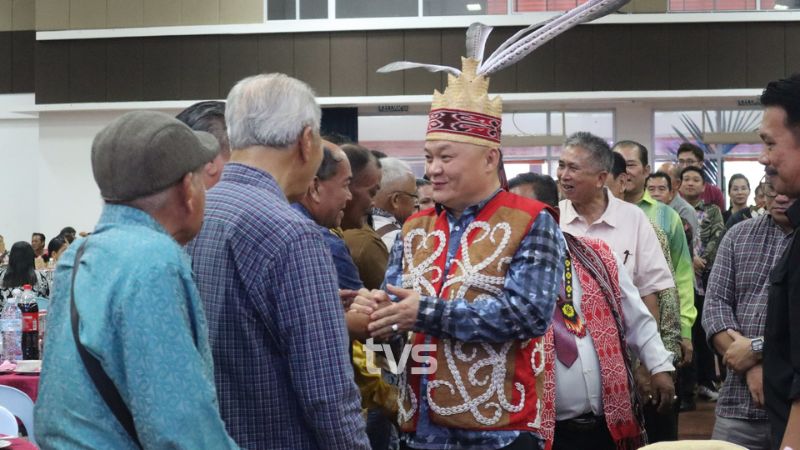
KUCHING (Dec 13): Concerns have emerged within the Chinese education community following recent remarks by the Prime Minister on the Unified Examination Certificate (UEC), prompting calls for the issue to be reviewed rationally rather than politicised.
Sarawak Federation of Chinese Associations (SFCA) president Dato Sri Richard Wee said members of the Chinese education community were frustrated, particularly as UEC recognition had been part of Pakatan Harapan’s election manifesto.
“This was clearly stated in their manifesto, and there had been long-standing engagement between Dong Zong (The United Chinese School Committees’ Association of Malaysia) and the Ministry of Education on syllabus issues and alignment with national requirements,” he told The Borneo Post.
Wee noted that the community had been cautiously hopeful when the unity government took office, given manifesto commitments and advocacy by parties such as the Democratic Action Party (DAP).
“We were quite hopeful to a certain extent, although we were patiently waiting, but it was not to be.
“And we have been waiting since they have formed the government, but I think ever since the recent Sabah election that we can see that the issue of this has surfaced again.
“But to the reaction of our Prime Minister, it is disappointing,” he said.
Highlighting Sarawak’s experience, Wee said the state government’s position on UEC recognition has been consistent and supportive, describing it as a model that has functioned effectively without disruption.
“The Sarawak government recognises UEC qualifications for recruitment into state departments and has provided strong financial support to Chinese independent schools, including annual grants of up to RM10 million and land allocations to help schools generate income,” he said.
He stressed that Sarawak’s recognition of the UEC has not affected other qualifications, recruitment processes, or university enrolment, demonstrating the feasibility of broader recognition.
However, Wee noted that state-level recognition alone is insufficient without federal acknowledgment, as access to federal posts, Public Service Commission (JPA) schemes, and pension systems remains restricted.
“If there is no federal recognition, there will still be significant hurdles for UEC holders, not just in federal employment but across the wider public service system,” he said.
Wee urged policymakers to approach the issue objectively, emphasising academic standards rather than political considerations.
He said from Sarawak’s perspective, the state government’s recognition of the UEC has not impacted other qualifications, recruitment, or university enrollment.
“So with that kind of effect and also the example, I see no reason why it should be an issue,” he added.



 English (US) ·