


 9 months ago
99
9 months ago
99
ADVERTISE HERE

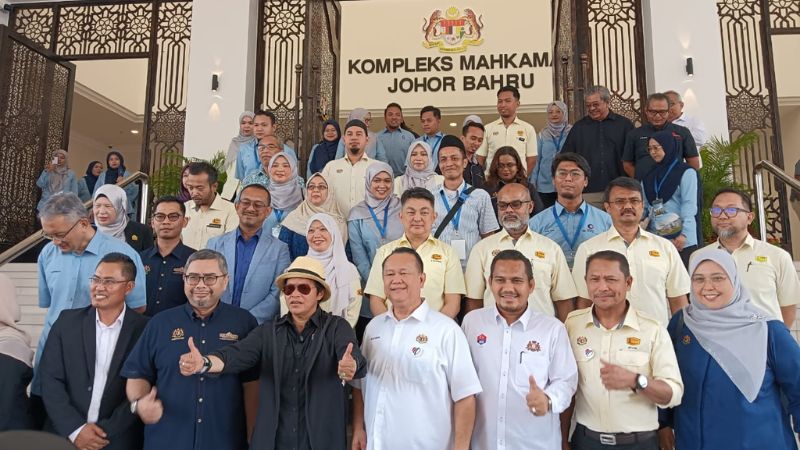
(Front row, fifth right) Dr Annuar joins the academics in a group photo, taken after the exchange of appointment letters.
SIBU (Dec 30): The proposed establishment of a medical school at the University of Technology Sarawak (UTS) will hinge on securing international accreditation rather than merely constructing facilities, as the university embarks on a six-month feasibility study to ensure the programme meets global standards.
Deputy Minister for Education, Innovation and Talent Development Datuk Dr Annuar Rapaee said the priority is to avoid producing a medical degree that lacks international recognition.
“The most important thing I have emphasised is that we must not make mistakes at the very first step.
“This medical degree must be recognised not only locally, but internationally,” he said after handing over appointment letters to the members of the feasibility study panel here.
Dr Annuar said the study will assess whether UTS can meet the stringent requirements set by the Malaysian Medical Council (MMC), the Ministry of Higher Education (MoHE) and international regulatory bodies, particularly the General Medical Council (GMC) of the United Kingdom (UK).
He explained that international accreditation is crucial to ensure Sarawakian medical graduates are eligible for postgraduate specialist training overseas, especially in the UK.
“If a degree is only recognised locally but not internationally, it does not benefit Sarawak in the long term.
“Our aim is to train specialists who can return and serve the needs of the state,” he said.
Addressing key regulatory challenges, Dr Annuar said the requirement for a medical faculty to have its ‘own hospital’ will be carefully examined by the panel.
“We need to clarify whether ‘own hospital’ means building a hospital ourselves or affiliating with existing hospitals.
“This is one of the most important issues that will be studied,” he said.
He added that subject to approval by the MMC, the initial intake would be capped at a maximum of 50 students, with any expansion dependent on regulatory compliance and infrastructure readiness.
Dr Annuar said the Petra Jaya Hospital, once completed, is among the facilities being considered for clinical training, alongside government hospitals for specialised postings such as ear, nose and throat (ENT) and ophthalmology.
On international collaboration, he revealed that UTS has received encouraging responses from several leading institutions, including King’s College London, University College London, the University of Dundee and the National University of Singapore.
“These are among the world’s leading universities, and discussions on collaboration will begin as early as January as part of the feasibility study,” he said.
On funding and policy alignment, Dr Annuar noted that medicine and law fall under Sarawak’s Free Tertiary Education Scheme (FTES), but can only be offered once a fully established and approved faculty is in place.
“If the state government agrees after the feasibility study, we will then need to develop the faculty buildings, training facilities, academic staff and all supporting infrastructure before the programme can be offered,” he said, adding that timelines would depend on regulatory and development milestones.
The feasibility study panel comprises Prof Dr Lela Suut, Prof Dr Awi Idi, Prof Dr Muhammad Zulkarnaen Ahmad Narihan, Prof Dr Kamarudin Kana, Dr John Tang Ing Ching and Dr Alan Fong, representing academia, public healthcare and private medical institutions.
UTS representatives overseeing the study include Deputy Vice-Chancellor (Academic) Prof Dr Mohammad Shahril Osman, director of the Centre for Quality Assurance Dr Sim Siew Ling, and senior lecturer Dr Zalikha Raman, with Yayasan Sarawak represented by Deputy Director (Education) Watson Chunggat Leonard Doo.

 English (US) ·