


 8 months ago
69
8 months ago
69
ADVERTISE HERE

Wee (fourth left) poses with distinguished guests during a photo call at the dinner. – Photo by Roystein Emmor
KUCHING (Jan 26): Political structures have contributed to nearly two decades of development challenges in Sungai Apong, leaving the community sidelined from mainstream progress, said Kuching South Mayor Dato Wee Hong Seng.
He said the area had long faced disadvantages in securing development resources due to structural and political factors beyond the residents’ control.
“I would like to share something candidly with everyone. This is not my first visit to the Sungai Apong community. Over the years, I have been here many times and have closely followed its development.
“I must honestly say that over the past nearly 20 years, Sungai Apong has faced considerable challenges in terms of development. Due to political structures, the community has long been in a disadvantaged position when it comes to securing development resources,” he said.
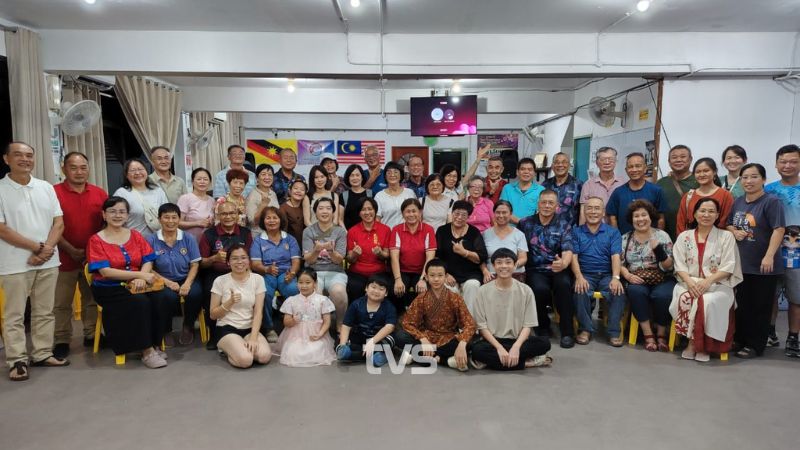
Wee said this in his speech at a celebration marking the birthday of the Nine Emperor Gods and the arrival of the Lunar New Year, organised by the Sungai Apong Jiu Huang Temple at a restaurant here last night.
He claimed that funding that could have improved infrastructure and living conditions was not implemented smoothly, resulting in Sungai Apong missing out on mainstream development.
“This is not the fault of the residents, nor should they bear the consequences. Community development should not be stalled due to political reasons,” he said.
Wee said access to basic infrastructure, safety measures and a liveable environment should not be delayed regardless of political circumstances.
Therefore, he said it was time for the situation to change, stressing that Sungai Apong should return to the mainstream of development and be in a position to access resources and drive progress.
“The development opportunities lost over the past two decades are not beyond discussion or negotiation. What matters is that we stand in a position that has both the ability and responsibility to fight for the people,” he said.
Wee also highlighted several pressing challenges currently faced by the community, including high-density living conditions, fire safety concerns and public risk management issues.
“High-density living, fire safety and public risk management cannot be addressed through fragmented measures. Land issues may be complex, but there is one thing that cannot be compromised — the lives and safety of residents. Public safety should never be politicised,” he said.
In this regard, Wee said unity within the community was crucial to achieving systemic improvements.
“That is why this community needs unity rather than division. Only by standing together can we push for systemic improvements. And only by working effectively with the current state government within the existing policy framework can Sungai Apong receive more stable and long-term support,” he added.
On the role of the temple, Wee acknowledged its contribution to the community, describing it as more than a place of worship.
“The Jiu Huang Temple is not merely a place of worship. It is also a stabilising force within the community. It brings peace of mind, fosters neighbourhood unity, and adds warmth to the community,” he said.
He noted that the temple had consistently translated compassion into action by helping underprivileged students continue their education, caring for vulnerable families and extending assistance whenever needed.




 English (US) ·