


 58 minutes ago
3
58 minutes ago
3
ADVERTISE HERE
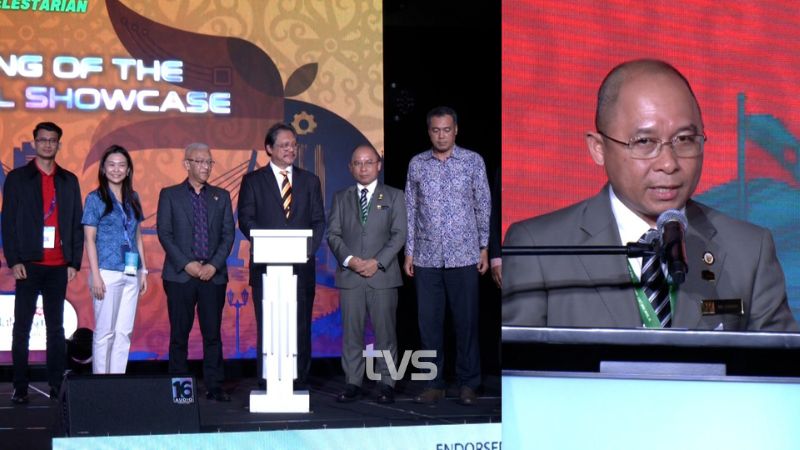
 Abang Johari exploring a digital solution for paddy cultivation after officiating the SARICON at Raia Hotel and Convention Centre on Oct 6, 2026.
 Advertisement
By Karen Bong
KUCHING, Oct 6: The Sarawak government is prepared to inject more funds to expand modern large-scale paddy cultivation while adopting a collaborative model that brings together private investors and smallholder farmers to ensure the commercial viability of rice production.
Premier Datuk Patinggi Tan Sri Abang Johari Tun Openg said the State had already allocated RM1 billion for irrigation infrastructure in identified paddy areas, with further funding to be considered as cultivation areas expand.
Advertisement

“At the moment, the government is doing this, engaging with the private sector. And it seems that there is a positive response,” he said when officiating at the 2nd Sarawak Rice Conference (SARICON II) 2026 at Raia Hotel and Convention Centre today.
He said the government’s approach was aimed at creating a commercially viable paddy sector by combining government investment in infrastructure with private-sector capital, technology and expertise, while ensuring smallholder farmers remained part of the production chain.
“In order to get the core production of rice, now we are engaging with the private sector for them to come in with certain investment. At the same time, they are linked with smallholders so that we can get the volume,” he said.
Abang Johari said the approach recognises that large-scale paddy development requires substantial capital investment, infrastructure and technology that cannot be provided by farmers alone.
He also highlighted a successful private sector-smallholder collaboration in Kuala Rajang, where a company is helping farmers cultivate previously idle agricultural land.
“The initiative has enabled farmers to achieve yields of about six tonnes per hectare,” he explained.
Under the arrangement, part of the rice produced is given to the participating farmers, while the remainder is sold on the open market.
Abang Johari said the success of the Kuala Rajang initiative had demonstrated the potential of private-sector participation in revitalising paddy cultivation and had encouraged more investors to consider entering the sector.
“Because of that success, private sector is willing to come in to invest in paddy production,” he said.
He said the Sarawak government’s strategy was particularly important as Sarawak sought to increase domestic rice production amid growing uncertainties in global food supply caused by climate change and extreme weather events.
Floods and other climate-related disasters affecting rice-producing countries could disrupt rice exports and expose Malaysia to greater supply risks, he said.
“Food security is a global problem. Otherwise, we won’t have any rice if the countries that produce rice are not willing to export to sell to you.
“Malaysia has to be self-sufficient. Sarawak wants to contribute to that self-sufficiency of rice because we have the land,” he said.
Abang Johari said Sarawak’s challenge was therefore not simply the availability of land but ensuring that the land was managed productively using modern technology and farming methods.
“Sarawak could no longer depend on conventional farming methods if it wanted to close the domestic rice production gap and improve farmers’ incomes,” he said, adding that the modernisation of paddy farming should ultimately create a new generation of technology-equipped farmers capable of operating commercially viable farms.
Abang Johari said the State’s RM1 billion irrigation allocation represented a major commitment to building the infrastructure needed to support large-scale paddy cultivation.
He also expressed hope for greater federal support, including additional funding for agricultural infrastructure.
The Premier said the combination of government support, private investment, smallholder participation, research and technology would be crucial to developing Sarawak’s rice industry into a more productive and sustainable sector.
“We have to provide the important things for paddy planting,” he said.
Deputy Minister of Food Industry Datuk Dr Abdul Rahman Ismail representing Minister of Food Industry, Commodity and Regional Development Dato Sri Dr Stephen Rundi Utom, Deputy Minister of Regional Development Datuk Martin Ben as well as Pakan assemblyman and advisor in the Premier of Sarawak’s Department (Food Industry, Commodity and Regional Development) Tan Sri William Mawan Ikom were among the distinguished guests present. — DayakDaily
 English (US) ·