
 1 hour ago
5
1 hour ago
5
ADVERTISE HERE
GARY Ningkan was only nine years old when his grandfather passed away.
By then, the man he knew simply as Aki was already frail, often confined to a wheelchair and unable to speak clearly. Gary remembers little of the grandfather who, decades earlier, had played a significant role in one of the most important periods in Sarawak’s history.
“I did not go through or experience him in his best self. So I think that is quite sad,” Gary said.
Yet even with few personal memories of his grandfather, Gary grew up surrounded by reminders of who he was.
He remembered gatherings at his grandfather’s house, where family members, friends and people who had known him personally would come to visit. As a child, Gary noticed the respect they showed the elderly man, even before he fully understood why.
“You would see a lot of people come over, family members and friends. So I think naturally, you would have been curious at that time as to why people are so respectful,” he said.
The answers came gradually, through stories from his parents, aunties and uncles, and later through history lessons in school.
His grandfather was Tan Sri Datuk Amar Stephen Kalong Ningkan, Sarawak’s first Chief Minister and one of the leaders closely associated with the events surrounding the formation of Malaysia.
For Gary, now 38, the history of Malaysia’s formation has never been entirely distant.
It has lived in the stories told by those who knew Ningkan and in the memories passed down to a grandson who was too young to fully understand the man before him.
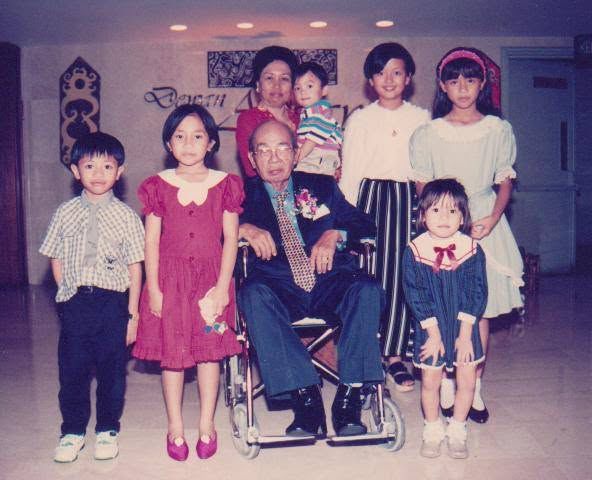 Gary (left) pictured as a child with his grandfather, Ningkan, who is seated in a wheelchair, and other family members.
A story passed down
Gary’s connection to that chapter of history also comes through his father, Paul Murphy Ningkan, the eldest son of Ningkan and Datin Amar Elizabeth Sendi.
Gary said his father was about nine years old when Ningkan became Sarawak’s first Chief Minister in 1963.
While Gary never witnessed those years himself, he grew up hearing about them.
His grandfather travelled extensively across Sarawak for political work, including journeys to the interior and other parts of the state during the years surrounding the formation of Malaysia.
While Ningkan was away, his family remained in Betong.
Gary said his father and grandmother lived in a simple wooden house near what is now Betong town. During the communist era, supporters and guards sometimes kept watch around their home.
“Sometimes there were guards patrolling around there,” Gary said.
For Gary, the formation of Malaysia is not only a chapter in Sarawak’s history. It is also part of his family’s own story, carried through the memories of his father and grandmother, who remained in Betong while his grandfather travelled for political work during those defining years.
Those stories would eventually be passed down to Gary, giving him a connection to a period he never experienced himself.
The man behind history
The Ningkan Gary came to know through his family’s stories was not only a political leader.
He was also, according to his relatives, a strict disciplinarian with a witty side.
“He was very strict. He’s a disciplinarian in a way. But at the same time, he can be very witty in some ways,” Gary said.
His aunties and uncles would sometimes reminisce about being scolded by their father, occasionally over small things. Yet, Gary said, he was also kind to them.
One story that has stayed with Gary involved his mother driving Ningkan back from Betong, with Gary’s father also in the car.
Whenever she stepped on the brakes, Ningkan would become agitated.
“Why don’t you just knock the car?” he would ask.
For Gary, it is one of the many small family stories through which he has come to know his grandfather: not just as a political leader, but as a witty family man and, judging by his reaction whenever his daughter-in-law stepped on the brakes, a rather anxious passenger.
To Sarawak, Ningkan was a leader whose name is closely linked to the state’s journey towards Malaysia. To Gary, he was first known simply as Aki.
Through the stories of his father, aunties and uncles, Gary has gradually come to know the man behind the historical figure.
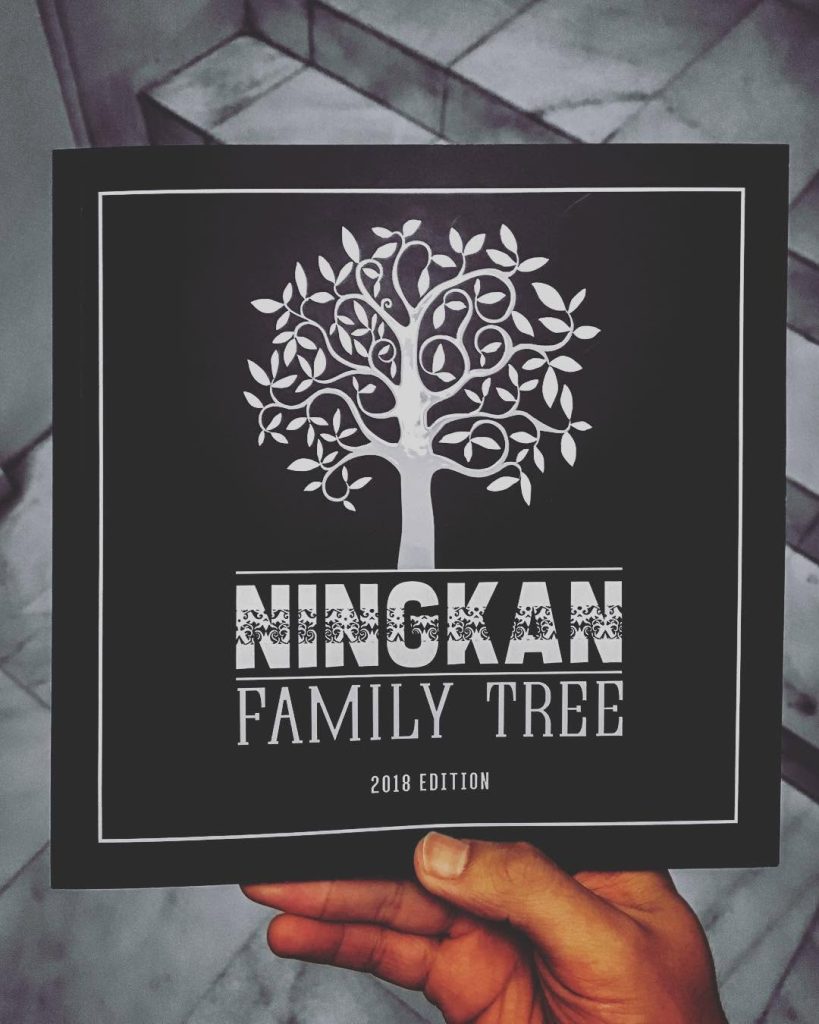 ‘Ningkan Family Tree 2018 Edition’, a booklet initiated by Gary and his cousin, Franklin, and shared among members of the Ningkan family to preserve their family history.
Beyond the political life
The family’s stories of Ningkan also included the more difficult years that followed after he was no longer Chief Minister.
“He wasn’t a rich man, to put it this way,” Gary said.
From what his father had told him, Gary understood that the changes in his grandfather’s political circumstances also had financial implications for the family, while public perceptions changed as well.
“That’s part of being a politician, I suppose. You have your ups and downs,” Gary said.
Learning about those experiences shaped the way Gary viewed the generation before him.
The lesson that stood out most to him was perseverance.
“When I look at the older generation and the hardship they went through, I really couldn’t imagine being in their shoes,” he said.
He recalled stories of people walking kilometres and crossing rivers simply to get to school, determined to pursue an education and improve their lives.
“For them to have that level of perseverance, just to get through means of education, to improve their livelihood, I think that is something that the younger generation should not only learn, but try to instil in our characters,” he said.
For Gary, perseverance is among the lessons younger Sarawakians can take from the generation that lived through the years surrounding the formation of Malaysia.
Preserving family memories
The Ningkan family still keeps photographs, regalia and other possessions belonging to Kalong.
For Gary, however, preserving family history is not only about safeguarding physical belongings.
In 2018, he and his cousin, Franklin Simon, initiated the creation of a family tree booklet documenting their family’s roots.
The booklet was printed and shared among the Ningkans.
The family also organises a reunion every two years, with the gathering rotating between Kuching, Betong and Miri.
For Gary, these efforts help keep the family connected to its past.
The booklet records names and relationships that might otherwise become distant with time, while the reunions bring together relatives from different branches of the family.
For Gary, who has few personal memories of his grandfather, preserving those connections carries a particular significance.
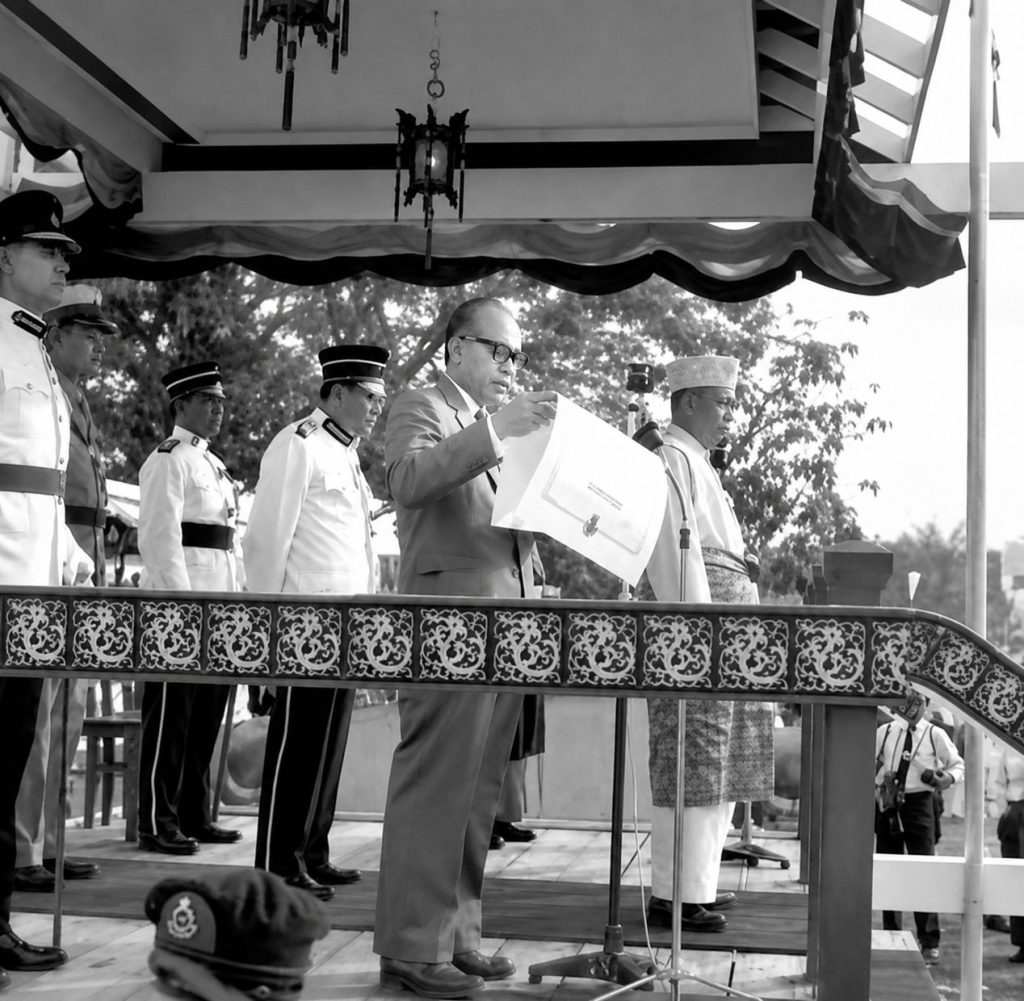 Kalong read the proclamation of the independence of Sarawak on September 16, 1963.
Carrying the legacy forward
Being the grandson of a man whose name is closely linked to Sarawak’s political history brings Gary a sense of pride.
“Of course I feel very proud because not everyone can say that their grandfather was a pioneer in establishing Sarawak as an independent state and later on to be part of Malaysia,” he said.
But that pride also comes with what Gary described as an unspoken expectation.
“It has put some burden on your shoulders in the sense that you have a lot of expectations that you feel even though people don’t tell you.”
Rather than seeing that solely as a burden, Gary has chosen to treat it as a personal challenge.
“I take it as a challenge for myself.”
For him, carrying forward his grandfather’s legacy does not mean entering politics or following exactly the same path.
“The way I preserve his memory, or try to uphold his legacy, is through what I do. I believe that’s the best way for family members, as his grandson,” he said.
He hopes the other grandchildren will carry that legacy in their own ways as well.
“We try to be the best in whatever we do. Try to achieve as much as we can in whatever we do.”
Gary previously served as president of the Sarawak Dayak Graduates Association for two terms.
During his time, he said, he and his team worked to make the association more progressive and relevant to younger professionals, while carrying out programmes in different parts of Sarawak, including a STEM and robotics programme in Kapit.
Today, he remains active in his professional field as the deputy chair of the Royal Institution of Surveyors Malaysia, Sarawak Branch.
For Gary, contributing to society does not necessarily require a political platform.
“There are many ways for us to contribute to society. You can also do community work,” he said.
It is his own way of carrying forward a family legacy, not by trying to become another Ningkan, but by striving to contribute and make a difference in his own capacity.
When history looks back
As Gary grew older, he began to notice a change in the way his grandfather was remembered.
“I think history has been kinder to him only recently,” he said.
During his younger days, Gary felt there were places where Ningkan was not spoken of as positively as he is today.
Now, he believes, there is a greater interest in understanding Sarawak’s history and the struggles of leaders from that era.
He sees a connection between this renewed interest and the growing attention given to the Malaysia Agreement 1963 and Sarawak’s rights.
“I think people are starting to understand and appreciate what the leaders at that time were fighting for,” he said.
Gary believes the conversations surrounding MA63 have encouraged people to look again at what leaders of that generation sought for Sarawak.
“If you are an honest leader, history will eventually remember you as one,” he said.
As a child, Gary recognised the respect people showed his grandfather without fully understanding its significance.
As he grew older, he began to understand why.
Today, as Sarawak’s place and rights within Malaysia continue to be discussed, he sees his grandfather’s story through a different lens.
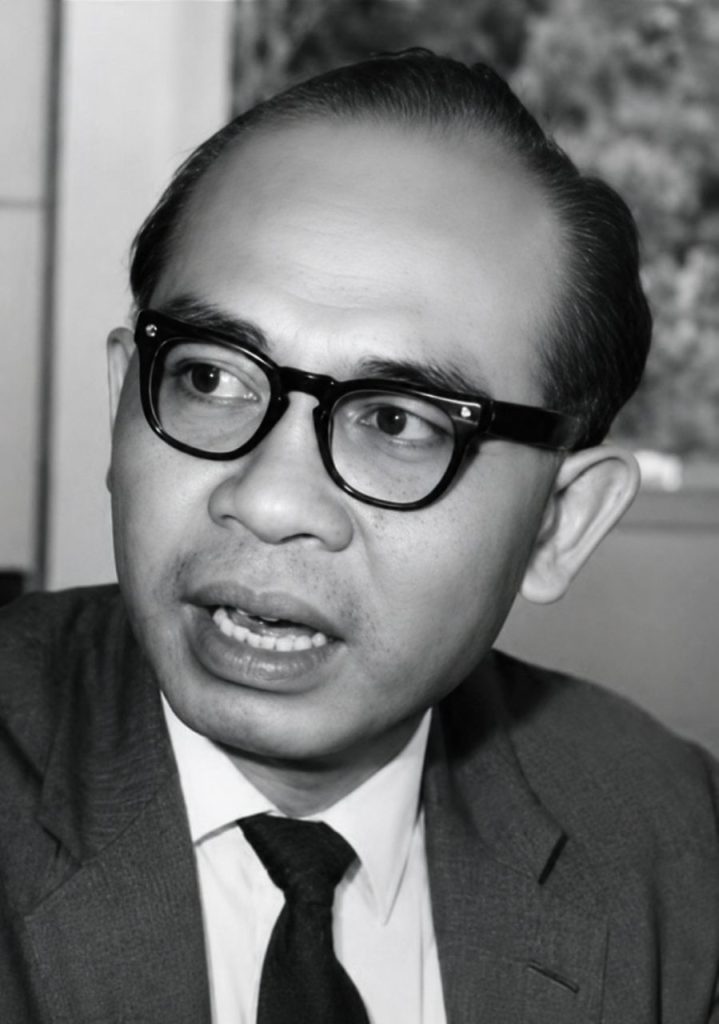 Tan Sri Datuk Amar Stephen Kalong Ningkan, Sarawak’s first Chief Minister.
An inheritance of memory
Gary was born 25 years after Malaysia was formed.
He never witnessed the events of 1963 or saw his grandfather travelling across Sarawak during those pivotal years.
Instead, that period reached him through the memories of those who had lived through it.
Through his father, who was about nine years old when Ningkan became Chief Minister.
Through stories of the simple wooden house in Betong, where his father and grandmother remained while Ningkan travelled for political work.
Through memories of guards patrolling around their home during the communist era.
And through small moments that revealed the person behind the political figure.
“Why don’t you just knock the car?”
For Gary, it is one of the fragments of family history through which he has come to know his grandfather.
The man who played a role in Sarawak’s journey into Malaysia is remembered through history and public records.
But within the family, another memory has endured.
A strict father.
A witty man.
A grandfather known as Aki.
As Malaysia marks Malaysia Day on September 16, the story of the nation’s formation can be remembered through the leaders, agreements and events that shaped it.
But history also survives within families.
In photographs.
In family records.
In reunions.
And in the stories passed from one generation to the next.
Gary did not witness the chapter of history in which his grandfather played a role.
But he inherited its memory.
And through the family history he helped preserve, and through the way he chooses to carry forward the values he associates with his grandfather, that connection between one family and the formation of Malaysia continues into another generation.


 English (US) ·