
 1 hour ago
5
1 hour ago
5
ADVERTISE HERE
AS Sarawak continues negotiations over its remaining rights under the Malaysia Agreement 1963 (MA63), the question is no longer only about what has been restored, but what comes next.
From additional state seats, tourism and health autonomy to the continuing effort to educate younger Sarawakians about the state’s history, several issues remain on the table with the federal government.
But beyond negotiations, laws and constitutional provisions lies a larger question: what should the success of MA63 ultimately mean to ordinary Sarawakians?
In the second part of Sarawak Tribune‘s exclusive Malaysia Day interview, Deputy Minister in the Premier’s Department (Law, MA63 and State-Federal Relations), Datuk Sharifah Hasidah Sayeed Aman Ghazali, discusses the outstanding negotiations, why understanding MA63 matters to the next generation, and why the ultimate measure of success must be whether its gains reach the rakyat.
ST: Does the concern over parliamentary representation also relate to the 17 additional state seats approved by the Sarawak Legislative Assembly?
SHARIFAH HASIDAH: Even the 17 seats that we have approved in our Sarawak State Legislative Assembly (DUN) have not yet taken off at the federal level.
They say they are working on it, but I think it is a little slow and we are hoping for it to be addressed as soon as possible.
At our technical committee meeting on August 3, we told the federal government that we wanted all the matters we had presented to them to be settled, as far as possible, by December this year.
We gave them that timeline – whether we can actually get everything settled by then, I do not know, but that is what we have asked for.
ST: Tourism is also among the unresolved matters. What exactly is Sarawak asking for?
SHARIFAH HASIDAH: We want tourism to be placed under the Concurrent List. At present, tourism is under the Federal List.
We want it under the Concurrent List so that both the state and federal governments have the authority to enact laws and create policies on tourism.
They have agreed to give some administrative devolution of power over tourism, but administratively having authority is different from having the legal authority to legislate.
Sarawak already does many things on our own, but as far as the law is concerned, tourism remains under federal jurisdiction.
If it is under the Concurrent List, we can enact our own laws or policies on tourism.
For instance, if we wanted laws involving taxes, levies or charges relating to tourism, presently we cannot really do so because it remains under federal jurisdiction.
We are saying: put tourism under the Concurrent List so both of us have the legal right to administer it fully.
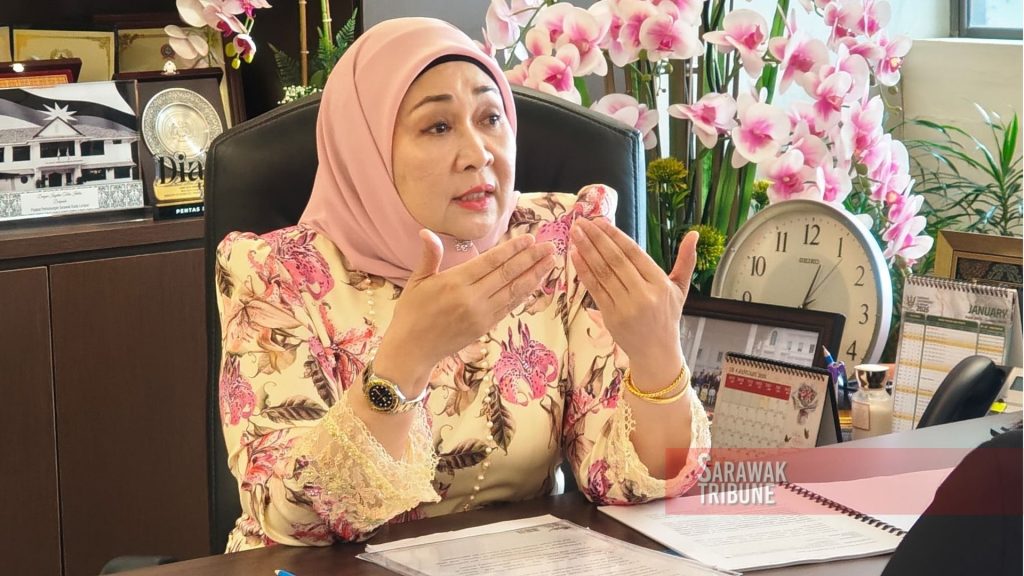 Datuk Sharifah Hasidah Sayeed Aman Ghazali. – Photo: Alverdtekoster Anyap
ST: What does Sarawak want when it talks about health autonomy?
SHARIFAH HASIDAH: For health autonomy, what we are basically telling the federal government is this: you give us the money, and we administer the fund because we know our state very well.
We know which hospitals need to be done, where things need to be done first, and what should be prioritised.
We know the issues in Sarawak. So what we are saying is: give us the money and we run the show for you.
The responsibility for providing the funding remains with the federal government.
ST: How are these MA63 negotiations actually conducted between Sarawak and the federal government?
SHARIFAH HASIDAH: Our negotiations are done properly and in a very structured manner whereby we have several committees.
There is a working committee, a technical committee and, of course, the highest level, which is the Majlis Tindakan Pelaksanaan MA63, involving Prime Minister Datuk Seri Anwar Ibrahim, our Premier, and the Chief Minister of Sabah.
The matters I have mentioned have gone through these committees, so the discussions are properly coordinated and structured.
ST: How would you assess the federal government’s cooperation and progress in addressing Sarawak’s claims under MA63?
SHARIFAH HASIDAH: They seem serious, willing to sit down and discuss.
The Prime Minister has always said that if it is our right, then it is our right, and we are entitled to get back what was promised.
Our negotiations are going on pretty well.
We have formed the working committee, technical committee and the highest-level committee, and the issues go through these structures.
In terms of discussions and negotiations, they are receptive, but the actual decision is something different.
I am not saying that we have had no success.
We have attained quite a fair bit of success, but there is still a lot more that needs to be done, especially in relation to oil and gas.
ST: Why is it important for young Sarawakians today to know and understand MA63 and Sarawak’s position within Malaysia?
SHARIFAH HASIDAH: Because this is the agreement that gave birth to the country. Without MA63, there is no Malaysia.
This is the agreement that gave birth to the existence of the nation, so it is very significant.
Before we agreed to form the country, our leaders – the Bidayuh leaders, Iban leaders, Malay leaders, Melanau leaders, Chinese leaders – agreed that there were certain rights that we had to maintain.
These included our administrative rights, financial rights, rights over oil and gas, territorial boundaries, our right to maintain our culture and budaya, our languages and the right to use English. That is why we can speak English in our DUN.
These things are spelt out in the IGC Report. If you look at the IGC Report, it is very thick. It is not easy to go through, but the provisions are there.
Before we formed the country, we said these rights must be included, protected and implemented.
Article 8 of MA63 also states that matters that have not yet been implemented can be implemented through the Federal Constitution, executive decisions or legislation. That is why it is very important.
If we want to become Sarawak Maju Makmur, we have to ensure our rights are protected under MA63.
It is significant for people to understand the history of Sarawak and the history of the country.
We can only move forward and achieve the vision of becoming a high-income, modern and advanced economy by 2030 – where there is economic prosperity, social inclusivity, and care for the environment – if we understand our history and the significance of MA63.
For younger people, and even older people who do not really know about it, please read about it and find out. Nowadays, it is easy because you can go to Google or use ChatGPT to find out.
So for the young people, this is the time to get to know the story of Sarawak.
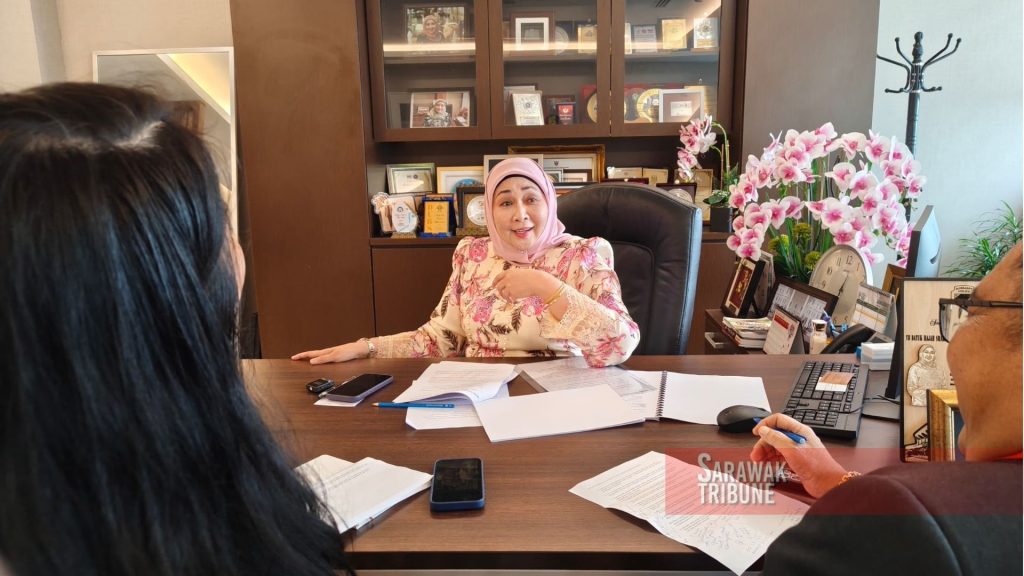 Datuk Sharifah Hasidah Sayeed Aman Ghazali. – Photo: Alverdtekoster Anyap
ST: But do you think enough young Sarawakians actually know that history?
SHARIFAH HASIDAH: Unfortunately, they do not, and even the older generations were quite ignorant about it ourselves in the past.
That is why we are very thankful to Tok Nan. He was the one who really started this during his era, and it has continued since then.
It is very important for young people. I always emphasise to them: you have to know our history.
We should do more engagement and tell this story. The media has to play its part so that people can see, hear and try to understand what we are doing.
Sometimes people ask me, “What exactly are you doing?” and the opposition have questioned why we went to London, saying it was a waste of money, but it was not.
ST: Why was it necessary for Sarawak representatives to go to London to retrieve documents relating to MA63?
SHARIFAH HASIDAH: When we first embarked on this MA63 effort, we could not find the official documents in Sarawak.
Of course, you can Google things, but how can a government simply rely on Google when dealing with something as important as this?
We could not find the documents here. So, we had to go overseas to the British National Archives in the United Kingdom, to get the documents.
When we went there, we found thousands and thousands of documents – minutes of meetings involving our leaders back then, records of their discussions and their views on how they wanted Malaysia to be formed and how they wanted our rights to be protected.
We also found early maps of Sarawak. That is important when we talk about matters such as the Land Code and the definition of Sarawak’s land extending to the continental shelf.
We found these things in London. We did not have them here because when the British left, they took many of the documents with them.
Even a copy of the Malaysia Agreement that we signed – we did not have it here.
So, the trip to London was significant. It was not a waste of money, as was said by the opposition. We went there to do research.
Before you conduct a study or fight for your rights, you must have your facts and your evidence. That is why we brought the documents back, so that we have the facts and evidence.
We do not simply talk without having something to support our position.
ST: After all these negotiations, what would full and meaningful implementation of MA63 actually look like from Sarawak’s perspective? How will Sarawak know when what it has been fighting for has been achieved?
SHARIFAH HASIDAH: At the end of the day, when we talk about Sarawak, what do we want? We want Sarawak Maju Makmur.
We want Sarawak to be successful, to be a high-income economy and a progressive place where there is economic prosperity and the rakyat can feel the success of Sarawak.
So, if you talk about MA63, the success of MA63 must be translated to the rakyat. The rakyat must be able to benefit from what we have fought for.
What is important is financial independence and the financial gains that we can obtain from what we fight for.
At the end of the day, it is about ensuring Sarawak succeeds as a thriving place by 2030.
Take oil and gas, for instance.
We say these resources are our right, but we must also be able to benefit from the use of our oil and gas. There is no point saying oil and gas is our right if we cannot benefit from it.
So success means being able to benefit from the resources we have, as a result of our rights under MA63, to gain financial independence.
If we have financial independence and we are financially strong, we can continue to develop Sarawak and benefit Anak-Anak Sarawak.
We have already done that. Look at the free tertiary education scheme (FTES) for Anak-Anak Sarawak.
Why can the state do it? Because of the revenue we have been able to obtain from what we have done.
So, at the end of the day, if you want to ask how successful MA63 is, it is when we can increase the revenue of the state by benefitting from the resources we have as a result of our rights under MA63.
It has to be translated to the rakyat. There is no point fighting tooth and nail over our rights but the rakyat remain poor.
The rakyat must be able to feel it.
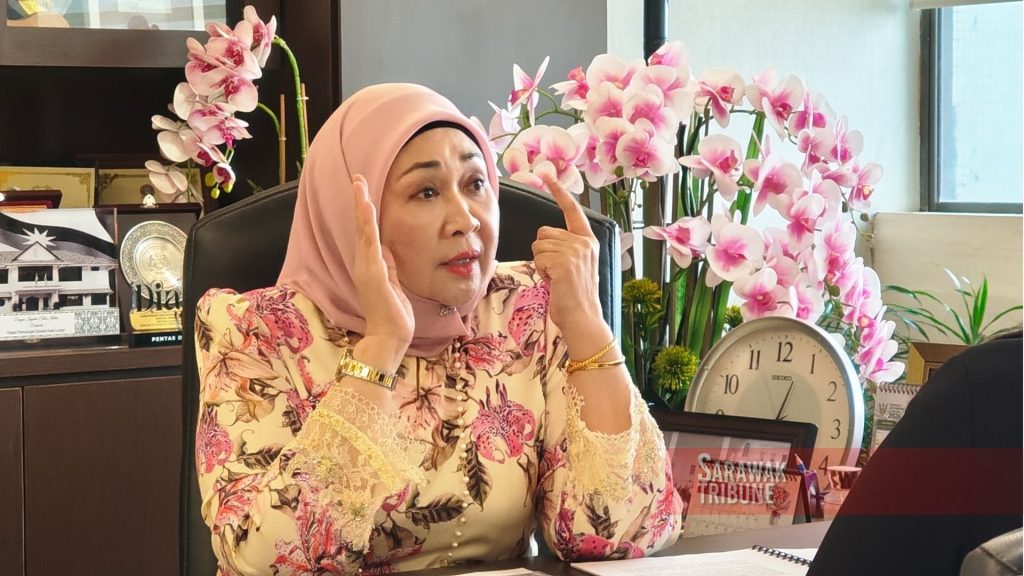 Datuk Sharifah Hasidah Sayeed Aman Ghazali. – Photo: Alverdtekoster Anyap
ST: Are Sarawakians already beginning to see those benefits?
SHARIFAH HASIDAH: Yes, now we can feel the benefits.
For instance, we have AirBorneo. Do you think it is easy to do something like AirBorneo if we do not have financial strength? The rakyat of Sarawak can benefit from it.
Now we are also the majority shareholder in Affin Bank, and that shows financial strength.
We have TVS. How many other states have their own television station? These things require money.
We have also built bridges – 22 bridges. Who benefits from the bridges? The rakyat. People do not have to rely on ferries in the same way anymore.
At the end of the day, success is when we can have financial independence, solid finances and strong financial strength.
With that money, we can continue developing Sarawak. That is what matters.
It is not about fighting legal battles and negotiating simply for the sake of saying that we fought and negotiated.
We need financial strength from what we are doing.
ST: And how should that financial strength be used in the longer term?
SHARIFAH HASIDAH: At the end of the day, what we are doing is always putting the rakyat of Sarawak first.
Not just this generation, but the next generation.
We might not be here anymore, but if we have the income and the financial strength, then our children and grandchildren will benefit.
Most importantly, it must be for all races where everybody should benefit.
I especially like what we are doing for the younger generation through FTES and international schools.
If you send a child to an international school conventionally, you may have to pay close to RM50,000 or RM60,000 a year and only wealthy families can afford that.
Now, through Yayasan Sarawak International Secondary Schools (YSISS), ordinary children have the opportunity to attend an international school funded by the state government.
These are the kinds of things we can do.
At the end of the day, it is about being financially independent and having financial strength. When we have strong revenue, we have the money to give back to the rakyat.
That is what our perjuangan under MA63 means to me.
If we can achieve that financial independence, generate strong revenue because of the rights we have under MA63, and then give it back to the rakyat – that, to me, is success.


 English (US) ·