
 2 hours ago
4
2 hours ago
4
ADVERTISE HERE
MALAYSIA Day on September 16 marks the formation of Malaysia in 1963, but for Sarawak, the occasion also reflects a lengthy political process involving negotiations, consultations and the pursuit of safeguards before becoming part of the new federation.
Here is a look at Sarawak’s journey towards the formation of Malaysia and why September 16 is different from Merdeka Day on August 31.
How did the idea of Malaysia begin?
The idea was formally proposed by then Malayan Prime Minister, Tunku Abdul Rahman Putra Al-Haj, on May 27, 1961.
The proposal envisioned a new federation comprising the Federation of Malaya, Singapore, Sarawak, North Borneo (now Sabah), and Brunei.
For Sarawak, the proposal raised important questions about its political future, particularly whether its people supported the formation of Malaysia, and what protections would be provided if Sarawak became part of the new federation.
What was the Cobbold Commission?
The Cobbold Commission was established in January 1962 to determine the views of the people of Sarawak and North Borneo on the Malaysia proposal.
The commission, chaired by Lord Cobbold, conducted consultations in both territories between February and April 1962.
Its report found broad support for Malaysia, although there were different views on the timing and conditions of the federation. A significant section of the people supported the idea provided their interests and safeguards were protected.
The findings became an important basis for subsequent negotiations on the formation of Malaysia.
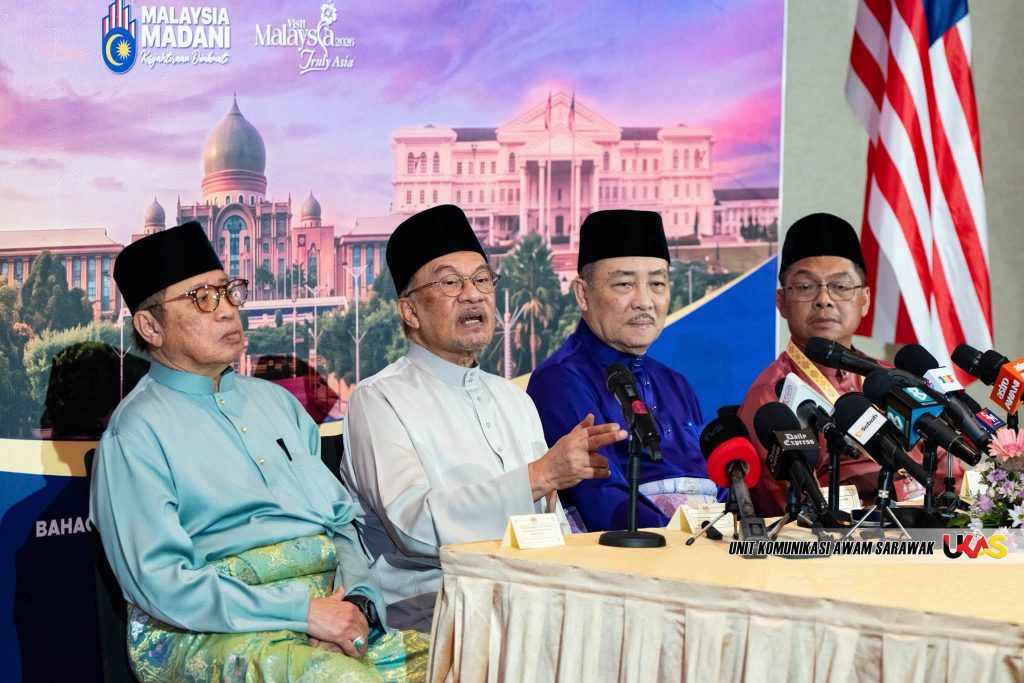 (From left) Sarawak Premier Datuk Patinggi Tan Sri Abang Johari Tun Openg, Prime Minister Datuk Seri Anwar Ibrahim and Sabah Chief Minister Datuk Seri Hajiji Noor during the press conference after the MTPMA63 meeting in Sabah recently. – Photo: UKAS
What role did Sarawak’s leaders play?
Sarawak’s political leaders were directly involved in the discussions over the state’s future.
Among the prominent local leaders involved were Temenggong Jugah Barieng, Datuk Bandar Abang Mustapha, Tun Abang Openg, Tan Sri Ling Beng Siew and P.E.H. Pike.
Tan Sri Datuk Amar Stephen Kalong Ningkan also played an important role in Sarawak’s transition towards self-government. He became Sarawak’s first Chief Minister in July 1963.
On July 22, 1963, Sarawak achieved self-government, shortly before Malaysia was formally established.
What were Sarawak’s safeguards?
Sarawak sought assurances that its special circumstances and interests would be protected within the proposed federation.
These concerns were discussed through the Inter-Governmental Committee (IGC), which worked out constitutional arrangements and safeguards for Sarawak and North Borneo.
Among the issues covered were: immigration control; religion; education; the position of English; citizenship; representation in Parliament; the protection of indigenous interests; the public service; financial arrangements; land and local government; and constitutional safeguards.
Sarawak’s concerns were also reflected in what became commonly known as the 18-point memorandum.
However, the 18 points should not be treated as a separate treaty. The legal and constitutional framework for Malaysia was established through the Malaysia Agreement 1963 (MA63), the IGC Report, the Federal Constitution and related legal instruments.
When was the Malaysia Agreement signed?
The Malaysia Agreement 1963 was signed in London on July 9, 1963.
It was signed by the United Kingdom, the Federation of Malaya, Sarawak, North Borneo and Singapore.
The five representatives signing on behalf of Sarawak were P.E.H. Pike, Temenggong Jugah Barieng, Datuk Bandar Abang Mustapha, Tan Sri Ling Beng Siew and Tun Abang Openg.
The agreement initially envisaged Malaysia being established on August 31, 1963.
However, the date was postponed to September 16 to allow the United Nations’ process to determine the wishes of the people of Sarawak and North Borneo to be completed.
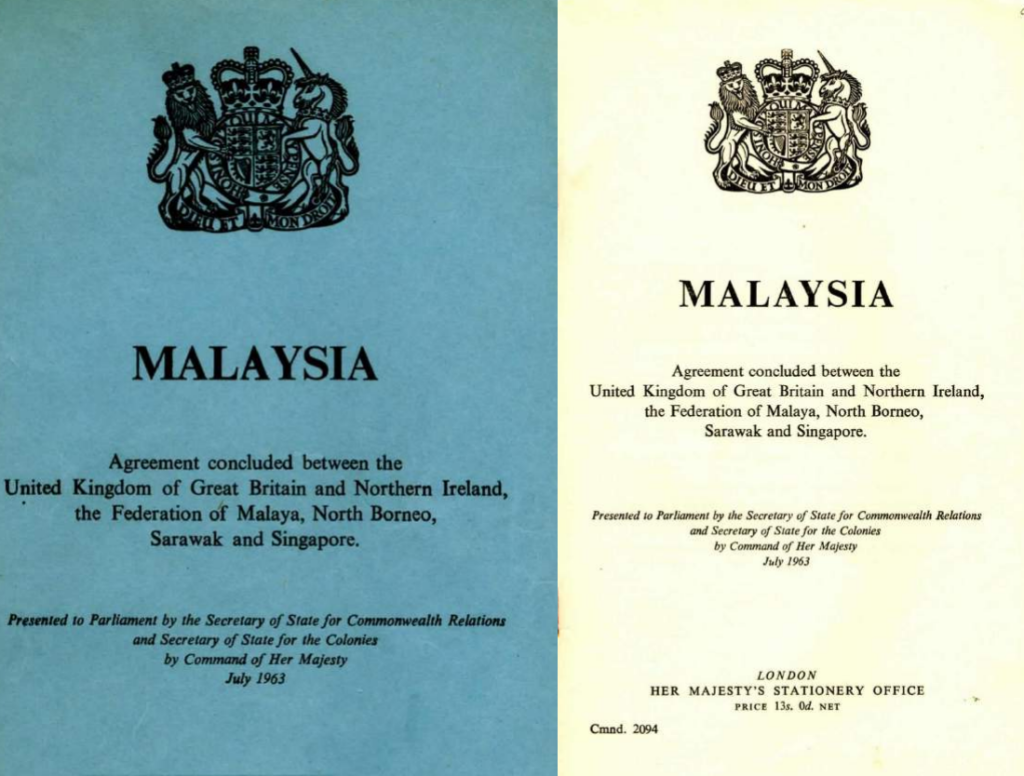 A copy of the Malaysia Agreement 1963 document. – Photo: Pustaka Sarawak
So, what happened on September 16, 1963?
On September 16, 1963, Malaysia was formally established.
In Sarawak, the proclamation was read by Ningkan at Central Padang, now known as Padang Merdeka, in Kuching.
Tun Abang Openg was subsequently sworn in as Sarawak’s first Governor, while Sarawak’s first Cabinet assumed responsibility for administering the state within the new federation.
Sarawak therefore entered Malaysia as one of the territories involved in the negotiations that led to the creation of the federation.
Why is Malaysia Day different from Merdeka Day?
The two dates commemorate different historical events.
August 31, 1957 – Merdeka Day: Marks the independence of the Federation of Malaya from British rule.
September 16, 1963 – Malaysia Day: Marks the establishment of Malaysia, when the Federation of Malaya, Sarawak, North Borneo and Singapore came together to form the new federation.
Therefore, Malaysia Day is not simply another independence anniversary.
For Sarawak, September 16 marks the culmination of its transition from colonial rule to self-government and its entry into a newly established Malaysia following negotiations over constitutional arrangements and safeguards.
Why does the history still matter today?
The events leading to 1963 continue to shape discussions about Sarawak’s position within Malaysia.
Issues such as immigration, native rights, education, language, finance, land, development and constitutional safeguards remain closely associated with the arrangements negotiated before Malaysia was formed.
Understanding Sarawak’s role in 1963 is therefore important to understanding why Malaysia Day holds particular significance in the state.
Malaysia Day commemorates the creation of Malaysia on September 16, 1963. For Sarawak, it also serves as a reminder of the negotiations, participation and safeguards that shaped the state’s place within the federation.




 English (US) ·