
 1 hour ago
5
1 hour ago
5
ADVERTISE HERE
From a humble start in Kuching to a Grab 5-Star Eats Awards 2025 win, Depo Kitchen’s journey reflects how food can bring Malaysians together, celebrating the diversity we share this Hari Malaysia.
A taste of what makes us Malaysian
Ask what makes a meal Malaysian and there is unlikely to be just one answer.
It could be nasi lemak wrapped in banana leaf, nasi kerabu in its vivid blue hues, a plate of nasi kandar piled with curries, a comforting bowl of laksa Sarawak or Sabah’s fresh and tangy hinava. Different dishes, different traditions, different parts of the country — yet each tells a story of the Malaysia we share.
For Masduqi Husni Thamrin and his wife, Dayang Puspasari Abang Spian, who co-founded Depo Kitchen, that diversity is precisely what makes Malaysian food special.
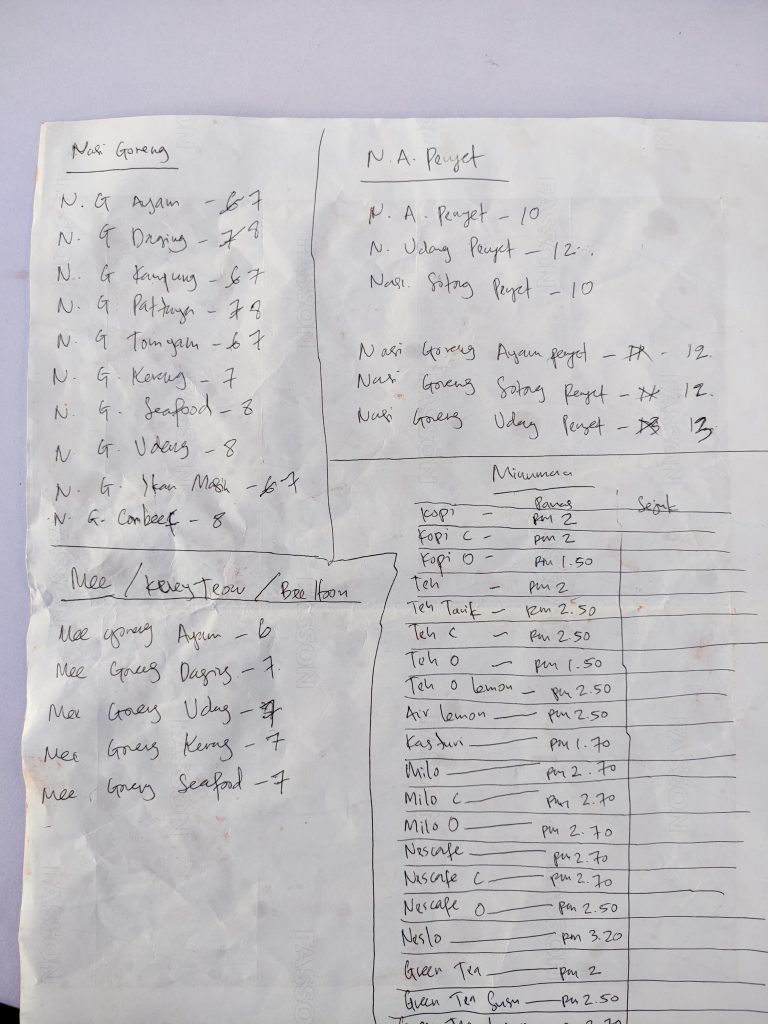 A handwritten menu from Depo Kitchen’s early days, penned by Masduqi himself.
“Malaysia itself consists of various races, cultures and states. What makes it truly Malaysian is how the food can be enjoyed together regardless of background,” Masduqi said.
To him, food is more than something to eat. It is one of the simplest ways to experience Malaysia’s diversity and bring people of different backgrounds to the same table.
That idea sits naturally with Grab’s Discover the Best of Malaysia, which celebrates the food, people and experiences that reflect the country’s diversity.
For the couple, the journey into food began not with a grand plan to build a restaurant, but as a way to find a path forward during one of the most challenging periods of their lives.
From a pandemic pivot to a growing Sarawak brand
Before entering the food and beverage (F&B) industry, Masduqi and Puspa operated Lash & Studio in Metrocity, Jalan Matang, offering eyelash extensions and facials, alongside an event management business.
When the COVID-19 pandemic struck in 2020, both businesses were badly affected. Looking for a way forward, they began selling salmon mentai and Vietnamese rolls through pre-orders, self-pickup and cash on delivery (COD) under FoodSetGo by Puspa.
The encouraging response gave them the confidence to venture further into food.
In July 2022, they took their next step from beneath a 10-by-10-foot blue canopy at home, introducing Kunafa Depo Semariang.
The idea was simple: to bring the popular kunafa trend to Kuching so Sarawakians could enjoy it without travelling to Peninsular Malaysia.
Before selling it, Masduqi and Puspa frequently flew to Kuala Lumpur, determined to get the taste right. When they first launched, the kunafa was served plain, without toppings. As the business grew, they began introducing different toppings and variations.
 Masduqi (right) and Puspa receive the Grab 5-Star Eats Awards 2025 recognition.
By October, three tables had been placed outside for dine-in customers. As the menu expanded beyond kunafa, the business was renamed Depo Kitchen.
Nasi Ayam Penyet, Nasi Goreng, Mee Goreng and drinks joined the line-up. In those early days, Masduqi did a bit of everything — writing the menu by hand, taking customers’ orders and even preparing their drinks himself.
Those three tables eventually became 12.
In January 2025, Depo Kitchen opened its first permanent restaurant at Jalan Matang, followed by a second outlet in Kota Samarahan in September. From one employee, the business has grown to about 60.
For Masduqi, that growth is about more than outlets.
“Success is not only about how many outlets we have managed to open,” he said.
What matters more, he added, is that a business born out of difficult times can now provide livelihoods for others.
Its journey, he said, has been shaped by necessity, trial and error, customer feedback and the support of the Sarawak community.
Familiar food, with its own identity
Today, Masduqi describes Depo Kitchen’s food as “simple, familiar but with its own identity”.
Many of the dishes on the menu are also rooted in what Masduqi and Puspa themselves enjoy eating — food they wanted Sarawakians to experience without having to travel elsewhere.
That often means going beyond simply bringing a dish to Kuching. The couple would travel to try different versions, understand the flavours they liked and then fine-tune them to suit Sarawakian diners.
The menu, in many ways, reflects their own food experiences — from the kunafa that first brought them into the food business to Nasi Kandar, which came about after Puspa craved the dish during pregnancy.
“We like taking inspiration from different types of food, but ultimately we adapt them to suit the local palate,” Masduqi said.
Today, the menu features a range of dishes, with kunafa, Nasi Ayam Gepuk and Nasi Kandar among its best-sellers.
The team does not choose dishes simply because they are trending, but considers what customers enjoy, what works for the local palate and what can give Depo Kitchen an identity of its own.
“Innovation is important, but it does not mean we have to change everything all the time. Sometimes, what customers want is simply for their favourite food to remain delicious every time they come,” he said.
Where different tastes meet
That balance between familiarity and variety is an apt reflection of Malaysian food itself.
For Masduqi, its uniqueness lies in the way different communities and regions bring their own culinary traditions to the table, while those foods are ultimately enjoyed together.
“We may have different tastes, but when people of different religions and races sit at the same table and enjoy food, we can share the same experience,” he said.
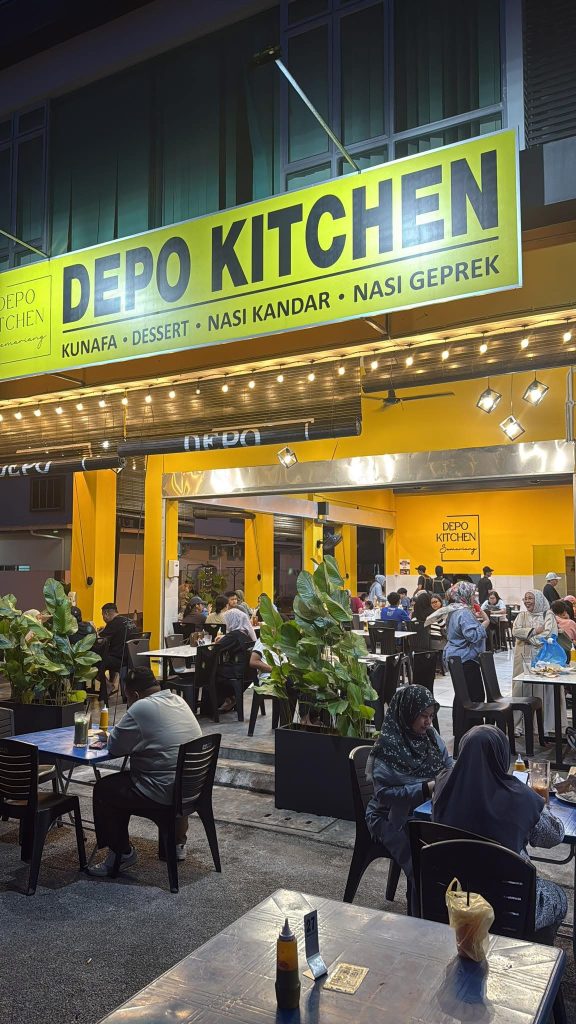 Depo Kitchen’s first permanent outlet at Jalan Matang.
He sees this at Depo Kitchen, which attracts customers from different walks of life.
“Food is a language that everyone can understand. We may be different in many ways, but good food can make us sit down and enjoy time together,” he added.
He also sees plenty to be excited about in Sarawak’s food scene, with its diverse communities and rich food culture complemented by local F&B brands that are becoming increasingly creative and willing to introduce new concepts.
He hopes more Sarawak-born businesses will eventually grow beyond the state.
“We have the food, talent and creativity that are strong enough to compete,” he said.
A five-star milestone
Depo Kitchen’s growth beyond its humble beginnings received a significant boost when it was named one of the winners of the Grab 5-Star Eats Awards 2025.
For a business that began with pre-orders and COD before operating under a small blue canopy, the recognition was a particularly meaningful milestone.
“Looking back at how Depo Kitchen started from home with a small canopy, and today receiving recognition like this, it really is an achievement we are proud of,” Masduqi said.
But he sees the award as a reflection of collective effort, crediting the kitchen team, service crew, supervisors and customers who supported the business from the beginning.
For him, the recognition is not an endpoint, but a source of motivation and a responsibility to continue improving. It is also an opportunity to share what Depo Kitchen represents beyond Sarawak.
If he were to introduce one Depo Kitchen dish to diners from elsewhere in Malaysia, he would choose Nasi Ayam Gepuk, one of the dishes most closely associated with the restaurant and an important part of its growth.
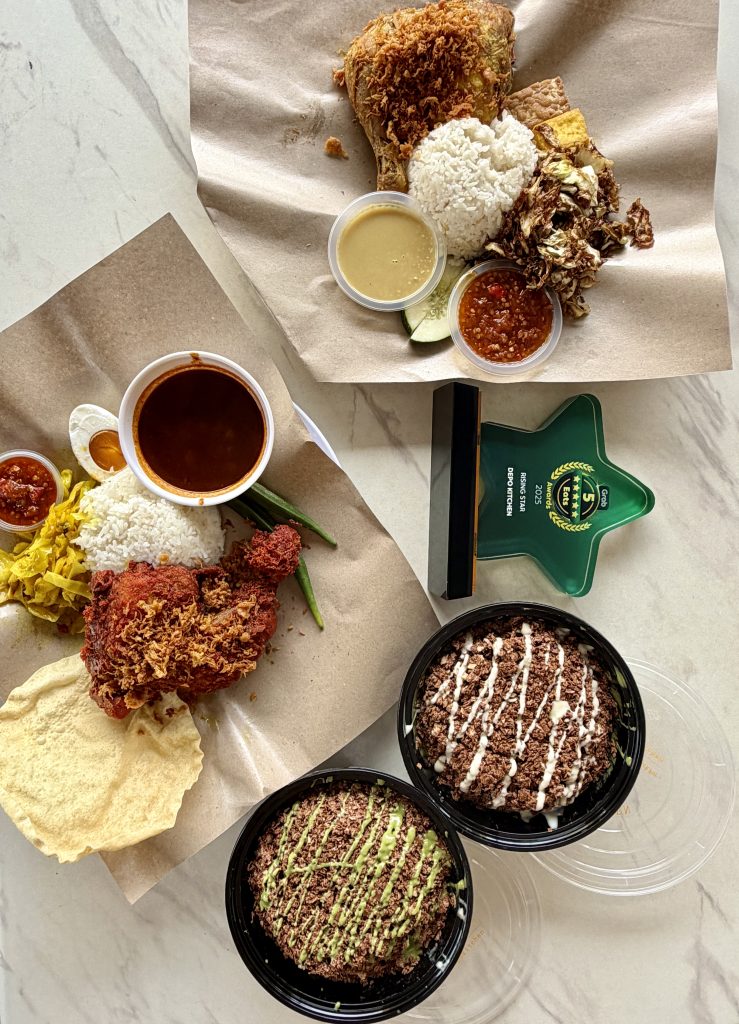 Depo Kitchen best-sellers, clockwise: Nasi Ayam Gepuk, Kunafa and Nasi Kandar.
The combination of fried chicken, spicy and flavourful Sambal Gepuk and accompanying sides is familiar to many Malaysians, but Masduqi believes Depo Kitchen’s version carries its own character.
His hope is that visitors from outside Sarawak who try it in Kuching will take away not only a satisfying meal, but also a memory of a brand that was born and raised in Sarawak.
That, ultimately, is what Discover the Best of Malaysia means to him.
It is about giving people the opportunity to discover the country’s diversity through its flavours, cultures and food experiences.
And on Hari Malaysia, food offers perhaps one of the clearest reminders of what that diversity means.
“Food is one of the simplest symbols of who we are as Malaysians. From Sabah and Sarawak to Peninsular Malaysia, every place has its own food and specialities,” he said.
The dishes may differ. The flavours may differ. The traditions behind them may differ. But around a Malaysian table, those differences do not have to be a barrier.
For Masduqi, that is Malaysia: different cultures and tastes, yet still able to sit together and enjoy the same table.




 English (US) ·